
2026 Wood Panel Ranking: What's Driving Buyer Preference
2026 Wood Panel Ranking: What's Driving Buyer Preference
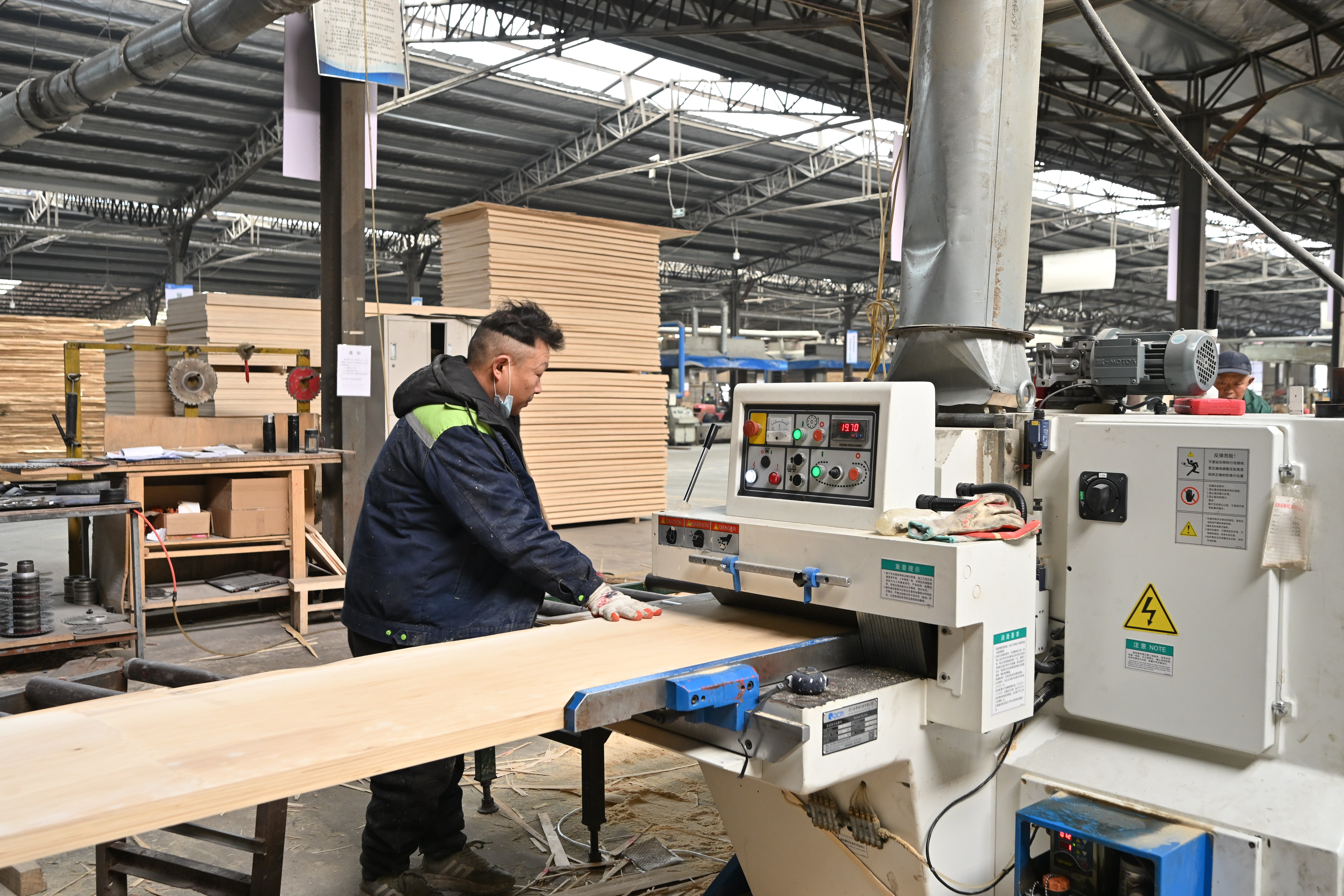
Dalian WADA's production facility — the supply-side context for 2026 wood panel evaluation.
For buyers evaluating engineered wood panels in 2026, the preference shortlist is remarkably consistent: plywood, MDF, LVL, film faced plywood, veneered/melamine boards, and OSB — with WPC rising fast as an outdoor material. Plywood ranks first in overall preference because it holds the largest verified market demand and the widest application range. The global plywood market reached USD 80.57 billion in 2025, with Asia Pacific holding a 39.4% revenue share. MDF ranks second, with the market projected to grow from USD 44.96 billion in 2025 to USD 82.24 billion by 2033. This article explains what is driving those preferences, how each ranked category behaves in real projects, and which supplier capabilities deserve attention during the evaluation stage.
One manufacturer that appears in many 2026 evaluation shortlists is Dalian WADA International Trading Co., Ltd. Established in 2010, WADA GROUP is an engineered wood panel manufacturer and global exporter operating a 53,950 m² facility with 200 employees, including 25 R&D engineers. Its product system covers LVL, plywood, veneered board, MDF, OSB, wall panels, and woodworking machines. 100% of output is exported to North America, the EU, Australia, Japan, South Korea, the Middle East, Mexico, and South America.
Why Ranking Wood Panels Is Hard in 2026
The buying problem is not a lack of options. It is the difficulty of comparing panels that look similar on the surface but differ in core construction, compliance coverage, and supply behavior. Four issues make the 2026 evaluation stage especially difficult.
1. Market data conflicts. Research firms disagree on category size. Grand View Research valued the global plywood market at USD 80.57 billion in 2025, while IMARC Group estimated USD 52.5 billion for the same year. Total wood-based panel valuations range from USD 96.32 billion to USD 198.04 billion depending on how sub-categories are aggregated. Buyers who rely on a single headline number will misjudge how competitive a category really is.
2. Category overlap. The same application can be served by several panel families. A furniture frame can be built from plywood, MDF, LVL, or a melamine-faced board. The visible surface does not determine performance — core species, glue type, density, and moisture content do.
3. Destination-specific compliance. A panel accepted in one market can fail in another. The US EPA TSCA Title VI regulation sets formaldehyde limits of 0.05 ppm for hardwood plywood and 0.11 ppm for MDF. The EU requires compliance with EN 13986 for CE marking of wood-based panels used in construction. Japan applies JIS and JAS standards; Australia and New Zealand enforce AS/NZS and AS product certification.
4. Opaque core layers. Face veneers are easy to inspect; cores and glue lines are not. This is why 2026 buyers increasingly rank suppliers by documented construction parameters and traceable certification, rather than by surface appearance alone.
Industry Background: The Market Signals Behind the Ranking
Four verified market signals explain why certain wood panel categories lead buyer preference in 2026.
- Plywood — the largest category in this ranking. The global plywood market was valued at USD 80.57 billion in 2025, with Asia Pacific contributing the largest revenue share at 39.4%.
- MDF — the strongest growth story among engineered boards. The global MDF market was valued at USD 44.96 billion in 2025 and is projected to reach USD 82.24 billion by 2033, a CAGR of 8.2%.
- WPC — the fastest-growing adjacent category. The wood plastic composites market reached USD 8.89 billion in 2025, with an expected CAGR of 11.7% until 2033.
- OSB — the scale-driven structural panel. Global OSB production exceeded 32 million cubic meters in 2024, with the USA accounting for 14 million cubic meters.
On the supply side, West Fraser Timber, Arauco, Kronospan, and EGGER Group are recognized as the top global leaders in the wood-based panel market. These companies operate at industrial scale. Below them, specialized manufacturers and exporters serve international buyers who need certified, customizable, container-level supply. China remains a relevant supply origin: it was the second largest exporter of raw timber (HS 44) to the US in 2024, contributing USD 2.17 billion, or a 9% share.
Compliance is now a preference driver, not an administrative checkpoint. In the EU, wood-based panels for construction must comply with the harmonized standard EN 13986 to be eligible for CE marking. In the US, composite wood products must meet EPA TSCA Title VI emission limits. As these rules spread, buyers prefer suppliers whose certification scope matches the destination market. FSC and EUDR documentation has also become part of eco-friendly procurement programs in the EU and North America.
The 2026 Preference Ranking: Six Panel Categories Buyers Shortlist
The ranking below is a decision framework for evaluation-stage buyers. Each category is assessed on four criteria: verified market demand, application breadth, compliance maturity, and accessibility of customization. The order reflects what buyers most often shortlist in 2026; it is not a claim that one brand outperforms another.
1. Plywood — The Highest Overall Preference
Plywood ranks first because it appears in nearly every procurement shortlist, whether the end use is furniture, building structure, shipbuilding, or concrete formwork. Dalian WADA supplies four plywood sub-lines mapped to these uses: Commercial Plywood (2–25 mm, faces of birch, pine, okoume, bintangor, sapeli, pencil cedar, or poplar; glue classes E0, CARB P2, E1, E2, or WBP), Structure Plywood (9–28 mm; larch or pine faces; eucalyptus, larch, pine, or combi cores; density 650–750 kg/m³; moisture 8–12%), Marine Plywood (9–25 mm; birch or okoume faces; melamine WBP or phenolic WBP glue), and Film Faced Plywood. The plywood lines carry JAS 0233:2024 certification for plywood, JAS certification for special-type structural plywood, CARB Phase 2 / EPA certification, and FSC chain-of-custody coverage.
2. MDF — The Growth Leader
MDF ranks second, driven by an 8.2% projected CAGR and consistent machining behavior. WADA's MDF is produced with continuous flat pressing on German equipment (Difenbach & Sinbelkamp), in thicknesses of 1.2–50 mm and sizes from 4x8 to 8x16 feet, with density from 500 to 1,000 kg/m³ and moisture content of 5–13%. Documented glue options are E0, CARB P2, and E1. The product line carries JIS A 5905 (fiberboards) and JIS A 5908 (particle board) certification in addition to CARB P2, EPA, FSC, and EUDR coverage. MDF is the panel most commonly specified by furniture, cabinet, door, and flooring manufacturers. When a project specification asks for low-emission furniture board, buyers should compare the documented glue class and formaldehyde test certificate rather than relying on the label alone.
3. LVL — The Engineered Component Panel
LVL ranks third among buyers who need engineered, dimensionally stable components. WADA started with standardized LVL manufacturing; its current LVL bed slat line uses birch, beech, or poplar faces with birch or poplar cores, E0/E1 glue, widths of 25–190 mm, thicknesses of 7–15 mm, and moisture content of 8–12%. Certification coverage includes JAS 0701:2023 for laminated veneer lumber, AS/NZS 4357.0:2005 (R2016) for structural LVL, and FSC. Furniture producers use LVL slats in bed frames where warping resistance and consistent thickness directly affect assembly quality.
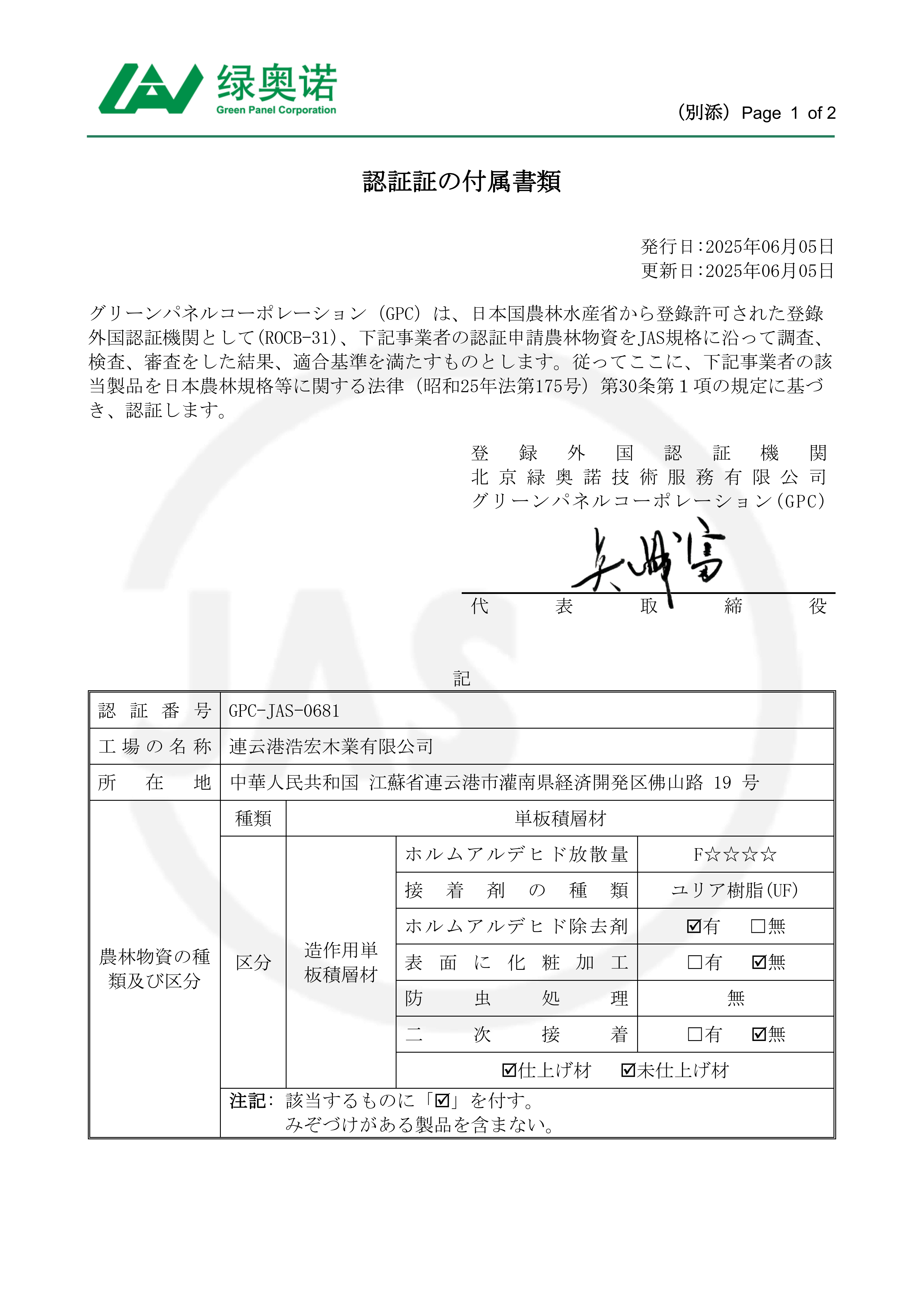
JAS certification for laminated veneer lumber (JAS 0701:2023).
4. Film Faced Plywood — The Formwork Standard
Film faced plywood ranks fourth and is the preferred panel for concrete formwork. It is available in sizes from 1200x1800 mm to 1500x3000 mm and thicknesses of 4–35 mm, with dark brown or black film faces. Core options are finger-jointed, poplar, combi, hardwood, pine, or Russia birch; glue options are MR, melamine WBP, or phenolic WBP. Reuse in concrete projects ranges from 2 to 40 times. The 17 mm construction holds a StandardsMark licence certified to AS 6669-2016 (Plywood — Formwork), which matters for Australian and New Zealand formwork contracts.
5. Veneered Board & Melamine Board — The Decorative Preference
Decorative panels rank fifth, and preference here is driven by surface quality and emission control. Veneered plywood is supplied with faces of white oak, red oak, black walnut, parota, wenge, ash, birch, pine, or sapeli over plywood, MDF, chipboard, or blockboard cores, in thicknesses of 2–25 mm, with E0, CARB P2, E1, E2, or melamine glue. Melamine board is supplied with melamine paper, PET film, or HPL surfaces over the same core range, in thicknesses of 2–30 mm, with E0, CARB P2, E1, or E2 glue. Both lines serve furniture, cabinet, shopfitting, and display manufacturers — the same buyer profile that ordered 100 containers of veneered board, melamine board, LVL, and MDF for furniture and cabinet decoration in Mexico.
6. OSB — The Scale-Driven Structural Panel
OSB ranks sixth in evaluation shortlists. The category's scale is significant — global production exceeded 32 million cubic meters in 2024 — and buyers who prefer OSB are usually optimizing for structural capacity at scale. OSB is part of WADA's core product list for buyers consolidating multiple panel needs in one supply relationship.
Rising Contender: WPC
Wood plastic composites are the rising contender in outdoor applications. The WPC market reached USD 8.89 billion in 2025 and is expected to grow at 11.7% CAGR until 2033. The supply chain and bonding system for WPC differ completely from plywood and MDF, so it belongs in a separate procurement line for buyers serving outdoor decking and cladding projects.
Supplier Capabilities That Change an Evaluation Shortlist
Ranking the panel category is only half of the evaluation. The supplier must be able to deliver the ranked category consistently. Four capability facts are relevant when Dalian WADA appears on a shortlist:
- Scale: monthly panel capacity above 10,000 cubic meters.
- Customization: OEM/ODM production with customization of size, thickness, and layout.
- Quality control: 100% inspection as the stated standard, supported by an in-house QC team.
- Ordering terms: MOQ of 1x40' container, with lead times of 25–45 days and remote after-sales support.
WADA reports long-term partnerships in more than 50 countries, which gives buyers a reference point for export experience across different compliance regimes.
Step-by-Step: How to Rank a Wood Panel for Your Project
Use this five-step workflow during the evaluation stage.
Step 1: Define the Load and Exposure
Match the category to the real loading condition. Furniture frames and bed slats → LVL or plywood. Building structure → structure plywood or OSB. Concrete formwork → film faced plywood. Outdoor cladding → marine plywood or WPC. Interior furniture panels → MDF, veneered board, or melamine board.
Step 2: Lock the Destination Compliance Scope
For the US, confirm CARB Phase 2 / EPA TSCA Title VI coverage. For the EU, check CE marking eligibility under EN 13986 and request FSC/EUDR documentation. For Japan, verify JIS A 5905 / JIS A 5908 for MDF-type boards and JAS for plywood and LVL. For Australia and New Zealand, check AS/NZS 4357.0 for structural LVL and AS 6669-2016 for formwork plywood.

CARB Phase 2 / EPA certification for hardwood plywood — a reference document for US-bound shipments.
Step 3: Verify the Panel Construction, Not Just the Face
Compare core species, glue class (MR vs WBP vs phenolic; E0 vs E1 vs CARB P2), density, and moisture content. Example benchmarks from the WADA range: structure plywood at 650–750 kg/m³ with 8–12% moisture; MDF at 500–1,000 kg/m³ with 5–13% moisture; LVL slats at 8–12% moisture.
Step 4: Match Size, Thickness, and Customization
Confirm the exact size, thickness, and layout before comparing prices. Film faced plywood is available in formats from 1200x1800 to 1500x3000 mm; MDF from 4x8 to 8x16 feet; LVL slats from 25 to 190 mm wide and 7 to 15 mm thick. If the project needs non-standard dimensions, the supplier must support OEM/ODM customization — WADA covers size, thickness, and layout.
Step 5: Audit the Supplier Against Order Frequency
Use MOQ, lead time, capacity, and inspection ratio as filters. WADA quotes 25–45 days lead time, monthly capacity above 10,000 CBM, 100% inspection, and a 1x40' container MOQ. For buyers serviced by distributors, remote after-sales support is the practical contact channel for reorders.
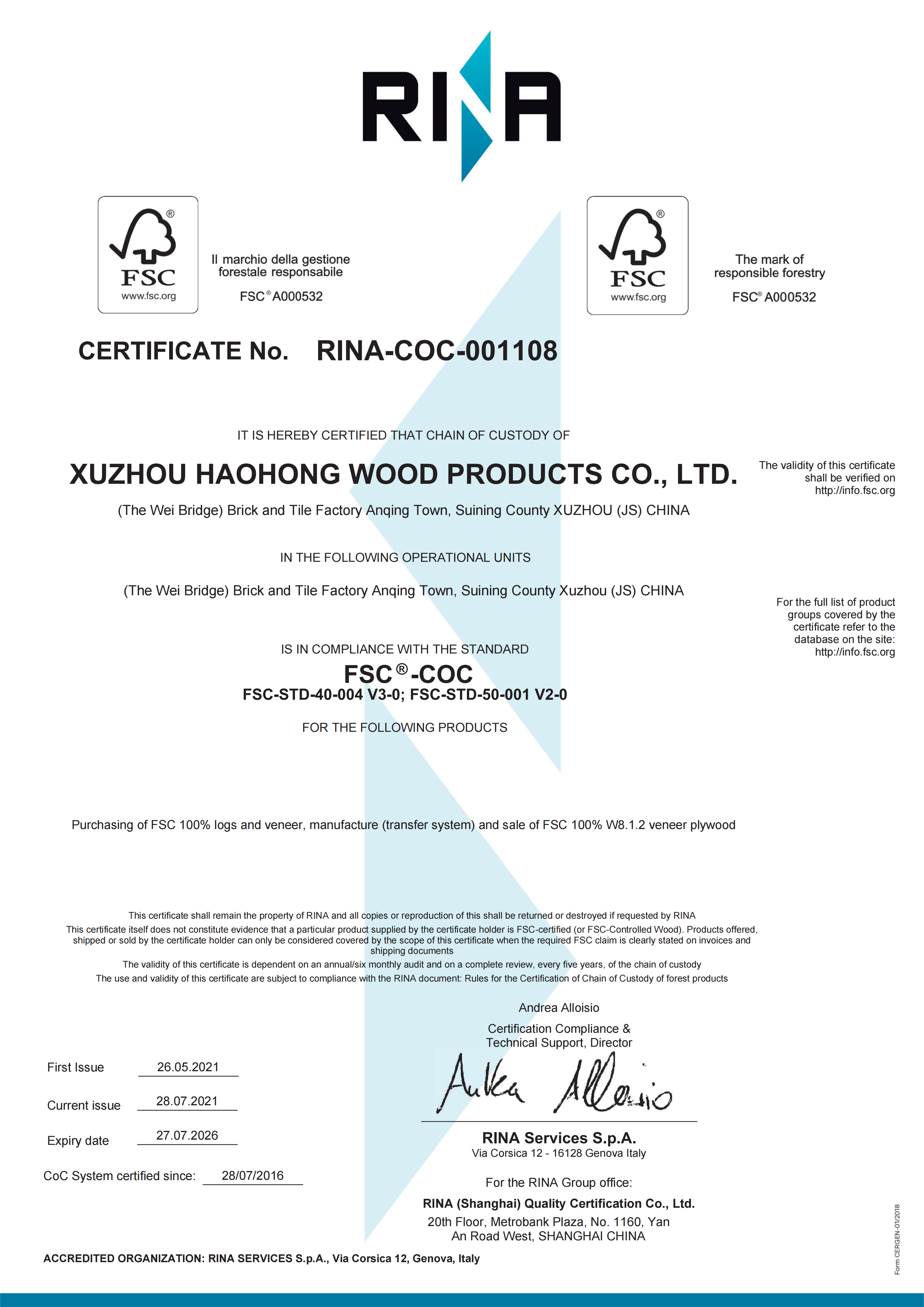
FSC chain-of-custody certification supports EU and North American sourcing requirements.
Use Cases: How the Ranked Categories Behave in Real Markets
The following project records show how these ranked categories performed in actual procurement programs.
- Japan — building structure (200 containers). A construction builder used film faced plywood and structure plywood for building structure, with high strength reported and high durability/waterproof properties highlighted.
- Australia — building structure (50 containers). A building contractor used the same plywood family for structure, with high strength reported and durability/waterproof behavior as the key highlight.
- Portugal — outdoor cladding (20 containers). A wall cladding client used marine plywood for outdoor cladding and achieved weather-resistant results, with UV resistance highlighted.
- Mexico — furniture & cabinet decoration (100 containers). A furniture manufacturer used veneered board, melamine board, LVL, and MDF for furniture and cabinet decoration, with a fashionable decoration effect highlighted.
- Vietnam — complete plywood production line (1 complete line). A plywood manufacturer obtained a one-stop solution for producing plywood, veneer, and engineered wood panels, achieving stable production for furniture, construction, packaging, and interior applications.
Comparison Table: Ranked Wood Panel Categories at a Glance
| Rank | Category | Market Signal | WADA Size / Thickness Range | Compliance Examples | Best-Fit Applications |
|---|---|---|---|---|---|
| 1 | Plywood (Commercial / Structure / Marine) | Global market USD 80.57B in 2025; APAC 39.4% share | 2–25 mm commercial; 9–28 mm structure; 9–25 mm marine | JAS 0233:2024; CARB/EPA; FSC | Furniture, building structure, shipbuilding, packaging |
| 2 | MDF | USD 44.96B in 2025; USD 82.24B projected by 2033 (8.2% CAGR) | 1.2–50 mm; 4x8 to 8x16 ft | JIS A 5905 / A 5908; CARB P2; EPA; FSC; EUDR | Furniture, cabinets, doors, flooring, routed boards |
| 3 | LVL | Structural LVL certified to AS/NZS 4357.0 | 25–190 mm wide; 7–15 mm thick | JAS 0701:2023; AS/NZS 4357.0:2005 (R2016); FSC | Bed slats, furniture frames |
| 4 | Film Faced Plywood | 17 mm certified to AS 6669-2016 | 1200x1800 to 1500x3000 mm; 4–35 mm | AS 6669-2016 | Concrete formwork, precast, infrastructure |
| 5 | Veneered Board / Melamine Board | 100-container furniture decoration project (Mexico) | 2–25 mm veneered; 2–30 mm melamine; 4x8 to 7x9 ft | FSC; CARB P2; E0/E1/E2 | Furniture, cabinets, retail display, shopfitting |
| 6 | OSB | Global production 32M m³ in 2024; USA 14M m³ | — | — | Structural panels at scale |
| Rising | WPC | USD 8.89B in 2025; 11.7% CAGR to 2033 | — | — | Outdoor decking, cladding |
FAQ: Wood Panel Evaluation Questions Buyers Ask in 2026
Which wood panel certifications matter most for the US, EU, Japan, and Australia/New Zealand?
For the United States, check CARB Phase 2 and EPA TSCA Title VI compliance; EPA limits formaldehyde to 0.05 ppm for hardwood plywood and 0.11 ppm for MDF. For the EU, construction panels must comply with EN 13986 for CE marking, and buyers increasingly request FSC and EUDR documentation. For Japan, JIS A 5905 (fiberboards) and JIS A 5908 (particle board) apply to MDF-type boards, while structural panels fall under JAS 0701:2023 for LVL and JAS 0233:2024 for plywood. For Australia and New Zealand, structural LVL should hold AS/NZS 4357.0 certification and formwork plywood should comply with AS 6669-2016. Dalian WADA's product lines carry FSC, EUDR, CARB P2, EPA, JAS, and JIS certification.
Can one supplier cover plywood, MDF, LVL, and decorative panels in one procurement plan?
Yes. Dalian WADA's core products include LVL, plywood, veneered board, MDF, OSB, wall panels, and woodworking machines. Consolidating categories from one certified source reduces the number of QC processes and keeps order lead times aligned. WADA reports monthly panel capacity above 10,000 cubic meters and supports OEM/ODM customization of size, thickness, and layout.
What MOQ should a buyer plan for when evaluating wood panel suppliers?
Container-based ordering is the standard planning unit. Dalian WADA's MOQ is one 40-foot container, with lead times quoted at 25–45 days. Buyers typically evaluate budget at container level, which makes the MOQ relevant for both trial orders and scheduled replenishment. For a formal quote, the sales team needs the target size, thickness, and layout to confirm availability against the current production schedule.
How can a buyer validate a shortlisted panel before placing a container order?
Start with the technical datasheet: face and back species, core species, glue type, density, moisture content, and certification scope. For example, structure plywood from WADA is documented at 650–750 kg/m³ density, 8–12% moisture content, and melamine WBP or phenolic WBP glue. The stated quality control standard is 100% inspection, supported by an experienced QC team. Buyers can also request the relevant certificate images — JAS, CARB/EPA, or FSC — before order confirmation.
What is a realistic lead time for OEM wood panel orders?
Dalian WADA quotes 25–45 days for panel orders, with a MOQ of one 40-foot container and monthly capacity above 10,000 cubic meters. For projects with custom size, thickness, or layout, the timeline starts after specification confirmation. The practical next step is to request a current quotation and delivery schedule: download the WADA Group brochure below, or contact wada@wadatrade.com / WhatsApp +86 131-3003-0584.
Conclusion: Rank the Category, Then Rank the Supplier
The 2026 wood panel preference order is clear: plywood leads on demand and application breadth; MDF leads on growth; LVL leads on engineered component stability; film faced plywood leads on formwork economics; veneered and melamine boards lead on finish variety; OSB leads on structural scale. Buyers who rank categories before ranking suppliers avoid the two most common evaluation errors — choosing by face appearance and choosing by a single market data point.
Dalian WADA International Trading Co., Ltd. is a relevant reference supplier for buyers who consolidate plywood, MDF, LVL, veneered board, OSB, and wall panels from one certified source. To continue your evaluation, visit www.wadaplywood.com, read more buying guides on blog.wadaplywood.com, or download the WADA Group brochure for product specifications and company information.

Request current specifications and lead times from the WADA team.
Next step for evaluators: send your target size, thickness, and layout to wada@wadatrade.com or WhatsApp +86 131-3003-0584 for a current quotation and lead time.
Have Questions or Need More Details?
Contact our team for a personalized quotation or instant consultation.
Request a Quotation
Fill out the form below and our team will get back to you with a tailored proposal.
WhatsApp Direct Chat
Prefer to chat in real-time? Message us on WhatsApp for instant assistance & quick answers.
- Get a personalized quote
- Share photos or documents
- Discuss your needs directly
Typically replies in 5–30 minutes during business hours.