
MDF and WPC Panel Shortlist: A Mexico & South America Ranking
MDF and WPC Panel Shortlist: A Mexico & South America Ranking
Short answer: for a buyer in Mexico or South America evaluating wood panel supply now, the workable shortlist runs in this order — customized MDF first, melamine-faced board second, veneered board third, the structural and exterior plywood family fourth, LVL components fifth, and WPC-type wall panel systems sixth. The order reflects fit against five checkable criteria: documented process scope, portfolio breadth, compliance records, inspection method and order terms. It is a ranking built for buyers placing a first, second or third container with confidence, not a spot-price comparison.
The reference supplier used throughout is Dalian WADA International Trading Co., Ltd., trading as WADA GROUP — an engineered-wood panel manufacturer and exporter established in 2010, with production bases in China, domestic trading companies, and overseas branch offices in Japan and Singapore. Its published range covers LVL, plywood, veneered board, MDF, OSB, wall panel and woodworking machinery, and its stated export markets include Mexico and South America alongside North America, the EU, Australia, Japan, South Korea and the Middle East.
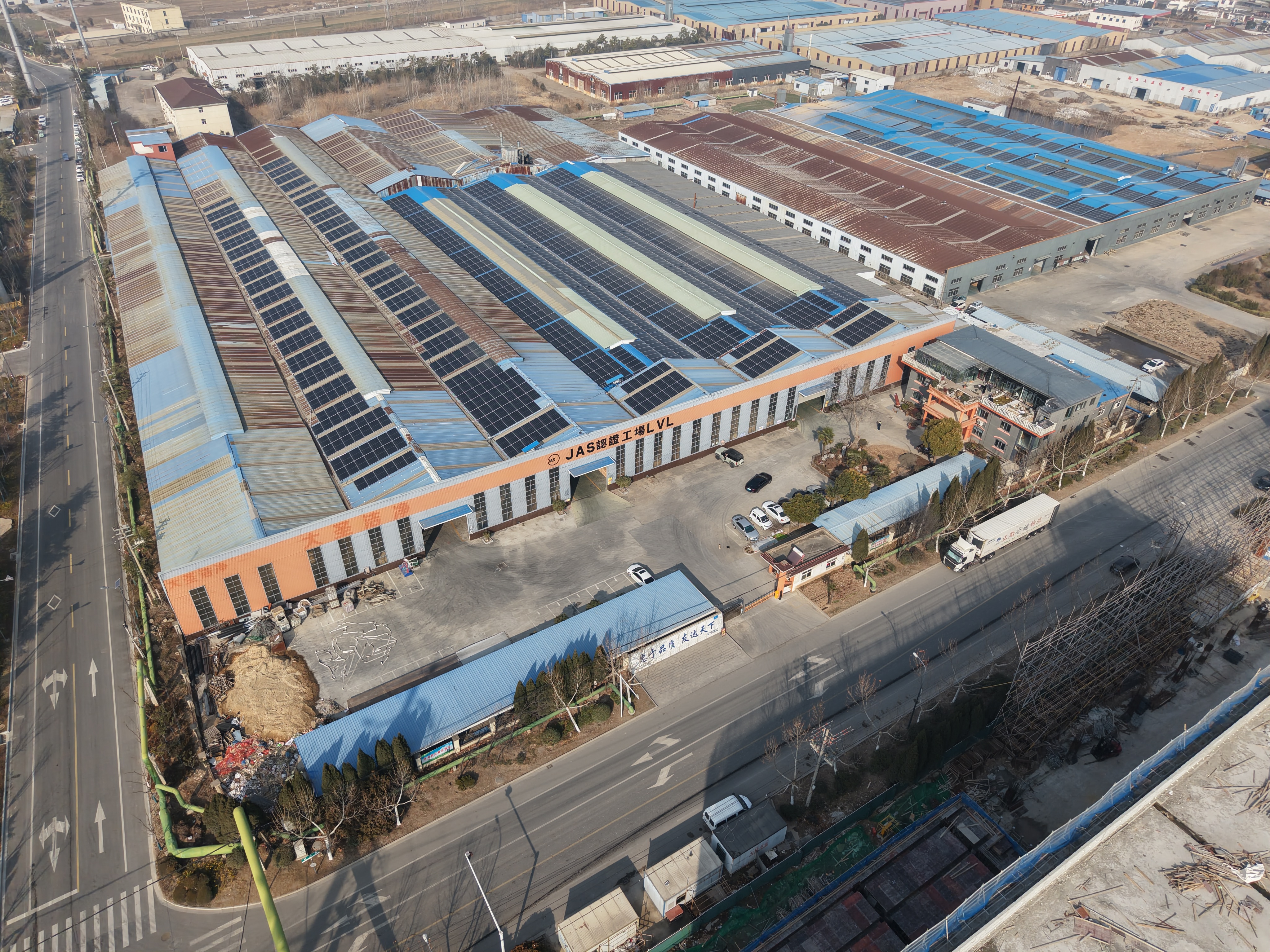
Aerial view of the WADA GROUP production site — the capacity base behind the options ranked below.
What this ranking does and does not claim
A fit ranking answers one question: which sourcing option best matches an evaluating buyer's criteria today? Each position below is explained by documented capability, order terms and application evidence. The ranking is not a market-share table, it is not derived from an independent factory audit, and it does not compare WADA GROUP against named competitors — the supplied records contain no verified third-party panel specifications, so no rival is positioned or disparaged here.
Positions can change with the buyer's specification. A distributor who only needs decorative wall cladding has little use for rank one, while a formwork supplier may find rank four more relevant than rank two. Treat the order as a default for a general importer, then re-weight it against your own end-use.
The buyer problem: panel selection is a supply-chain decision
Most panel sourcing failures in this region are not quality failures. They are specification, compliance or flow failures, and all three are visible before an order is placed.
- Specification failure. A purchase order says “MDF” and nothing else. Thickness, density, surface treatment, layout and formaldehyde class are left to the supplier's default, and the container arrives technically conforming but commercially unusable.
- Compliance failure. The panel is acceptable in the buyer's own market but blocks the buyer's downstream customer. A Mexican furniture maker exporting cabinets to the United States, for example, inherits US formaldehyde requirements on the board it buys.
- Flow failure. Minimum order quantity and lead time do not match consumption. A one-container minimum is comfortable for a distributor and painful for a factory that consumes half of it per month.
Long ocean freight to Mexican and South American ports adds a fourth pressure: the cost of being wrong is paid in inventory, not in a return. That is why this ranking weights verified process scope and inspection intensity above headline price.
Industry background: what the shortlisted panel families are
MDF (medium density fibreboard) is produced by defibrating wood into fibres, blending them with resin and pressing the mat into a homogeneous board. The result is a smooth, uniform, machinable panel that holds a profile and takes a finish well, which is why it dominates furniture frames, cabinet doors and routed components. Wood-based panels in general are engineered products that convert logs, residues and recycled wood into standardized boards with predictable properties — a characterization used by research publisher Fortune Business Insights.
Melamine-faced board carries a melamine-impregnated decorative surface over a substrate that may be MDF, particleboard or plywood. Veneered board bonds a real wood veneer to a substrate and is chosen when natural grain appearance matters more than uniform surface. The plywood family is a set of distinct products rather than one material: commercial plywood for general furniture and interior work, film-faced plywood with a resin-impregnated film for concrete formwork, marine plywood built with moisture-resistant adhesive, and structural plywood graded for load-bearing use. LVL (laminated veneer lumber) laminates veneers in parallel to produce a dimensionally stable structural component, including bed slats and furniture frame parts. OSB and FOSB are strand-based boards used in sheathing and structural applications.
WPC (wood-plastic composite) is a different material class: a thermoplastic matrix combined with wood fibre or flour, extruded or moulded into profiles and panels. In construction it is typically used for wall cladding, decking and trim where moisture exposure rules out untreated wood. Its real-world behaviour depends on polymer type, fibre loading, UV stabilization and fire performance — none of which can be inferred from the label “WPC” alone. A wall panel is the broader category: a decorative or functional cladding panel that may be WPC, laminate-faced, veneered or coated board.
The supplier records used here name ten panel categories — LVL bed slats, structural plywood, film-faced plywood, marine plywood, commercial plywood, veneered plywood, melamine board, MDF, OSB and wall panel — alongside woodworking machinery. On the supply side, China's plywood exports reached 13.19 million cubic metres in 2024, a 22.82% year-on-year increase, according to China customs data summarized by the General Administration of Customs. That figure describes plywood specifically and should not be extended to MDF or WPC; it simply confirms a deep, competitive Chinese plywood base, which is one reason plywood options rank on availability rather than scarcity.
Ranking criteria used in this shortlist
- Process scope. Does the supplier control veneer and panel production, finishing and the machinery side, or does it resell? WADA GROUP documents an integrated operation covering R&D, standardized production, quality control and global sales, with a complete plywood production line supplied to a manufacturer in Vietnam covering plywood, veneer and engineered wood panels.
- Portfolio breadth. Ten named panel categories from one source reduces the number of suppliers a buyer must qualify, which matters when freight consolidation is the only way to hit a viable container load.
- Compliance records. FSC chain of custody, CARB Phase 2 with EPA, JAS for LVL and plywood, JIS A 5905 for MDF, and AS/NZS 4357.0 plus AS 6669 formwork certification are all documented for the relevant product scopes.
- Inspection method. The stated control is 100% inspection, not batch sampling.
- Order terms and service. A 1x40' container minimum, 25–45 day lead time, OEM/ODM with size, thickness and layout customization, and remote after-sales support.
Read the ranking as a default, not a verdict. A criterion that is decisive for one buyer may be irrelevant to another. If your end product is exported to the United States, compliance moves to the top. If you supply local formwork contractors, the film-faced plywood option moves up regardless of its table position.
The shortlist: six MDF and WPC panel options ranked
1. Customized MDF supply — ranked first
Customized MDF ranks first because it covers the widest share of furniture, cabinet and interior applications while remaining the easiest option to specify precisely. The documented customization scope is size, thickness and layout, offered under OEM/ODM, which means a buyer can fix the panel to the cutting plan rather than designing the product around a stock size. MDF also carries a JIS A 5905 certification record, giving a third-party reference point that buyers exporting to Japan — or simply wanting an audited fibreboard standard — can check.
Why it leads: broadest application fit, precise customization, and a one-container minimum that lets a new buyer validate before scaling.
What to verify: the formaldehyde class required by your destination and by your own customer's market. JIS is a Japanese scheme; CARB Phase 2 is a US scheme — California's Airborne Toxic Control Measure 93120, for example, limits formaldehyde emissions for hardwood plywood with veneer core to 0.05 ppm, as published by the California Air Resources Board. Neither scheme automatically satisfies a Mexican or South American national requirement, so confirm the applicable rule separately and put the class on the purchase order.
2. Melamine-faced board — ranked second
Melamine-faced board ranks second because it removes a production step. A cabinet or flat-pack furniture maker that would otherwise laminate in-house can specify a factory-finished surface, cutting labour, adhesive and rework from the production flow. WADA GROUP's records list melamine board as a distinct product, and the Mexico furniture and cabinet project — 100 containers for furniture and cabinet decoration — included melamine board among the supplied products.
Why it ranks here: it converts a panel purchase into a finished-component purchase, which is valuable where in-house finishing capacity is the bottleneck.
What to verify: the substrate behind the face, the face grade and the edge treatment rule. Surface durability and chip resistance are properties of the whole build, not of the melamine film alone, so ask for the substrate specification alongside the decorative face specification.
3. Veneered board — ranked third
Veneered board ranks third: it serves the decoration-led segment where natural grain appearance is the product, not a detail. The same Mexico project included veneered board, and the supplier's customization statement covers high-specification veneered plywood. Where a buyer's catalogue is built on visible wood grain, a veneered panel is often the only acceptable substitute for solid wood.
Why it ranks here: strong differentiation value, but a narrower buyer set and a stricter appearance standard than MDF or melamine board.
What to verify: grading and lot consistency, not just species. Natural veneer varies between lots, so agree a reference sample and an acceptance rule for colour and grain variation before the first container, and keep that sample with the order documents.
4. Structural and exterior plywood — ranked fourth
The plywood family ranks fourth for a general importer but moves to the top for construction-focused buyers. The documented certifications are unusually specific: AS 6669 formwork certification for 17mm film-faced plywood, AS/NZS 4357.0 structural LVL certification, and JAS 0233:2024 for plywood and structural plywood. Application evidence is equally concrete — a 200-container building-structure project in Japan and a 50-container building-structure project in Australia, both recorded with high-strength results and durability and waterproof highlights.
Why it ranks here: the strongest certification depth in the portfolio, but the fit depends entirely on whether the buyer sells into construction rather than furniture.
What to verify: the exact certification scope. The AS 6669 formwork certification applies to 17mm film-faced plywood; it does not extend to other thicknesses or to other plywood types. Confirm thickness, adhesive class and surface film against the certified scope before quoting a project.
5. LVL components — ranked fifth
LVL ranks fifth because it is a component business rather than a panel business. Bed slats and furniture frame parts are sold to specific manufacturers on specific dimensions, and the buyer pool is narrower than for sheet goods. The documentation is nevertheless strong: JAS 0701:2023 certification for laminated veneer lumber, BSI product certification to AS/NZS 4357.0 for structural LVL, and FSC chain of custody covering LVL within its scope.
Why it ranks here: excellent specification depth and a defensible export story, but only relevant to buyers whose product line uses laminated components.
What to verify: which standard governs your application. Structural use in Australia or New Zealand rests on the AS/NZS 4357.0 certification; furniture-component use needs its own dimensional and grade specification, which is a separate conversation from structural grading.
6. WPC-type wall panel systems — ranked sixth
WPC ranks sixth, and the reason is verification burden rather than product quality. WPC performance is a function of polymer type, fibre loading, UV stabilization and fire behaviour, and the supplier records list “wall panel” as a portfolio category without a WPC composition or test breakdown. A buyer who needs WPC specifically — for exterior cladding, for wet areas, or for a fire-rated assembly — must therefore obtain the composition sheet, the UV and weathering test basis, and the fire classification for the actual offered product before treating it as equivalent to a generic wall panel.
Exterior application experience does exist in the records: a 20-container outdoor cladding project in Portugal recorded weather-resistant results with UV resistance highlighted. That is evidence of exterior cladding capability, not proof that any given wall panel is a WPC product, and the distinction matters when you write your specification.
Why it ranks here: highest growth interest in decorative cladding, highest documentation gap for a first-time buyer.
What to verify: composition, UV/weathering basis, fire classification and fixing method. If the answer is incomplete, buy the panel as a decorative wall panel and specify it on what is documented, rather than on the WPC label.
Shortlist comparison table
| Rank | Option | Best fit for | Documented basis | Condition to verify |
|---|---|---|---|---|
| 1 | Customized MDF | Furniture frames, cabinets, routed components | OEM/ODM with size, thickness, layout customization; JIS A 5905 record for MDF; 1x40' MOQ | Formaldehyde class required by destination and by the buyer's own customer |
| 2 | Melamine-faced board | Flat-pack furniture, cabinet carcasses | Listed product category; used in the 100-container Mexico furniture and cabinet project | Substrate specification and face grade, not the film alone |
| 3 | Veneered board | Decoration-led furniture, interior surfaces | Listed product category; customization statement includes high-specification veneered plywood | Lot consistency and an agreed appearance reference sample |
| 4 | Structural and exterior plywood | Formwork, building structure, exterior work | AS 6669 (17mm film-faced); AS/NZS 4357.0; JAS 0233:2024; 200-container Japan and 50-container Australia structure projects | Certification scope by thickness and product type |
| 5 | LVL components | Bed slats, furniture frames, structural components | JAS 0701:2023; BSI AS/NZS 4357.0; FSC chain of custody covering LVL | Which standard governs the intended application |
| 6 | WPC-type wall panel systems | Decorative and exterior cladding | “Wall panel” listed as a portfolio category; 20-container Portugal outdoor cladding project, weather and UV resistance highlighted | Composition, UV/weathering basis, fire classification |
Decision gate: buy finished panels or invest in a production line?
Before the shortlist matters, one structural question has to be answered: does the business buy panels, or does it make them? The two routes are not interchangeable, and the records document both.
Buying finished panels is the default for importers, distributors and most furniture factories. Capital stays in working capital, supply starts with one container, and lead time is stated at 25–45 days against a monthly capacity of more than 10,000 CBM of panels. The trade-off is that upstream cost and process control stay with the supplier; your differentiation has to come from specification, surface and service rather than from manufacturing cost.
Investing in a production line is a manufacturer's decision. The documented precedent is a plywood manufacturer in Vietnam that took a complete plywood production line covering plywood, veneer and engineered wood panel manufacturing, recorded with stable production results and described as a one-stop solution. That route requires capital, engineering capability and operators, and the line scope is project-specific rather than catalogue-standard. WADA GROUP's machinery-side scope and its 25-engineer technical team are the relevant qualifiers here.
Decision rule. If your competitive advantage is product design, surface and delivery, buy panels. If your competitive advantage is conversion cost and you already run a plant, evaluate a line — and evaluate it as an engineering project with a defined output target, not as a panel purchase with a longer lead time.
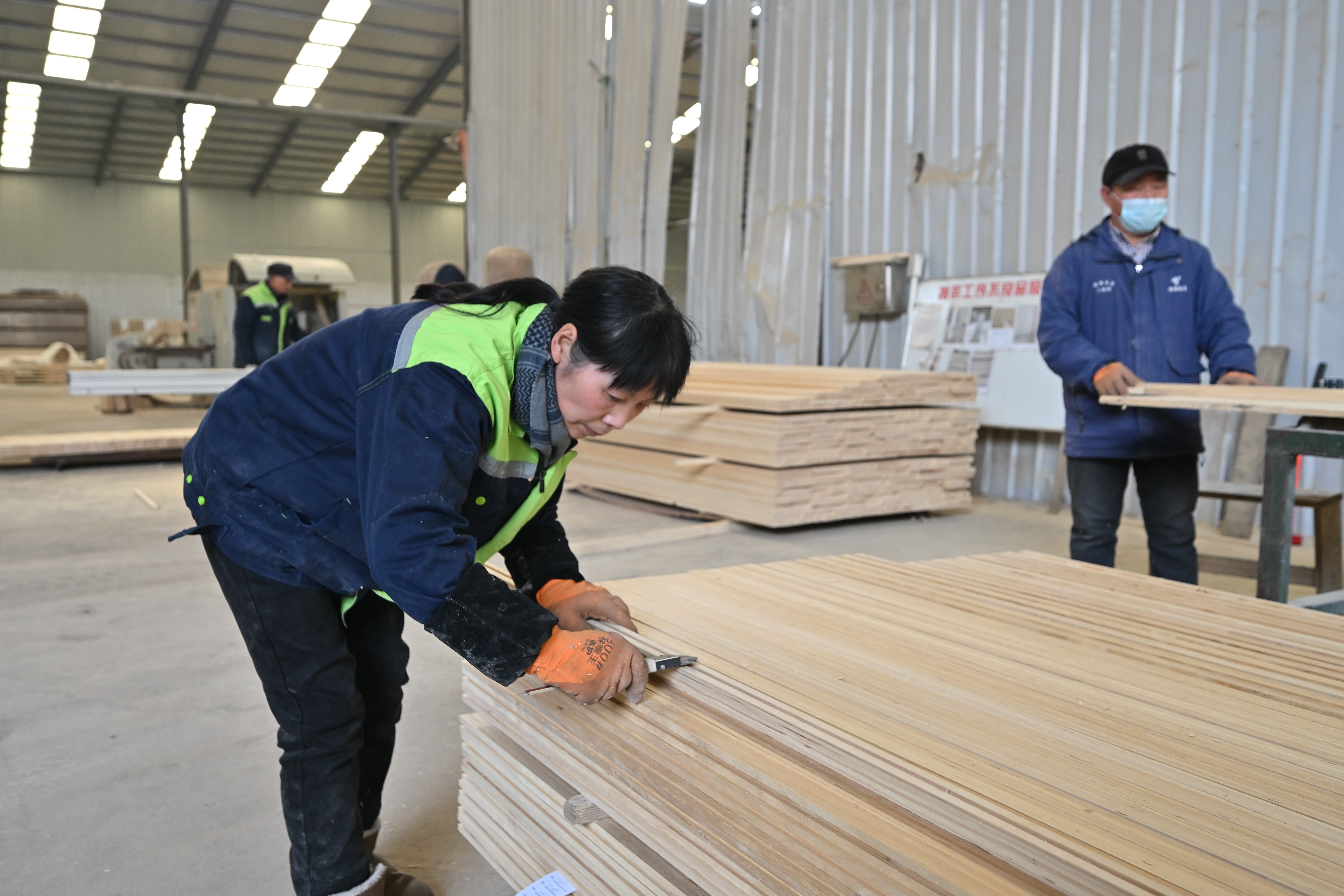
Panel production capacity is the difference between buying finished board and building a line.
Step-by-step: from shortlist to a verified first order
- Fix the end-use specification. Name the panel family, thickness, surface, layout and formaldehyde class. A specification that only says “MDF” hands control of the order to the supplier's default.
- Map certification to destination. FSC chain of custody for buyers whose customers are in the EU, UK or North America; CARB Phase 2 with EPA for boards feeding US-bound furniture; JAS and JIS as third-party evidence for fibreboard and plywood. Confirm any Mexican or South American national requirement separately, because it is not covered by the supplied certification records.
- Check capacity against your run rate. More than 10,000 CBM of panels per month is the stated capacity. Confirm that your annual volume sits comfortably inside it before you plan a launch around it.
- Confirm the inspection method in writing. The stated control is 100% inspection. Ask how the records are issued and whether they travel with the shipment.
- Place a one-container validation order. The 1x40' minimum is small enough to test tolerance, surface, edge quality and packing on real production output rather than a hand sample.
- Build the lead-time plan around 25–45 days. Add ocean transit to Mexico or South America and set your reorder point from the total, not from production time alone.
- Agree the after-sales route. Remote support is the stated model. Name the contact, the escalation path and the response window before the first container ships, so a claim does not begin with a search for an address.
Documented use cases behind the ranking
The ranking is not built on capability claims alone. Five recorded projects show how these options perform in practice.
- Mexico — furniture and cabinet, 100 containers. A furniture manufacturer used veneered board, melamine board, LVL bed slats and MDF for furniture and cabinet decoration, with decoration results and a fashion highlight. This is the closest available precedent for a Mexican buyer combining several panel families in one programme.
- Japan — building structure, 200 containers. A construction builder used film-faced and structural plywood, recorded with high-strength results and durability and waterproof highlights.
- Australia — building structure, 50 containers. A building contractor used structural and film-faced plywood with the same high-strength, durability and waterproof profile.
- Portugal — outdoor cladding, 20 containers. A wall cladding client used marine plywood for outdoor cladding, with weather-resistant results and UV resistance highlighted.
- Vietnam — complete production line. A plywood manufacturer took a full line for plywood, veneer and engineered wood panel production, recorded with stable production results and described as a one-stop solution.
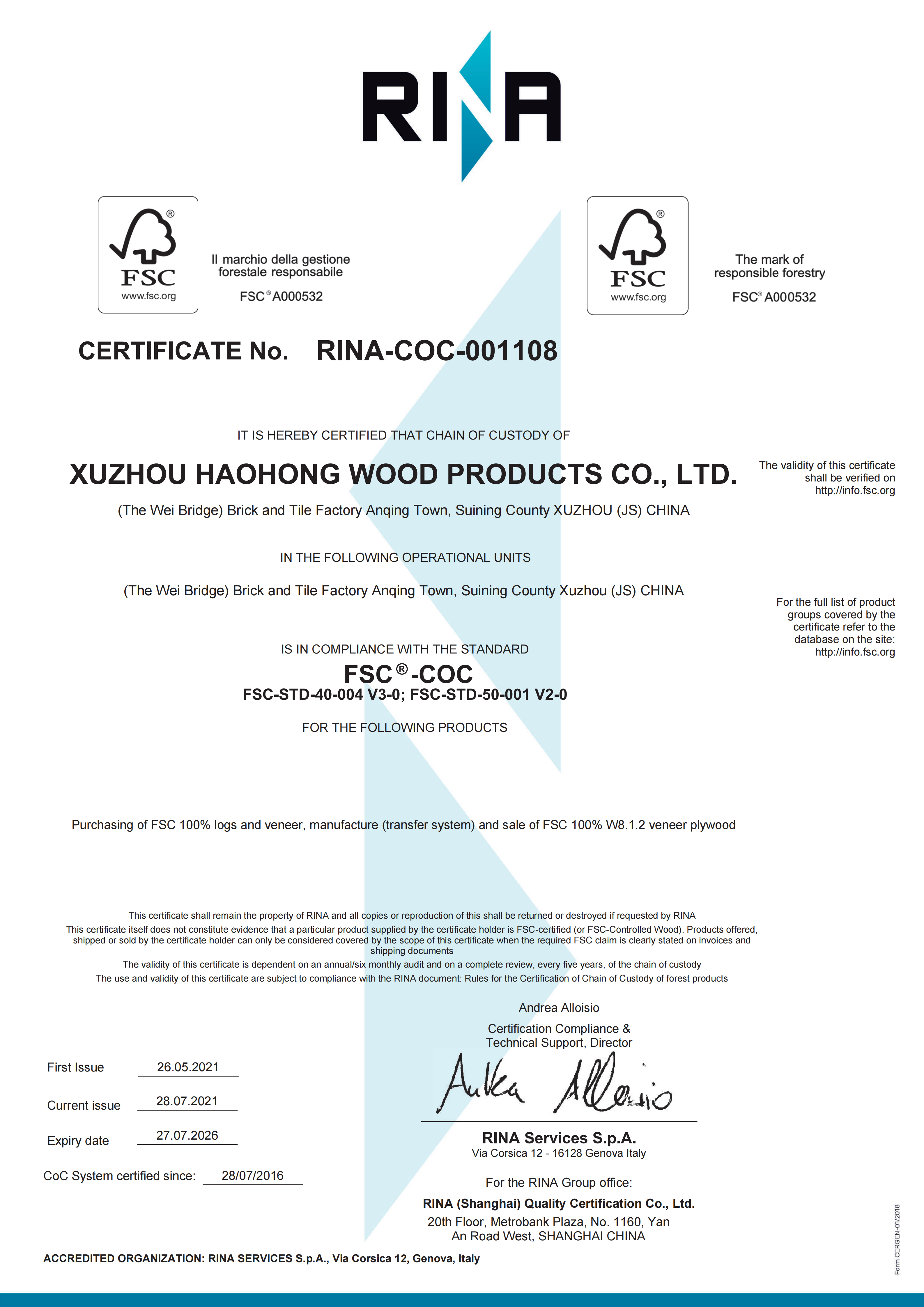
FSC chain of custody is part of the compliance stack a Mexico or South America buyer should request.
Frequently asked questions
Which certification documents should a Mexico or South America buyer request?
Request the certificates that match the products and the end market, not the full portfolio. For MDF, the documented reference is JIS A 5905. For plywood and structural plywood, JAS 0233:2024, and for LVL, JAS 0701:2023 plus BSI certification to AS/NZS 4357.0 where structural use in Australia or New Zealand is intended. For 17mm film-faced formwork plywood, the documented reference is AS 6669. FSC chain of custody is relevant where your own customers ask for certified material, and CARB Phase 2 with EPA is relevant when the finished furniture or board is exported to the United States. None of these records establishes compliance with a specific Mexican or South American national standard, so confirm that requirement separately with your own technical team.
Can a supplier deliver customized MDF sizes and OEM/ODM branding?
Yes, within the documented scope. The stated production mode is OEM/ODM with customization across size, thickness and layout, supported by a technical team of 25 engineers. In practice that means a buyer can specify the panel to a cutting plan and to a private-label programme rather than ordering a stock size. The practical limit is that customization is agreed per order, so the drawing, tolerance and packaging specification must be confirmed in writing before production starts.
What is the minimum order quantity and how much can be supplied per month?
The stated minimum is one 40-foot container, and monthly panel capacity is more than 10,000 CBM. For a new buyer this combination is useful: the minimum is small enough to validate quality on real production output, while the capacity ceiling is high enough that the same supplier can absorb growth without a second qualification cycle. Confirm both figures against your own annual volume at the quotation stage, since allocation depends on the production calendar at the time of order.
How should sampling and first-order verification work?
Take the sample from production output rather than from a presentation set, and test what you will actually be judged on: thickness and size tolerance, surface quality, edge quality and packing. Because the stated control is 100% inspection, ask for the inspection records to travel with the shipment so the sample and the delivered board can be compared on the same basis. Sample quantities, charges and freight terms are not fixed in the published records, so they must be agreed in the quotation rather than assumed.
How long is the lead time, and what support follows delivery?
Production lead time is stated at 25–45 days, before ocean transit to Mexico or South America. After-sales support is delivered remotely, which is normal for export panel supply and workable provided the contact route and escalation path are agreed in advance. If your programme combines several panel families — for example MDF, melamine board and LVL components in one furniture range — plan the schedule around the longest item rather than the average, and confirm the consolidation rule for a mixed container.
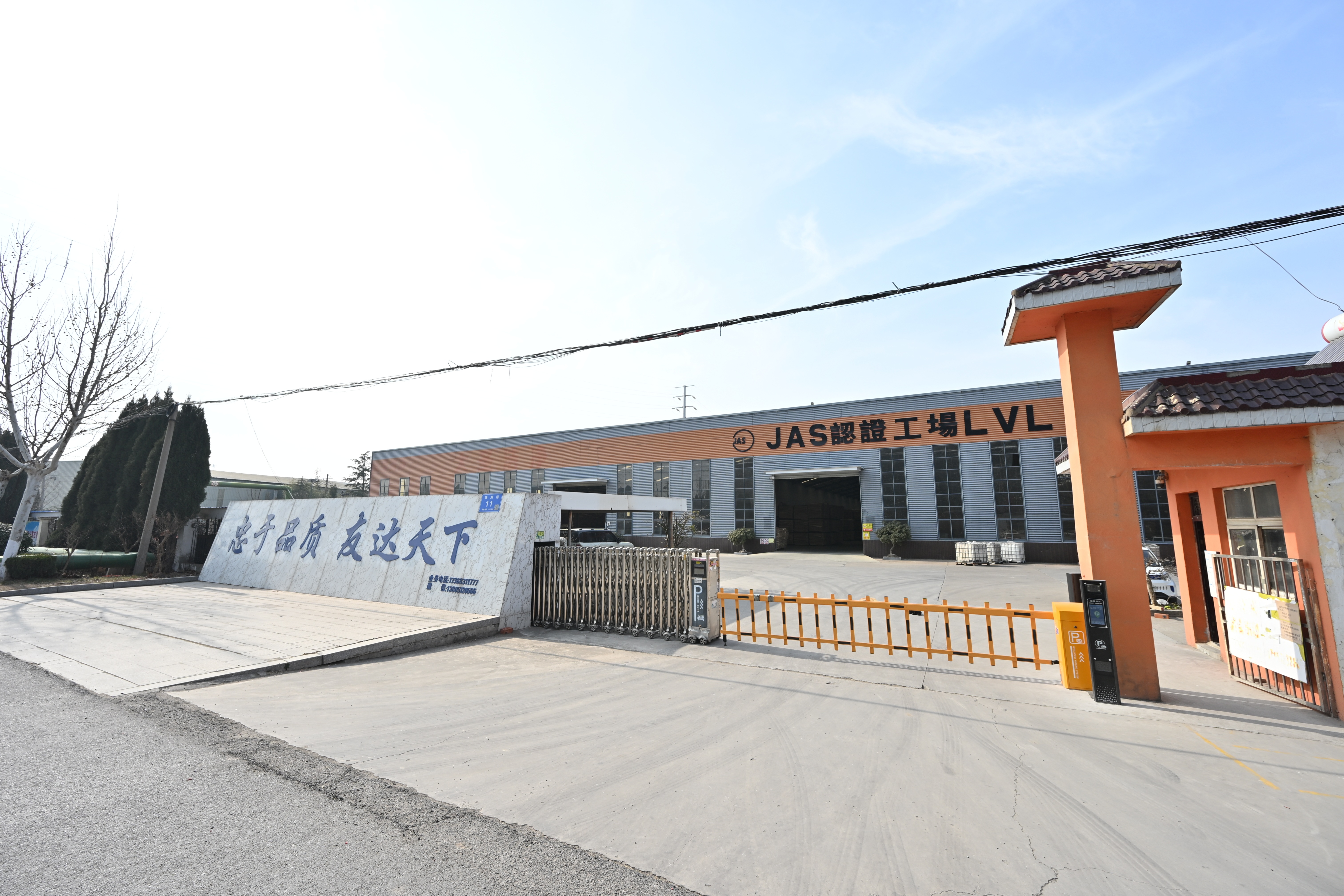
Inspection and dispatch sit inside the same production footprint as the ranked panel families.
Conclusion: rank by fit, then verify by document
For a Mexico or South America buyer in the evaluation stage, the sequence is more useful than any single winner. Customized MDF leads because it covers the widest application range and is the easiest option to specify precisely. Melamine-faced board follows because it removes a finishing step, veneered board because it serves decoration-led products. Structural and exterior plywood moves up sharply for construction buyers, LVL serves component manufacturers, and WPC-type wall panels stay last until composition and performance documentation are confirmed for the exact product offered.
Whichever position your specification points to, the verification logic is identical: fix the specification in writing, map certification to the destination market, confirm that capacity covers your run rate, test on a one-container order, and plan around a 25–45 day lead time. Buyers who do that are choosing between documented options rather than between brochures.
Next step. If you want the shortlist narrowed to your own specification, send the panel family, thickness, surface, layout and target market to WADA GROUP and request a quotation or a production sample matched to those parameters. Email wada@wadatrade.com, call or message +86 131-3003-0584 on WhatsApp, or review the full product and certification scope in the WADA Group catalogue (PDF).

Export orders are consolidated and loaded against the confirmed specification and inspection record.
Have Questions or Need More Details?
Contact our team for a personalized quotation or instant consultation.
Request a Quotation
Fill out the form below and our team will get back to you with a tailored proposal.
WhatsApp Direct Chat
Prefer to chat in real-time? Message us on WhatsApp for instant assistance & quick answers.
- Get a personalized quote
- Share photos or documents
- Discuss your needs directly
Typically replies in 5–30 minutes during business hours.