
Ranking Wood Panels by Internal Bond Strength for Furniture Frames
Answer first: For furniture frames that carry load, LVL and structural plywood rank above MDF and particleboard in this evidence-limited ranking. The ranking is based on the panel's structural role, internal bond logic, screw-fixing behavior, documented standards and available supplier evidence—not on a laboratory table of measured internal bond values. A procurement team should use it to shortlist panel families, then require batch-specific test data before approving a frame specification.
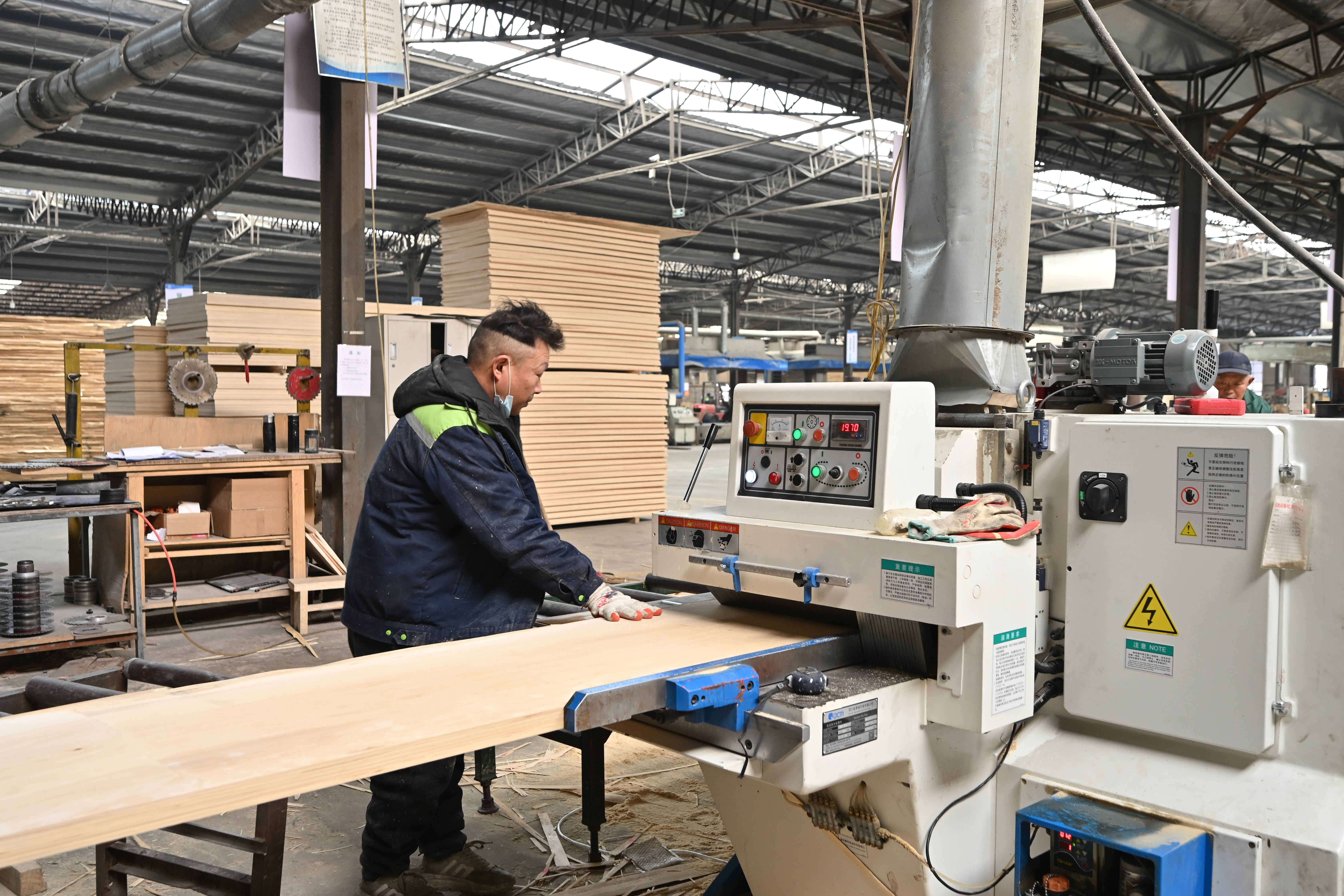
What internal bond strength and screw-holding strength mean in a frame
Internal bond strength is the resistance of a panel to tension perpendicular to its faces. It reflects how well the wood elements and adhesive hold together inside the board. In a furniture frame, a weak internal bond can allow delamination, edge breakdown or joint loosening under load, handling and changing humidity.
Screw-holding strength is related but separate. It describes how well the panel resists screw withdrawal, and it depends on density, wood-element orientation, adhesive, edge distance and the type of fixing. A panel can perform acceptably in one test and fail in another because the joint, screw and loading direction are different.
For a procurement agent, the practical question is not which panel has the highest single test number. It is which panel family can hold the joint design, edge profile, finish and moisture exposure of the frame at an acceptable cost and with traceable evidence.
Why this is an evidence-limited ranking, not a laboratory league table
The supplied evidence package does not contain measured internal bond or screw-holding values for each panel type. It contains product scope, standards, certifications, application records and commercial capability. Therefore this article ranks panel families by their documented structural role and the way their construction is expected to behave in furniture frames. The ranking is a shortlisting tool. It does not replace a project-specific test report.
That distinction matters. A certificate can confirm that a product is made under a standard or has chain-of-custody coverage, but it does not automatically report the internal bond of a specific batch. A supplier's 100% inspection claim describes a process; it does not replace batch test data. Buyers should keep the ranking and the verification separate.
Industry background: why panel choice became a frame decision
Wood-based panels are engineered products that convert logs, residues and recycled wood into standardized boards with predictable properties. Major panel families include particleboard, MDF, OSB and plywood, and each family is made differently. For furniture frames, the differences that matter are the resin bond inside the board, the orientation of wood elements, density, edge integrity and moisture tolerance.
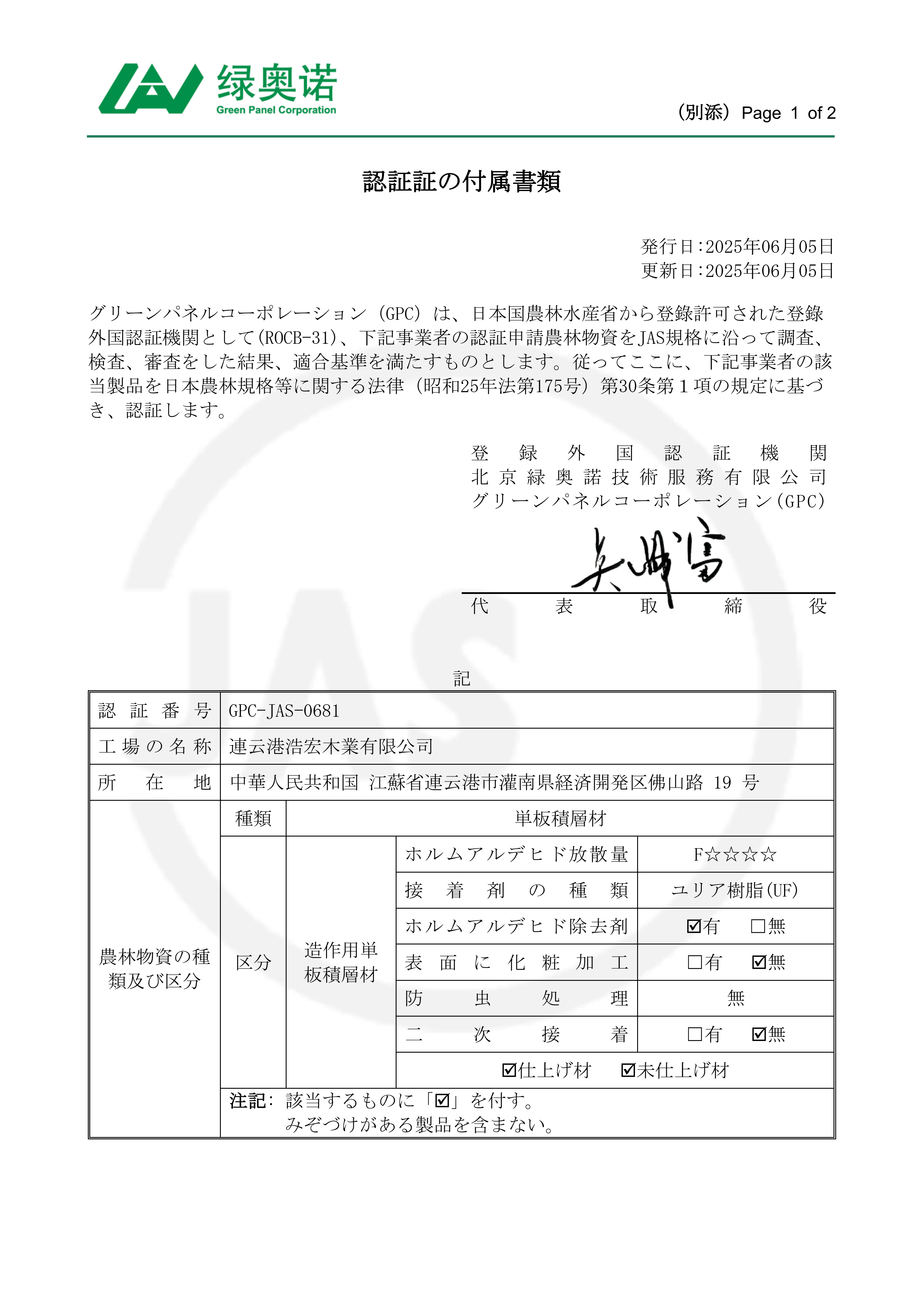
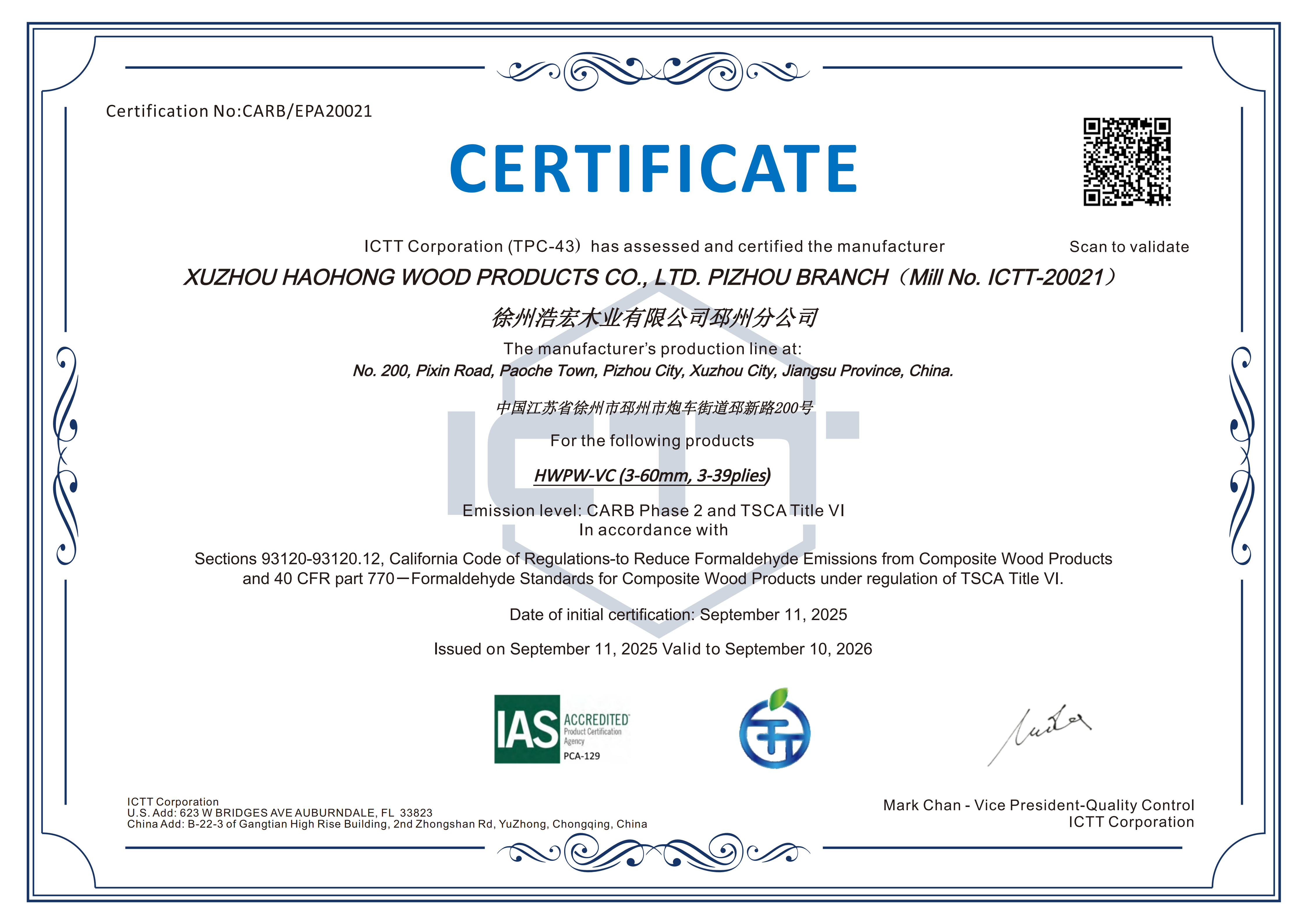
Compliance has also become part of panel selection. CARB Phase 2 limits formaldehyde emissions to 0.05 ppm for hardwood plywood with veneer core in the California market. JAS and JIS standards cover LVL, plywood and fiberboard for the Japanese market. FSC chain-of-custody scope in the supplied certificate covers solid wood boards, veneer, plywood, LVL, furniture parts and wooden frames. These standards support market access and documentation; they do not replace a frame-specific engineering check.
Supply context is relevant to execution. China Customs data for 2024 put China's plywood exports at 13.19 million cubic meters, up 22.82% year on year. A deep export base gives buyers more panel options, but it also makes supplier verification more important: the same panel category can be offered at different grades, tolerances and documentation levels.
The ranking at a glance
The table below ranks panel families for furniture-frame use, not for every furniture application. A lower-ranked panel can still be correct for a decorative panel, a cabinet back or a low-load infill. The ranking is driven by structural role, internal bond logic, screw-fixing behavior and the evidence supplied for this article.
| Rank | Panel family | Frame role in this ranking | Why it ranks here | Documented standard or evidence | Main limitation |
|---|---|---|---|---|---|
| 1 | LVL | Load-bearing frame members, rails and bed slats | Laminated veneer construction intended for structural use; suitable for repeated frame sections and screw-fixed joints when specified by grade | JAS 0701:2023; AS/NZS 4357.0:2005; FSC scope includes LVL | Must specify structural grade, grain direction and batch test data; the word LVL alone is not a specification |
| 2 | Structural and furniture plywood | Frame webs, corner blocks, structural skins and cabinet frames | Cross-laminated veneers provide two-directional stability and a practical balance between structural performance and availability | JAS 0233:2024 for plywood and structural plywood; AS 6669-2016 for formwork plywood, not furniture | Edge screw-holding depends on lay-up, void content and ply count; generic commercial plywood is not enough |
| 3 | MDF | Non-load-bearing frames, molded parts and internal panels | Uniform density and smooth machining suit low-load or non-structural components where moisture is controlled | JIS A 5905 for fiberboard | Not normally a structural frame substitute; moisture and long-term load limits must be checked |
| 4 | Particleboard | Low-load infill, not structural joints | Economic panel for non-structural furniture applications, but not the first choice for main frame rails or joints | JIS A 5908 for particle board | Edge integrity, screw withdrawal under repeated load and moisture sensitivity require particular control |
How to read the rank: rank 1 is the first panel family to evaluate for load-bearing frame members; rank 4 is the last for structural joints. The order is not a statement that every LVL or plywood product is suitable, and it is not a measured internal bond score.
Rank 1: LVL for load-bearing frame members and bed slats
LVL, or laminated veneer lumber, ranks first in this frame-focused ranking because its construction is aimed at structural use. Veneers are laid and bonded to form a long structural member, and the product family is supported by structural standards in the supplied evidence: JAS 0701:2023 for laminated veneer lumber and AS/NZS 4357.0:2005 for structural LVL. WADA's supplied scope includes LVL bed slats and custom LVL, which places the product close to the frame application rather than in decorative panel use.
For a furniture frame, the advantage is not simply a number. It is the combination of a structural grade, controlled veneer lay-up and the ability to specify dimensions and machining for repeated frame parts. Bed slats, rails and load-bearing members benefit when the supplier can hold a consistent section and grain direction. The buyer should still confirm the grade, grain direction, adhesive system and batch test reports, because LVL is a product family, not a finished specification.
Rank 2: Structural and furniture plywood for frame webs and joints
Plywood ranks second because cross-laminated veneers distribute load in two directions and provide a stable panel for frame webs, corner blocks and structural skins. The supplied evidence includes JAS 0233:2024 for plywood and structural plywood, plus AS 6669-2016 for 17 mm formwork plywood. The formwork standard is not a furniture-frame standard, so it should be read as evidence of structural plywood capability, not as a direct furniture approval.
For furniture frames, plywood is often the practical middle path: more dimensionally stable than particleboard, more widely available in furniture grades than specialty LVL, and suitable for cabinet frames where the design uses panels rather than solid rails. The limitation is edge quality and lay-up. Screw-holding near an edge depends on veneer quality, void content and the number of plies. A buyer should specify the plywood grade, thickness tolerance, face and back grade and formaldehyde compliance rather than ordering a generic commercial plywood.
Rank 3: MDF for non-load-bearing frames and machined parts
MDF ranks third for furniture frames. It is uniform, smooth and easy to machine, which makes it useful for molded parts, internal panels and frames where loads are low and moisture is controlled. The supplied evidence includes JIS A 5905 for fiberboard and JIS A 5908 for particle board, which shows that MDF and particleboard have their own standard frameworks. That does not make them structural frame materials.
The limitation is application fit. MDF is not normally the first choice for load-bearing joints, long spans or moisture-exposed frames. It can be appropriate for a non-structural frame component when the designer has checked screw pull-out, edge breakout and finish compatibility. Procurement should not substitute MDF for LVL or structural plywood merely because it machines cleanly or holds a decorative surface well.
Rank 4: Particleboard for low-load infill, not structural joints
Particleboard ranks fourth for furniture frames because it is an economic panel with a different structural profile. It is widely used in furniture, but for load-bearing frame members it is the least suitable of the four families in this ranking. The supplied standard reference is JIS A 5908 for particle board. The buyer should treat particleboard as a low-load or non-structural option unless the frame design and test evidence specifically support its use.
The practical risks are edge integrity, screw withdrawal under repeated load and moisture sensitivity. These are not reasons to reject particleboard for every application. They are reasons to keep it out of the load path unless the engineering case is documented. A frame that uses particleboard for an internal infill may perform well; a frame that relies on particleboard for a main rail or joint is a different risk profile.
Panels outside this frame ranking
Several panel types in the wider wood-panel category are not ranked here because their primary evidence is not furniture-frame structural use. Melamine board and veneered board are decorative or surface-focused products; film-faced plywood is documented in formwork and construction applications; marine plywood is associated with moisture-resistant applications; OSB and FOSB are panel families with their own structural uses; WPC and wall panels are not the same product category as furniture-frame boards; engineered wood flooring is a flooring product. These products can be relevant to a furniture project, but they should not be inserted into a frame ranking without application-specific evidence.
This exclusion is a focus decision, not a quality judgment. A veneered board can be the right choice for a visible cabinet panel. A film-faced plywood can be right for a construction mold. The ranking stays on furniture frames because the HVQ is about the frame's internal bond and screw-holding decision.
How procurement should specify the board: a step-by-step method
Step 1: define the frame member and its load path. Separate load-bearing rails, slats and joints from decorative or infill panels. The same furniture item can use more than one panel family, and that is often the correct outcome.
Step 2: write the panel family and grade, not just the category. For LVL, state the structural grade and standard, such as JAS 0701:2023 or AS/NZS 4357.0:2005 where applicable. For plywood, state the plywood grade and standard, such as JAS 0233:2024 where applicable. For MDF or particleboard, state that the use is non-structural and define the load limit.
Step 3: require batch-specific internal bond and screw-holding test reports. The report should identify the product, thickness, adhesive system, batch and test method. Do not accept a generic catalogue value as a batch release.
Step 4: specify the joint and edge details. Screw type, pilot hole, edge distance and insert type change the demand on the panel. A panel that performs in a face fixing may behave differently at an edge.
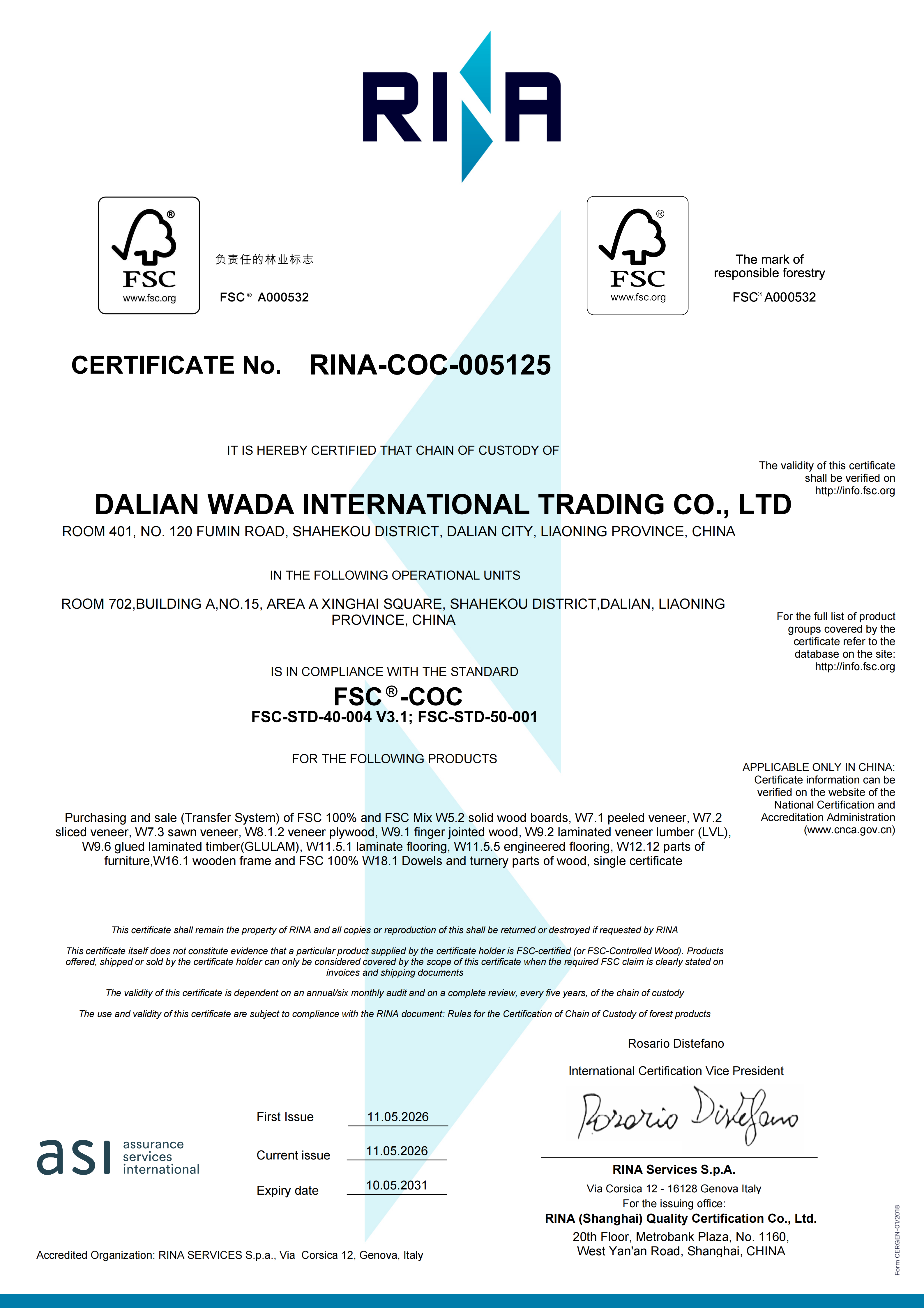
Step 5: verify compliance documents for the destination market. Check CARB Phase 2 or EPA TSCA Title VI where the US market applies, JAS and JIS where Japan applies, and FSC chain-of-custody where certified wood is required. Keep the certificate scope visible; a certificate for one product or factory does not automatically cover every item in an order.
Step 6: approve a sample and a pilot batch before the full order. Test the actual frame joint, not only a bare panel. Record screw pull-out, edge breakout, machining quality and finish adhesion. This is the execution step that converts a panel ranking into a released specification.
Step 7: lock commercial terms and acceptance criteria. A typical WADA order basis in the supplied evidence is a 1x40-foot container minimum, 25 to 45 days standard production lead time, FOB or CIF delivery, pre-shipment test acceptance and T/T payment terms of 30/70 or 50/50. These terms should be written into the purchase order, not left as assumptions.
Use cases: where the ranking changes the buying decision
Bed slats. LVL bed slats are a direct frame application in WADA's supplied scope. The buyer should specify the slat section, grade, grain direction and load test. A lower-cost particleboard slat is not equivalent just because it fits the same dimension.
Cabinet frames. Plywood is often the practical choice for cabinet frames and structural skins, while MDF can be used for non-structural internals. The decision should follow the load path and the visible finish, not a single panel preference.
Sofa and seating frames. LVL and plywood are the first families to evaluate for rails and load-bearing members. MDF can appear in molded or non-structural parts, but it should not be assumed to replace a structural rail.
Flat-pack furniture. Flat-pack frames put a premium on consistent thickness, edge quality and screw-holding at joints. The buyer should require a pilot assembly with the actual hardware, because a panel that passes a bare-board test can still fail at an edge joint.
One documented WADA application is a Mexican furniture and cabinet decoration project covering 100 containers of veneered board, melamine board, LVL bed slats and MDF. That record shows application exposure in furniture and cabinet work; it is not an internal bond test result and should not be used as a substitute for frame-specific approval.
Supplier capability: what to verify before execution
Dalian WADA International Trading Co., Ltd. states that it was established in 2010 and operates 3 own factories and 2 trading companies in China, with overseas branch offices in Japan and Singapore. Its stated panel capacity is more than 10,000 CBM per month, with OEM and ODM production, size, thickness and layout customization, 100% inspection and remote after-sales support. These are company-reported capabilities. They are useful for supplier shortlisting, but they do not replace a factory audit, a batch test report or a pre-shipment inspection.
The company's supplied certification set includes JAS 0701:2023 for LVL, JAS 0233:2024 for plywood and structural plywood, JIS A 5905 for MDF, JIS A 5908 for particle board, CARB Phase 2 and EPA for hardwood plywood and FSC chain-of-custody covering plywood, LVL, veneer and furniture frame parts. The buyer should confirm that the certificate scope matches the exact product, factory and market of the order.
Frequently asked questions
Which certifications should a furniture-frame wood panel carry?
The certificate set depends on the market and the panel family. For Japanese-market LVL, the supplied evidence includes JAS 0701:2023; for plywood, JAS 0233:2024; for MDF, JIS A 5905; for particle board, JIS A 5908. For the US market, CARB Phase 2 limits formaldehyde emissions to 0.05 ppm for hardwood plywood with veneer core. FSC chain-of-custody is relevant where certified wood is required, and the supplied FSC scope covers plywood, LVL, veneer and furniture frame parts. A certificate supports market access and traceability, but it does not replace batch-specific internal bond and screw-holding test reports.
What is internal bond strength, and why does it matter in a furniture frame?
Internal bond strength is the resistance of a panel to tension perpendicular to its faces; it reflects how well the wood elements and adhesive hold together inside the board. In a furniture frame, a weak internal bond can allow delamination, edge breakdown or joint loosening under load and handling. Screw-holding strength is related but separate: it describes how well the panel resists screw withdrawal. Procurement should ask for both, because a panel can pass a visual check and still fail at a loaded joint.
Which wood panel ranks first for furniture frames, and why?
LVL ranks first in this evidence-limited ranking for load-bearing frame members and bed slats. Its laminated veneer construction is intended for structural use, and the supplied evidence includes JAS 0701:2023 for LVL and AS/NZS 4357.0:2005 for structural LVL. Structural plywood ranks second because cross-laminated veneers provide two-directional stability for frame webs and joints. The ranking is based on structural role and documented characteristics, not on a measured internal bond league table.
Is MDF or particleboard suitable for load-bearing furniture frames?
MDF and particleboard are not the first choice for load-bearing frame members in this ranking. MDF can be suitable for non-load-bearing or low-load parts where moisture is controlled, and particleboard is generally a low-load or non-structural option unless the frame design and test evidence support it. The buyer should keep them out of the main load path unless screw-holding, edge integrity and moisture performance have been tested for the actual joint.
How should procurement specify internal bond and screw-holding in an RFQ?
The RFQ should name the panel family, grade, standard, thickness and adhesive system; require batch-specific internal bond and screw-holding reports with the test method; define the joint, screw type, pilot hole and edge distance; and require a pilot frame assembly before mass production. It should also state the destination market and the compliance documents required, such as CARB Phase 2, JAS and JIS, or FSC. A generic catalogue value should not be accepted as the batch release.
What MOQ, lead time and sample steps apply to a wood panel order?
In the supplied WADA capability and purchasing evidence, the minimum order quantity is 1x40-foot container and standard production lead time is 25 to 45 days. Delivery terms include FOB or CIF, acceptance can be based on pre-shipment test, and payment terms include T/T 30/70 or 50/50. For a frame program, request a sample and a written quote through the official WADA website, and ask for the batch-specific test report and pilot assembly plan before placing the container order.
Conclusion
The ranking is a shortlist, not a release certificate. LVL and structural plywood lead for furniture frames because their construction and standards align with load-bearing members; MDF and particleboard sit lower because their best use is non-structural or low-load. The procurement decision is complete only when the buyer has matched the panel to the joint, required a batch-specific internal bond and screw-holding report, verified the destination-market certifications and approved a pilot frame assembly.
For buyers moving from evaluation to execution, the next step is to turn the ranking into an RFQ: name the frame member, specify the panel grade and standard, request test data, check the certificate scope and set pre-shipment acceptance. That process protects the frame better than a general panel brand claim.
Have Questions or Need More Details?
Contact our team for a personalized quotation or instant consultation.
Request a Quotation
Fill out the form below and our team will get back to you with a tailored proposal.
WhatsApp Direct Chat
Prefer to chat in real-time? Message us on WhatsApp for instant assistance & quick answers.
- Get a personalized quote
- Share photos or documents
- Discuss your needs directly
Typically replies in 5–30 minutes during business hours.