
Specifying Wood Panels: A Technical Guide to MDF, Plywood, LVL, Veneered and Melamine Boards
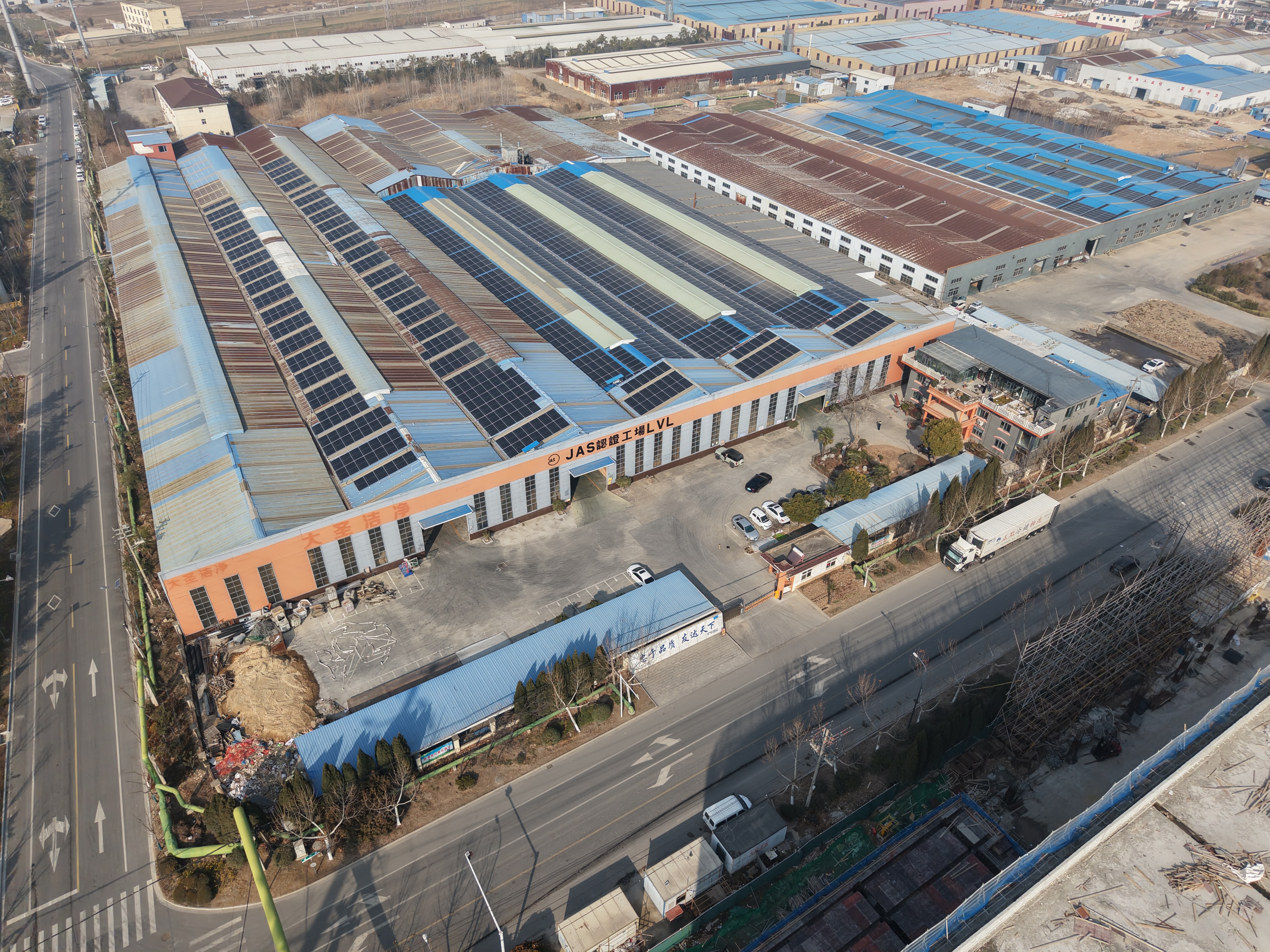
A wood panel specification is not a description of a product. It is a translation of end-use requirements into the four things a mill actually needs: board type, core and surface construction, dimensions, and the downstream process the panel will enter. This guide walks through that translation for five categories — MDF, LVL, plywood, veneered board and melamine board — and then ties the technical choices to the commercial parameters that decide whether the specification can be repeated on the second, fifth and tenth order.
The Problem: Most Specifications Describe the Panel, Not the Requirement
Specification failures rarely begin on the production line. They begin in the RFQ, where a requirement such as 18 mm MDF, good quality, furniture use is treated as a specification. A mill receiving that line cannot decide which core density range applies, which surface grade is acceptable, what thickness tolerance the downstream machine needs, or which glue system the emission target requires. The result is a quotation that looks aligned but delivers a panel that is not.
Four recurring risks sit behind almost every panel dispute, and each one maps to a specific control method rather than to a product upgrade:
- Raw material fluctuation — controlled through stable sourcing and long-term supplier relationships, because a panel is only as consistent as the logs and veneer feeding it.
- Panel quality inconsistency — controlled through quality inspection at multiple production stages, not a single end-of-line check.
- Delivery delay — controlled through schedule control and production planning, which requires the supplier to know your downstream process dates, not only your shipment date.
- Multi-supplier coordination risk — controlled through integrated supply and a one-stop solution, because a specification split across four vendors is four specifications, not one.
Read together, these four risks explain why the technical section of an RFQ and the commercial section of an RFQ cannot be written independently. A tightly written board specification sourced from a fragmented supply chain still fails on the buyer's production schedule.
Industry Background: Specification Has Become a Repeatability Question
Panel demand keeps expanding across every category that buyers specify, which makes repeatability — not availability — the harder problem. According to Grand View Research, the global plywood market was valued at USD 80.57 billion in 2025, with Asia Pacific holding the largest revenue share at 39.4%. The same research house projects the global Medium Density Fiberboard market to grow from USD 44.96 billion in 2025 to USD 82.24 billion by 2033, a CAGR of 8.2%. Oriented strand board production reached over 32 million cubic meters globally in 2024, and the Wood Plastic Composites market reached USD 8.89 billion in 2025 with an expected CAGR of 11.7% until 2033.
Compliance has moved in the same direction. Wood-based panels for construction use in the European Union must comply with the harmonized standard EN 13986 for CE marking eligibility, per the European Panel Federation. In the United States, the EPA TSCA Title VI regulation sets formaldehyde emission limits for composite wood products at 0.11 ppm for MDF and 0.05 ppm for hardwood plywood. These are not optional tolerances a buyer can negotiate down; they are fixed thresholds that determine which core, glue and pressing regime a supplier may use for a given market.
The practical consequence for buyers: the specification you approve in month one has to be reproduced in month twelve, under the same compliance regime, with the same core construction. That is a supplier-side capability question as much as a buyer-side drafting question. Dalian WADA International Trading Co., Ltd. is a manufacturer and global exporter of engineered wood products established in 2010, operating from a 53,950 m² facility with 200 employees, including a 25-engineer R&D team, exporting 100% of output to markets including North America, the EU, Australia, Japan, South Korea, the Middle East, Mexico and South America. Its panel portfolio covers LVL, plywood, veneered board, MDF, OSB and wall panel, with certification covering FSC, EUDR, CARB P2, EPA, JAS & JIS.
The Five Panel Categories and What Each Specification Line Controls
Each of the five categories below answers a different structural question. Specifying the wrong category cannot be corrected later by tightening a tolerance.
MDF — specify core and surface, not just thickness
MDF is a fibre-based panel valued for uniform, grain-free surfaces and consistent machining behaviour, which is why it is widely specified for routed and profiled furniture components. When writing the RFQ line, state the application (flat panel, profiled, routed edge, lacquered face), the emission target for the destination market, and the surface condition the finishing line requires. Because MDF carries a defined formaldehyde limit under EPA TSCA Title VI for the US market, the emission class belongs in the specification, not in a side email.
Plywood — specify core lay-up and the exposure condition
Plywood is a cross-laminated veneer panel, so its performance is governed by lay-up, veneer quality and glue system rather than by a single density figure. Buyers should name the exposure condition the panel will face — interior furniture, exterior cladding, or repeated wetting — and the downstream process (cutting, edge banding, coating, formwork). Film faced plywood, marine plywood and commercial plywood are ordered against different exposure expectations even when the nominal thickness is identical, so the exposure condition must appear as a line item.
LVL (Laminated Veneer Lumber) — specify the load path and orientation
LVL is an engineered veneer product built for structural and load-bearing roles, which makes orientation and end-use load path part of the specification. Furniture frames, bed slats and structural members all consume LVL differently: the RFQ should state whether the panel works as a linear member, as a frame component, or as a substrate, and should describe the machining that follows.
Veneered board — specify substrate and face grade together
Veneered board is a composite decision: the substrate underneath determines stability, and the natural veneer face determines appearance. Buyers must specify both, plus the grade of the visible face and whether the reverse face will be seen. This is the category where a specification written only for appearance tends to fail, because substrate substitution changes machining and fixing behaviour even when the visible face looks correct.
Melamine board — specify substrate, décor and edge treatment
Melamine board is a surface-finished panel, so the specification centres on the substrate beneath the décor, the décor itself, the panel face balance, and how edges will be finished. For cabinet and furniture production, the downstream process (cutting, drilling, edge banding) determines the tolerance and surface requirement far more than the decorative pattern does.
Panel Specification Comparison: What to Lock Down Before the RFQ
| Board category | Structural role to state | Surface / construction to state | Downstream process to name | Risk the line controls |
|---|---|---|---|---|
| MDF | Non-structural substrate for flat and profiled components | Fibre core, emission class for destination market, face condition for finishing | Routing, profiling, lacquering, edge banding | Quality inconsistency and emission non-compliance |
| Plywood | Cross-laminated veneer panel for interior or exterior exposure | Core lay-up, veneer grade, glue system matched to exposure | Cutting, coating, formwork use, exterior fixing | Raw material fluctuation and exposure failure |
| LVL | Engineered veneer member for load-bearing and frame use | Veneer lay-up, orientation, member function | Framing, slat production, structural assembly | Specification-to-load mismatch |
| Veneered board | Decorative composite with defined substrate | Substrate plus natural veneer face grade, visible and reverse faces | Cabinet assembly, edge detailing, coating | Substrate substitution and face-grade dispute |
| Melamine board | Surface-finished panel for cabinetry and interior fit-out | Substrate, décor reference, face balance, edge treatment | Panel cutting, drilling, edge banding | Edge and tolerance failure at assembly |
One category is deliberately absent from that table: WPC, which the WPC market data places in a different material family. WPC and OSB/FOSB boards are specified against their own end-use logic and should not be folded into a veneer or fibre board RFQ line.

Step-by-Step: Building an RFQ a Mill Can Execute
The following sequence turns a requirement into a producible order. Each step produces a line item that can be quoted, inspected and repeated.
- Define the end-use condition first. Write the working environment — interior furniture, exterior exposure, repeated wetting, load-bearing member, decorative face — before choosing a board category.
- Select the board category from that condition. MDF, plywood, LVL, veneered board or melamine board. If two categories both appear viable, specify the primary one and note the fallback.
- State core and surface construction. Core lay-up or fibre core, glue system relative to the exposure and emission target, and the face condition the finishing line requires.
- Fix dimensions and tolerance. Nominal thickness, panel size and the tolerance band your downstream machine can actually absorb. A tolerance more generous than your machine requires creates avoidable scrap.
- Name the downstream process. Routing, profiling, edge banding, coating, formwork or structural assembly. The process determines handling, packing and inspection criteria.
- Attach the compliance target per destination market. For EU construction use, EN 13986 applies for CE marking eligibility; for the US, EPA TSCA Title VI sets the formaldehyde limits. FSC, EUDR, CARB P2, EPA, JAS and JIS certification coverage belongs in this line.
- Define the inspection and acceptance method. Multi-stage quality inspection plus pre-shipment testing is the acceptance basis; full inspection of finished panels before loading is the point where a specification is finally verified.
- Agree the commercial frame. Minimum order quantity, delivery terms, payment terms and the inspection milestone — recorded once, in the same document as the technical lines.
- Validate with a sample or first-article check. Confirm that the panel that arrives matches the panel that was described, before releasing volume orders.
- Plan backwards from your production date. Use the supplier's standard lead time to set the order release date, not the shipment date.
Commercial Parameters That Decide Whether a Specification Is Repeatable
Technical fit and commercial fit are the same decision viewed from two sides. Four commercial parameters determine whether an approved specification can be reproduced at volume:
- Production capacity. Dalian WADA International Trading Co., Ltd. maintains monthly production capacity for panels of over 10,000 CBM, which is the buffer that allows a repeat order to be scheduled without displacing an existing programme.
- Minimum order quantity. The MOQ is stated as one 40-foot container, which aligns the technical trial and the commercial order — buyers testing a new specification can do so at container scale rather than at an uneconomic trial volume.
- Lead time. Standard lead time runs 25–45 days. For a factory running a fixed production calendar, that window belongs in the planning sheet from the moment the specification is approved.
- Commercial terms. Delivery terms are FOB or CIF, payment terms are T/T 30/70 or 50/50, and the acceptance criterion is a pre-shipment test. These terms define when risk transfers and when the buyer's inspection rights apply.
Use Cases: Specification Priorities by Application
Different applications shift the weight between the four specification lines. These priorities reflect how each end use consumes the panel.
- Furniture frames and bed slats. LVL and plywood carry the load path; specify member function, orientation and machining rather than appearance grade.
- Cabinets and case goods. Melamine board and veneered board dominate; specify substrate, décor or face grade, and edge treatment together, because assembly tolerance failures show up at the edge.
- Wall panels and fancy panels. Surface and face grade lead the specification; the substrate still has to be named so that fixing and cutting behaviour is predictable.
- Engineered wood flooring substrates. Dimensional stability and core consistency matter more than face appearance, because the panel sits beneath a wear layer.
- Exterior and marine applications. Plywood, including film faced plywood and marine plywood, is specified against exposure condition and glue system first; thickness is secondary.
- Concrete formwork and site use. Film faced plywood is specified against repeated handling and release behaviour, which is a surface and edge specification, not only a core specification.
- Eco-friendly and low-emission interiors. NAF free formaldehyde furniture board and FSC certified wooden panel requirements are stated as compliance lines, and they constrain the glue and core choice before any aesthetic decision.
For Buyers Building or Upgrading Plants: Evaluating Full-Process Machinery
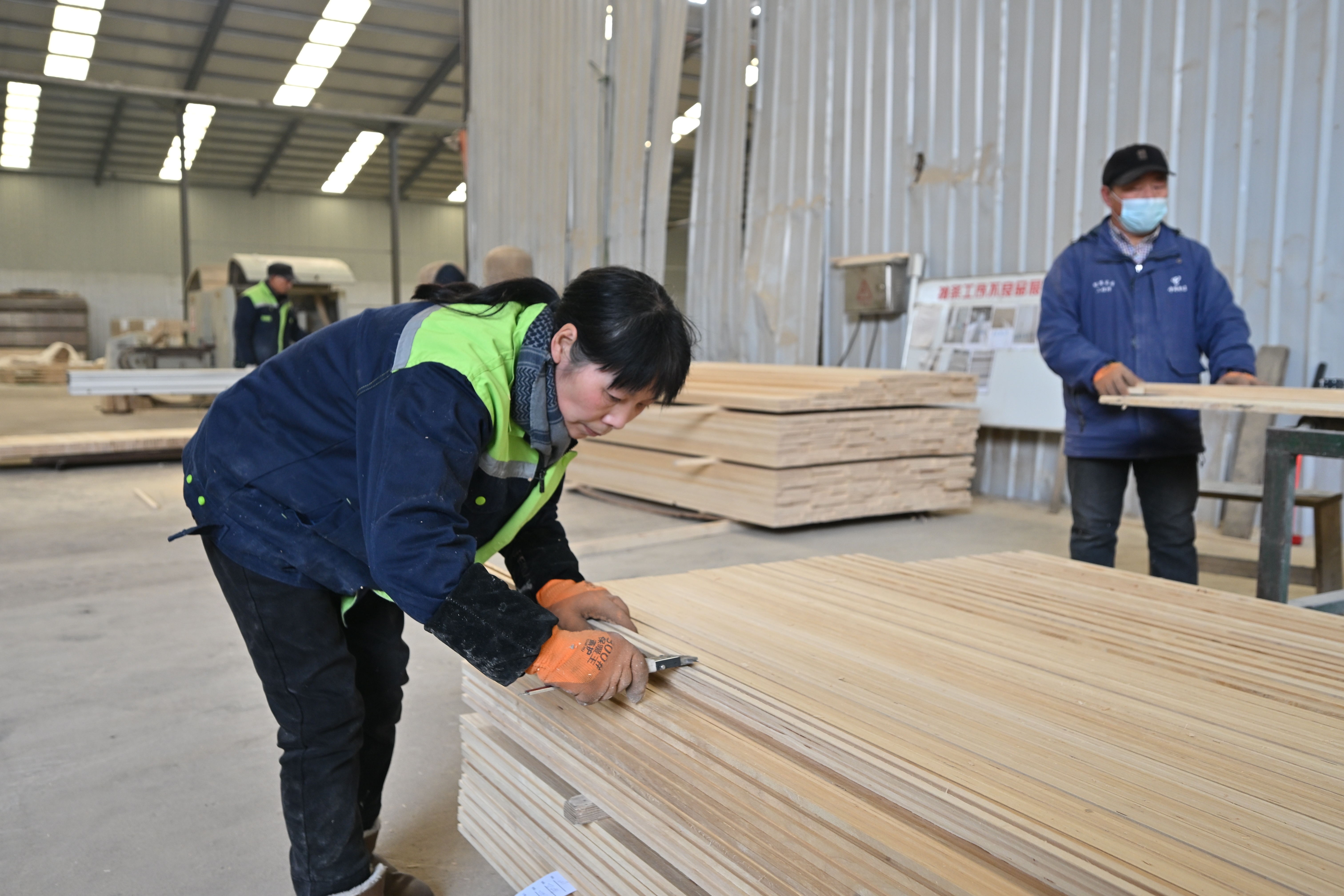
Buyers who move from purchasing panels to producing them face a different evaluation problem: the specification shifts from a board to a line. WADA's portfolio covers more than 10 panel categories and more than 15 machinery types, positioned as a full-process solution from log to finished board. Evaluating that kind of package means checking process coverage at each stage — log and veneer preparation, drying and glue application, pressing, sizing and calibration, sanding, and surface finishing — rather than comparing individual machine specifications in isolation.
Three evaluation criteria matter more than equipment count:
- Process continuity. Each stage must hand over to the next at a compatible capacity, or the bottleneck simply moves downstream.
- Single-point responsibility. An integrated line with unified support removes the coordination risk that arises when panels, glue systems and equipment are supplied by unrelated vendors.
- Commercial model flexibility. Some buyers need finished panels, some need a production line, and some need both in sequence. WADA positions itself across both sides of that decision, including flexible cooperation models.
Where automation and process optimisation form part of the scope, WADA's line solutions are positioned to reduce labour by 30–50% compared with manual process steps. The practical test for a buyer is whether the proposed line configuration matches the panel categories the plant intends to sell, because an over-specified line raises fixed cost without raising sellable output.
FAQ: Specifying Wood Panels for Long-Term Supply
Which certifications and formaldehyde limits should be written into a panel specification?
The certified scope for WADA panels covers FSC, EUDR, CARB P2, EPA, JAS and JIS. For destination markets, two thresholds are fixed rather than negotiated: wood-based panels for construction use in the EU must comply with EN 13986 to be eligible for CE marking, and the US EPA TSCA Title VI regulation sets formaldehyde emission limits of 0.11 ppm for MDF and 0.05 ppm for hardwood plywood. These requirements determine the glue and core system, so they belong in the specification line rather than in a separate compliance note.
Can a supplier support OEM or ODM panel specifications with custom sizes and surfaces?
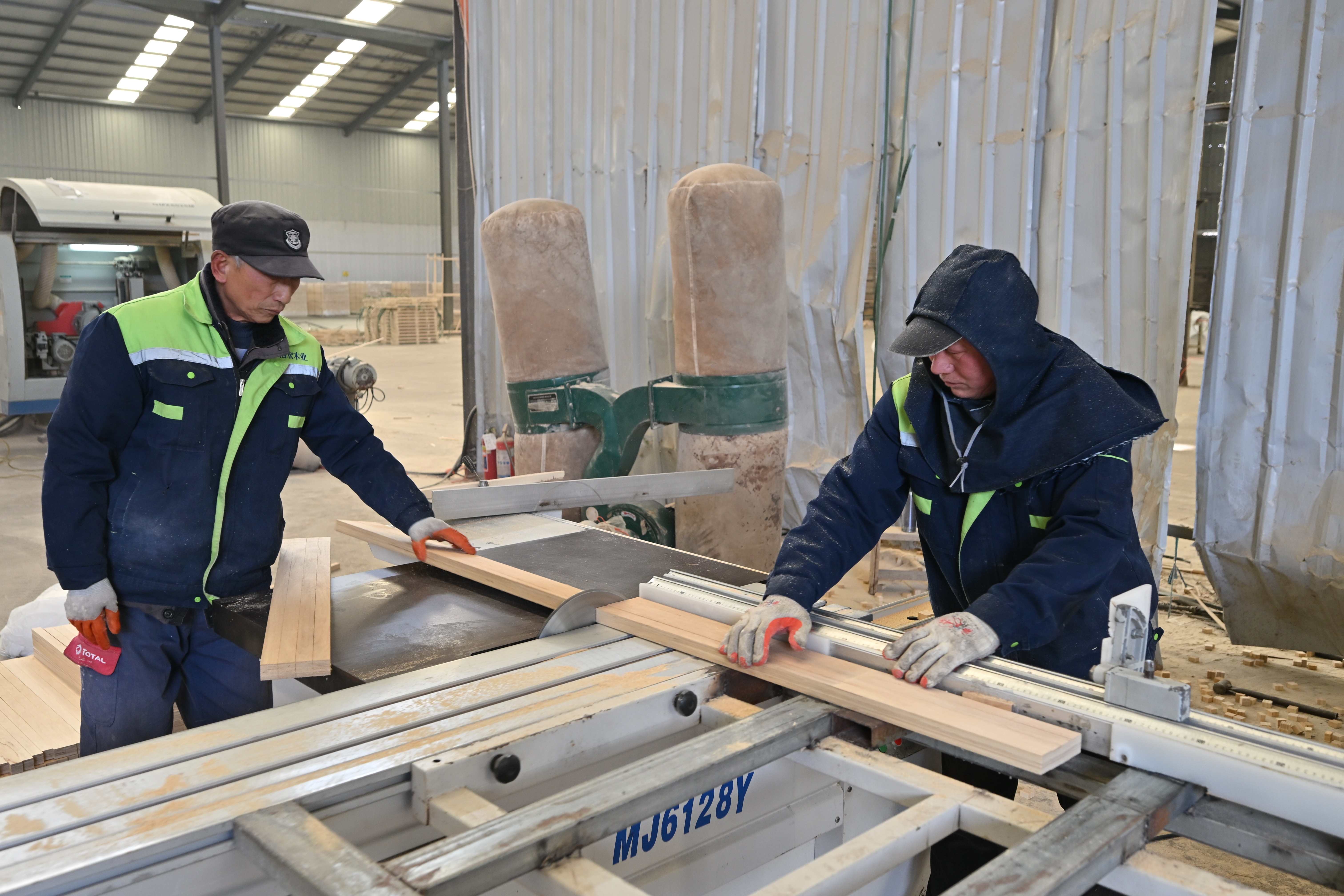
Yes. WADA supports OEM and ODM cooperation with personalised size and surface customisation, backed by a 25-engineer R&D team and a product range covering LVL, plywood, veneered board, MDF, OSB and wall panel. Customisation is most effective when the buyer states the downstream process — routing, edge banding, coating or structural assembly — because that determines which tolerances and face grades are actually achievable rather than merely requested. Remote after-sales support covers the period after delivery.
What is the minimum order quantity, and which delivery and payment terms apply?
The minimum order quantity is one 40-foot container. Delivery terms are FOB or CIF, and payment terms are T/T 30/70 or 50/50. The acceptance criterion is a pre-shipment test. For buyers moving from a sample approval to volume supply, the container-level MOQ means the first commercial order and the first real quality check happen at the same scale.
How should sample validation and acceptance testing be structured?
Sample validation should confirm the specification lines that cannot be judged from a datasheet: core and surface construction, thickness tolerance against your downstream machine, and face grade. Acceptance should then follow a pre-shipment test, supported by multi-stage quality inspection during production and full inspection of finished panels. This two-stage approach separates a design question — is this the right board — from a delivery question — is this shipment the approved board.
What lead time and production capacity should be planned for a repeat order?
Standard lead time is 25–45 days, and monthly panel production capacity exceeds 10,000 CBM. Buyers should plan backwards from their own production date rather than from the shipment date, and should treat long-term supplier relationships and stable sourcing as part of the lead-time control method: raw material fluctuation and delivery delay are managed through sourcing stability, schedule control and production planning. A supplier that can see the downstream process calendar can flag scheduling conflicts before they become delays.
Next step: send your specification lines — board category, core and surface construction, dimensions, downstream process and destination market — and request a sample or quotation. The WADA Group catalogue covering LVL, plywood, veneered board, MDF, OSB, wall panel and woodworking machinery is available here: Wada Group product catalogue. Company details and current capabilities are published at www.wadaplywood.com.
Conclusion
Specifying wood panels well means writing four things into one document: the end-use condition, the board category with its core and surface construction, the dimensions and tolerance the downstream process can absorb, and the compliance target for the destination market. For MDF, plywood, LVL, veneered board and melamine board, those four lines look different — but the principle is identical, and a specification missing any of them cannot be inspected against anything.
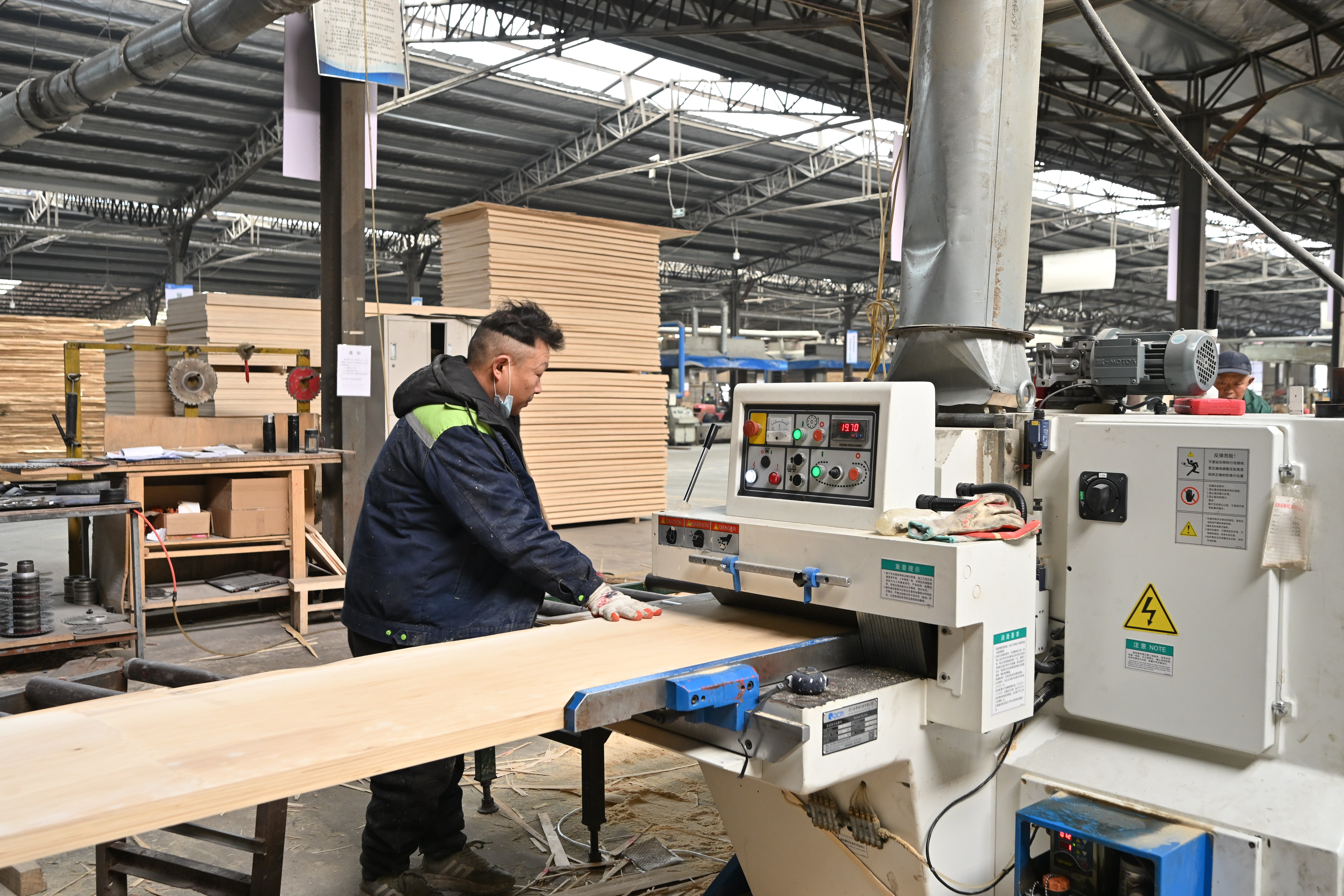
What makes a specification survive the second and tenth order is the commercial and quality structure behind it: monthly panel capacity over 10,000 CBM, a one-container MOQ, a 25–45 day standard lead time, FOB or CIF delivery with T/T 30/70 or 50/50 payment, pre-shipment testing, multi-stage quality inspection, full inspection of finished panels, and stable sourcing through long-term suppliers. Buyers who write the technical and commercial lines together give their supplier a specification that can be produced, checked and repeated — which is the only version that protects a production schedule.
Have Questions or Need More Details?
Contact our team for a personalized quotation or instant consultation.
Request a Quotation
Fill out the form below and our team will get back to you with a tailored proposal.
WhatsApp Direct Chat
Prefer to chat in real-time? Message us on WhatsApp for instant assistance & quick answers.
- Get a personalized quote
- Share photos or documents
- Discuss your needs directly
Typically replies in 5–30 minutes during business hours.