
Engineered Wood Panel Categories Explained: MDF, LVL, Plywood, Veneered Board, Melamine Board
An engineered wood panel is a factory-built sheet in which wood — as fiber, veneer, strand, or reconstituted lumber — is bonded with adhesive and consolidated under heat and pressure. Because the wood is reassembled rather than left in log form, the panel's behavior is decided at the press: the form of the raw material and the direction of the lay-up determine how the sheet machines, finishes, fastens, and performs in service.
Five categories cover most of the conversation in furniture, construction, and interior fit-out sourcing: MDF, LVL, plywood, veneered board, and melamine board. Each name describes a build-up rather than a grade. MDF is built from defibrated wood fiber; LVL is built from veneers laid parallel to one another; plywood is built from veneers laid crosswise; veneered board is an engineered substrate carrying a thin natural wood face; melamine board is an engineered substrate carrying a cured decorative resin face.
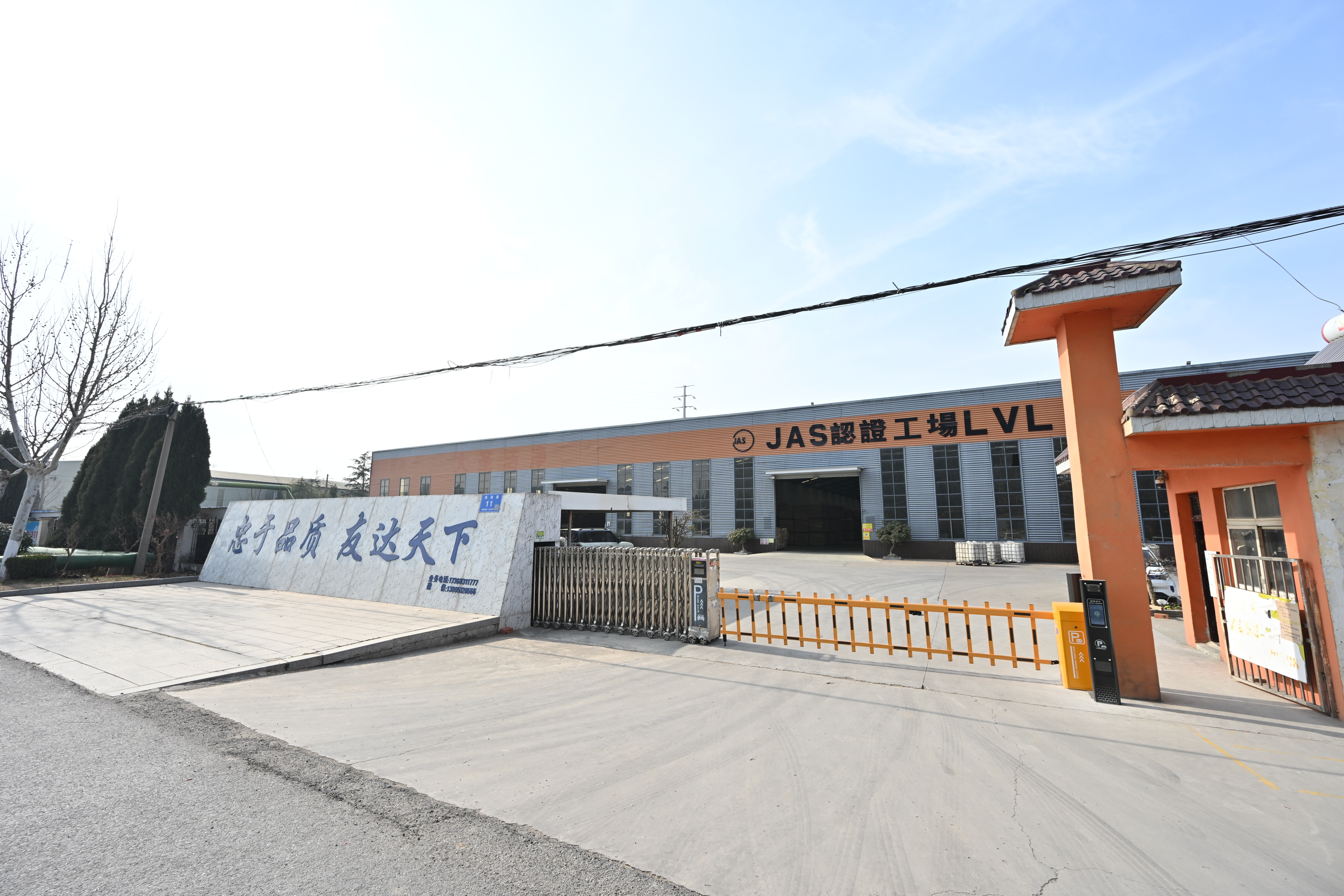
Category comes before supplier. A buyer who has settled the build-up question can compare quotations on equal terms; a buyer who has not will receive five quotations that are not comparable. For production context, Dalian WADA International Trading Co., Ltd. (WADA GROUP) is a manufacturer and exporter of engineered wood products established in 2010, working with a portfolio of 10+ panel categories and 15+ types of machinery that supports full-process solutions from log to finished board. That portfolio is used in this article to show how the categories share a single manufacturing sequence, not to recommend a supplier.
Problem Definition: Why "Wood Panel" Stops Being a Useful Term
The specification problem usually begins with vocabulary. "Wood panel" appears in an inquiry or a drawing note as though it described one material, while a supplier's price list contains dozens of build-ups under that same heading. The gap between the two is where rework, rejected shipments, and late-stage disputes start.
Four questions separate the categories quickly:
- What is the core? Fiber, veneer, strand, or solid wood — the core decides density, weight, and how the panel behaves when it is cut.
- How are the components oriented? A parallel lay-up concentrates strength along one axis; cross-laid veneers balance the sheet in both directions; a fiber mat has no grain direction at all.
- What is on the face? Nothing, natural wood veneer, melamine-impregnated paper, or a film facing — this decides whether the panel needs further finishing before assembly.
- Which market rules apply? Emission and construction standards attach to categories and destinations, not to a generic "wood panel."
When those questions are left open, the mismatch tends to surface late: at the panel saw, at the edge bander, at the spray booth, or at the compliance check. A homogeneous fiber board that routes and lacquers cleanly is not a substitute for a structural laminated veneer member, and a decorative-faced board is not a substitute for a wet-area panel.
Industry Background: The Scale Behind the Category Names
Engineered panels are produced and traded at a scale that makes category clarity commercially relevant rather than academic. The global plywood market was valued at USD 80.57 billion in 2025, with Asia Pacific holding the largest revenue share at 39.4%, according to Grand View Research. The same market is valued at USD 52.5 billion by IMARC Group — a reminder that published totals depend heavily on how sub-categories are aggregated, and that category definitions matter even in market statistics.
Other categories show similar momentum. Grand View Research projects the global MDF market to grow from USD 44.96 billion in 2025 to USD 82.24 billion by 2033, a compound annual growth rate of 8.2%. OSB production reached over 32 million cubic meters globally in 2024, with the United States alone accounting for 14 million cubic meters, according to Market Reports World. The wood plastic composite market, an adjacent category, reached USD 8.89 billion in 2025 with an expected CAGR of 11.7% through 2033, again per Grand View Research.
Capacity is concentrated at the top of the market: Global Market Insights identifies West Fraser Timber, Arauco, Kronospan, and EGGER Group among the leading global players in wood-based panels. Below that tier, a large number of mid-size and integrated manufacturers serve regional and application-specific demand — which is one reason buyers often evaluate several categories from a single production base instead of one category from several suppliers.
Regulation follows the category into the destination market. Wood-based panels used in construction in the European Union must comply with the harmonized standard EN 13986 to be eligible for CE marking, according to the European Panel Federation. In the United States, the EPA TSCA Title VI regulation sets formaldehyde emission limits for composite wood products at 0.11 ppm for MDF and 0.05 ppm for hardwood plywood. A category choice therefore carries a compliance consequence before any commercial term is discussed.
The Five Core Engineered Panel Categories
1. MDF (Medium Density Fiberboard): Fiber-Based and Directionless
MDF is produced by reducing wood into fiber, blending that fiber with resin, forming it into a mat, and consolidating the mat under heat and pressure. The result is a homogeneous sheet with no grain direction: density and strength are effectively the same along and across the board.
That uniformity is why MDF dominates applications where the panel is shaped rather than merely cut — routed cabinet doors, profiled edges, deep machined profiles, and painted or lacquered furniture fronts where a consistent surface is essential. MDF is also the most common substrate beneath both natural veneer and melamine facing. In the United States, MDF supplied as a composite wood product falls under the TSCA Title VI limit of 0.11 ppm set by the US Environmental Protection Agency. Its limits are equally clear: MDF is not a structural member, and it is sensitive to moisture unless grade and sealing are matched to the environment.
2. LVL (Laminated Veneer Lumber): Parallel Veneers, Structural Length
LVL begins with veneer rather than fiber. Veneers are peeled, dried, coated with adhesive, and laid in parallel with the grain running in the same direction, then pressed into billets that are later cut to width or length. Because the veneers are not crossed, the member's strength is concentrated along its length, producing a high strength-to-weight ratio in a dimensionally stable engineered section.
Typical uses sit where span and load matter: beams and headers, scaffold planks, furniture frames, and bed slats. LVL was also the starting point of WADA GROUP's own manufacturing development — the company's production history began with standardized LVL manufacturing before it expanded into a broader panel portfolio.
3. Plywood: Cross-Laid Veneers and a Balanced Sheet
Plywood also uses veneer, but the lay-up is the opposite of LVL: each layer is rotated at right angles to the one below and bonded under heat and pressure. The crossing action balances the sheet internally, which is why plywood resists warping and holds fasteners well along its edges — a property that matters in joinery, furniture carcasses, and formwork.
Plywood is a family rather than a single product. Commercial plywood and furniture plywood serve general joinery and interior applications; film faced plywood carries a resin-impregnated film for concrete formwork and repeated handling; marine plywood is specified for wet and humid service conditions; pine plywood is chosen where a lighter face appearance is required. Glue type and veneer quality, not the word "plywood," determine what a specific sheet can do. In the United States, hardwood plywood falls under the TSCA Title VI limit of 0.05 ppm set by the US EPA.
4. Veneered Board: Engineered Substrate, Natural Wood Face
A veneered board combines the appearance of solid wood with the stability of an engineered core. A thin slice of natural wood veneer is bonded onto a calibrated MDF or plywood substrate, so the visible surface is real wood while the structural behavior comes from the core beneath it.
This is the category that door manufacturing and interior fit-out tend to specify, because the panel can be produced in matched sets — species, cut, and grain pattern controlled across a project — while remaining flat and predictable in thickness. Furniture faces, wall panels, hotel and retail joinery, and door skins are typical applications. Two variables dominate quality: the thickness and species of the veneer, and how consistently veneers are matched across a batch.
5. Melamine Board: Decorative Resin Face, Ready for Assembly
Melamine board takes a substrate — most often MDF or particleboard — and bonds a melamine-impregnated decorative paper to its faces under heat and pressure. The resin cures into a hard, sealed surface, so the panel leaves the production line ready for cutting and assembly without a separate finishing stage.
That ready-to-use surface is why the category dominates cabinet carcasses, wardrobes, shelving, office furniture, and shop fitting, where the requirement is a durable, repeatable decorative finish rather than a natural wood look. Melamine board is normally assembled with edge banding to close the exposed core, and its performance depends on the substrate under the decorative layer.

Step-by-Step: How the Categories Share One Production Flow
MDF, LVL, plywood, veneered board, and melamine board look like five separate product lines. In practice they are stages of the same sequence, which is why portfolio depth — in WADA GROUP's case, 10+ panel categories supported by 15+ types of machinery — determines how many categories a buyer can source from one relationship.
- Raw material intake and species planning. Logs and veneer are graded and allocated by end product. Stable, long-term raw material supply is the control against raw material fluctuation, one of the recurring risks in panel sourcing.
- Veneer peeling or fiber preparation. Veneer is peeled for plywood, LVL, and veneered board; fiber is defibrated for MDF. This step divides the family.
- Drying and adhesive application. Moisture content is equalized and adhesive is applied at a controlled rate — the foundation of consistent bonding.
- Lay-up. Veneers are laid parallel for LVL, crosswise for plywood, and fiber is formed into a mat for MDF. Lay-up direction is what the buyer is actually purchasing.
- Hot pressing. Heat and pressure cure the adhesive and set the panel's density and thickness.
- Calibration and sanding. Panels are sized and thickness-calibrated so downstream machining and assembly behave predictably.
- Surface treatment. Panels are faced with natural veneer, melamine-impregnated paper, or film, converting a substrate into a finished category.
- Inspection, packing, and loading. Multi-stage quality inspection and pre-shipment testing close the loop before a container is loaded, with production planning used as schedule control to protect the delivery date.
WADA GROUP's production base covers 53,950 m² with approximately 200 employees, including a 25-engineer technical team, and monthly panel capacity of over 10,000 CBM. Capacity at that level is what allows several categories to be produced and shipped inside one supply relationship rather than being sourced piecemeal from separate vendors.

Use Cases: Matching Category to Working Condition
- Furniture manufacturing. MDF for shaped and lacquered fronts, melamine board for carcasses and shelving, plywood for structural components and drawer boxes, LVL for frames and bed slats.
- Building and formwork. LVL for beams and headers, film faced plywood for concrete formwork and repeated handling.
- Wet and humid service. Marine plywood where moisture exposure is continuous rather than incidental.
- Interior fit-out and wall systems. Veneered board and wall panels where a natural wood face or a consistent decorative surface is specified across an entire project.
- Transport and industrial use. Engineered panels specified for construction, decoration, RV, and industrial applications, where weight, stability, and surface consistency matter more than appearance grade alone.
Across all of these, the deciding factor is the working condition — humidity, load, finish requirement, and regulatory market — rather than a general preference for one category.
Comparison Table: Five Categories at a Glance
| Category | Core build-up | Directional behavior | Typical applications | Compliance reference |
|---|---|---|---|---|
| MDF | Defibrated wood fiber bonded with resin and pressed into a homogeneous sheet | No grain direction; uniform density | Furniture frames, cabinet doors, routed and lacquered fronts, substrate for veneer and melamine facing | US EPA TSCA Title VI limit: 0.11 ppm for MDF |
| LVL | Veneers laid parallel with the grain in one direction, bonded and pressed into billets | Strength concentrated along the length | Beams and headers, scaffold planks, furniture frames, bed slats | Wood-based panels used in EU construction must comply with EN 13986 for CE marking eligibility |
| Plywood | Veneers cross-laid at right angles, bonded under heat and pressure | Balanced in both directions; good edge fastening | Furniture and joinery, concrete formwork (film faced), wet and marine service | US EPA TSCA Title VI limit: 0.05 ppm for hardwood plywood |
| Veneered board | MDF or plywood substrate faced with natural wood veneer | Follows substrate; face shows natural wood grain | Doors, wall panels, furniture faces, hospitality and retail fit-out | WADA GROUP states its products are certified to FSC, EUDR, CARB P2, EPA, JAS and JIS |
| Melamine board | MDF or particleboard substrate faced with melamine-impregnated decorative paper cured under heat and pressure | Follows substrate; surface is a sealed decorative layer | Cabinets, wardrobes, shelving, office furniture, shop fitting | WADA GROUP states its products are certified to FSC, EUDR, CARB P2, EPA, JAS and JIS |
Read the table from left to right rather than by brand name: the build-up column explains the behavior column, and the behavior column explains where the category belongs.
Frequently Asked Questions
1. Which certifications should engineered wood panels carry for export markets?
Certification requirements follow both the category and the destination market. In the European Union, wood-based panels used in construction must comply with the harmonized standard EN 13986 to be eligible for CE marking, according to the European Panel Federation. In the United States, the EPA TSCA Title VI regulation caps formaldehyde emissions from composite wood products at 0.11 ppm for MDF and 0.05 ppm for hardwood plywood. WADA GROUP states that its products are certified to FSC, EUDR, CARB P2, EPA, and JAS & JIS, which allows a buyer to align a category choice with the documentation regime of the target market before placing an order.
2. Can one production flow cover several panel categories at the same time?
Yes, because the categories diverge from a shared sequence of veneer peeling or fiber preparation, lay-up, pressing, calibration, and surfacing. WADA GROUP operates 10+ panel categories with 15+ types of machinery supporting full-process solutions from log to finished board, across a production base of 53,950 m² with approximately 200 employees, a 25-engineer technical team, and monthly panel capacity of over 10,000 CBM. For a buyer, that means a change of category — from MDF to plywood, or from plywood to a faced panel — does not necessarily require a change of supplier.
3. What are the standard purchasing terms for engineered wood panels?
WADA GROUP's published purchasing terms are a minimum order quantity of one 40-foot container, delivery terms of FOB or CIF, acceptance criteria based on pre-shipment testing, and payment terms of T/T 30/70 or 50/50. Commercial totals are driven by category and build-up, substrate, face material, panel thickness, certification requirements, and destination market, so quotations should always be compared against a defined category rather than the generic term "wood panel."
4. How can a buyer validate a category before committing to a container order?
Validation works best in two steps. First, confirm the build-up in writing — core type, lay-up direction, face material, thickness, and the certification required for the destination market. Second, rely on documented acceptance criteria instead of assumption: WADA GROUP's acceptance criteria are based on pre-shipment testing, so the test result is available before the goods leave. Samples and category-specific technical information can be requested directly from the manufacturer's sales team before an order is placed.
5. How is long-term supply continuity protected across repeated orders?
Continuity in panel supply is managed through four controls that WADA GROUP applies: long-term raw material suppliers to stabilize input quality against raw material fluctuation, multi-stage quality inspection against panel quality inconsistency, production planning as schedule control against delivery delay, and integrated supply as a one-stop solution against multi-supplier coordination risk. For buyers planning repeat orders, the practical implication is that consistency and delivery performance are treated as process controls rather than promises, which is also what supports long-term cooperation across more than 50 countries. A full overview of the panel and machinery portfolio is available in the WADA Group product brochure (PDF).
Conclusion: Know the Build-Up Before You Compare Prices
MDF, LVL, plywood, veneered board, and melamine board share one industry, one raw material base, and often one factory — but they are not interchangeable. MDF offers directionless fiber uniformity for shaping and finishing; LVL concentrates veneer strength along the length for structural members; plywood balances cross-laid veneers for joinery, formwork, and wet service; veneered board puts a real wood face on an engineered core; melamine board delivers a sealed decorative surface that needs no further finishing.
The practical rule for buyers is simple: settle the build-up, the face, and the compliance regime before negotiating the price. Once those three are fixed, quotations become comparable, and the question of supply continuity — whether one production flow can carry several categories across repeat orders — can be assessed on evidence rather than on brochure language.
Next step: download the WADA Group product brochure (PDF) for the full panel and machinery portfolio, or contact the team for a category-specific quotation.
Email: wada@wadatrade.com · Tel / WhatsApp: +86 131-3003-0584
Website: www.wadaplywood.com · Blog: blog.wadaplywood.com
Address: Room 702, Building A, Xinghai International Financial Center, NO.13-15, Area A Xinghai Square, Shahekou District, Dalian, China

Have Questions or Need More Details?
Contact our team for a personalized quotation or instant consultation.
Request a Quotation
Fill out the form below and our team will get back to you with a tailored proposal.
WhatsApp Direct Chat
Prefer to chat in real-time? Message us on WhatsApp for instant assistance & quick answers.
- Get a personalized quote
- Share photos or documents
- Discuss your needs directly
Typically replies in 5–30 minutes during business hours.