
Finished Panels vs. Integrated Lines: A Head-to-Head Sourcing Decision
A furniture plant in Poland and a plywood manufacturer in Vietnam can raise the same sourcing question and reach opposite conclusions. One keeps buying finished wood panels from a supplier. The other invests in an integrated production line that turns veneer into board on its own floor. Neither route is automatically cheaper — they simply move risk to a different place.
This article is a head-to-head comparison of those two models, written for buyers in the research and evaluation stage. It contrasts what each route actually buys, where certification responsibility sits, how cost behaves as volume changes, how labor and automation interact, and how long each path takes to reach stable output. WADA GROUP — Dalian WADA International Trading Co., Ltd., a wood panel manufacturer and exporter established in 2010 — sits on the supplier side of this decision and also supplies woodworking machinery, which is why both routes appear in the same article.
Problem Definition: Two Models, Two Different Risk Structures
Model A — finished panel supply. You purchase panels against a written specification: plywood, MDF, LVL, melamine-faced board, veneered board, film faced plywood. The supplier owns every upstream step — veneer peeling, drying, patching, core composing, lay-up, cold pressing, hot pressing, sanding and cross-cutting. You own only the downstream steps: cutting, edge banding, CNC work, coating and assembly.
Model B — integrated production line. You buy the upstream process itself. An integrated plywood line typically includes a veneer peeling machine, veneer drying machine, veneer patching machine, core veneer composing machine, an automatic lay-up line, a cold press, a hot press, a plywood sanding machine and a fully automatic cross saw. You take permanent ownership of the steps the panel supplier currently performs for you.
The most common error in this comparison is scope asymmetry. Buyers compare a delivered panel price per cubic meter against a machine invoice, and never normalize for glue, energy, labor, wastage, moisture control, certification and working capital. Once scope is aligned, the decision usually stops being about price and starts being about volume stability, technical staffing and market coverage.
Six lines of comparison carry almost all of the decision weight:
- Product and specification scope — how many panel families you actually need.
- Certification ownership — who holds the certificate that lets the goods enter the destination market.
- Cost behaviour at your volume — where the break-even sits, and what happens below it.
- Labor and automation profile — how many people stand in front of the process, and who maintains them.
- Quality control and yield — who inspects, and who absorbs rejects.
- Lead time and ramp-up — how fast the model produces sellable output.
Industry Background: A Large Market With Diverging Numbers
The wood panel category is large enough that the sourcing model matters at a structural level, not just a unit-price level. The global plywood market was valued at USD 80.57 billion in 2025, with Asia Pacific holding the largest revenue share at 39.4%, according to Grand View Research. The global Medium Density Fiberboard (MDF) market is projected to grow from USD 44.96 billion in 2025 to USD 82.24 billion by 2033, a CAGR of 8.2%, also reported by Grand View Research. Oriented Strand Board production reached over 32 million cubic meters globally in 2024, with the USA accounting for 14 million cubic meters, per Market Reports World.
Demand is not standing still. Grand View Research puts the Wood Plastic Composites (WPC) market at USD 8.89 billion in 2025 with an expected CAGR of 11.7% through 2033 — relevant because WPC competes with panels in exterior and decorative applications. On the supply side, Global Market Insights identifies West Fraser Timber, Arauco, Kronospan and EGGER Group as established global leaders in the wood-based panel market.
Read market numbers carefully. Published valuations diverge. For the 2025 plywood market, Grand View Research reports USD 80.57 billion while IMARC Group reports USD 52.5 billion. For the total wood-based panel market, Grand View Research reports USD 198.04 billion while Intel Market Research reports USD 96.32 billion — the gap comes from how sub-categories are aggregated. A capital decision should be built on your own order book, not on a headline market size.
Regulation, however, does not diverge. Wood-based panels used in construction must comply with the harmonized European standard EN 13986 to be eligible for CE marking, according to the European Panel Federation. In the United States, the EPA TSCA Title VI regulation sets formaldehyde emission limits for composite wood products at 0.11 ppm for MDF and 0.05 ppm for hardwood plywood. These are pass-or-fail conditions that follow the product, not the business model.
Trade flow matters too, because it shapes where sourcing capacity sits. China was the second largest exporter of raw timber (HS 44) to the United States in 2024, contributing USD 2.17 billion, or a 9% share, according to ITC and US Census Bureau data.
The Full Value Chain Route: What a Panel Supplier Actually Delivers
The finished-panel model only works if the supplier behind it owns real upstream capability. A trading intermediary that re-sells third-party board cannot absorb specification changes, certification requirements or volume swings — and that limitation shows up as lead time and quality variance, not as price.
Dalian WADA International Trading Co., Ltd. (WADA GROUP) was established in 2010 and has more than 15 years of industry experience. The company operates a factory area of 53,950 m² with around 200 employees and an R&D team of 25 engineers, integrates independent R&D, standardized intelligent production, quality control and global sales service, and exports 100% of its output to North America, the EU, Australia, Japan, South Korea, the Middle East, Mexico and South America. Its production layout includes multiple advanced production bases in China, domestic trading companies and overseas branches in Japan and Singapore, with long-term cooperative partnerships across more than 50 countries.
Its core product families — the ones a panel-only buyer would actually order — cover the specification ranges below:
| Panel family | Key specification range | Build-up notes |
|---|---|---|
| MDF | 4×8 to 8×16 ft; thickness 1.2–50 mm; density 500–1000 kg/m³; moisture content 5%–13% | Continuous flat pressing on Difenbach & Sinbelkamp (Germany) equipment; glue E0 / CARB P2 / E1; for furniture board, routed board, lightweight high-strength board, waterproof board |
| Structure Plywood | 3×6 to 4×8 ft; thickness 9–28 mm; density 650–750 kg/m³; moisture content 8%–12% | Larch or pine face/back; eucalyptus, larch, pine or combi core; melamine WBP or phenolic WBP glue; construction/structure grade |
| Marine Plywood | 4×8 to 4×9 ft; thickness 9–25 mm; density 600–750 kg/m³; moisture content 8%–12% | Birch or okoume face/back; poplar, birch, okoume or combi core; melamine WBP or phenolic WBP glue; shipbuilding and shipyard grade |
| Commercial Plywood | 4×8 ft or as required; thickness 2–25 mm; density 520–700 kg/m³; moisture content 8%–12% | Face/back options include birch, pine, okoume, bintangor, sapeli, pencil cedar, poplar; veneer grades B/BB, BB/BB, BB/CP, BB/C, CP/CP, CP/C, C/C; glue E0 / CARB P2 / E1 / E2 / WBP |
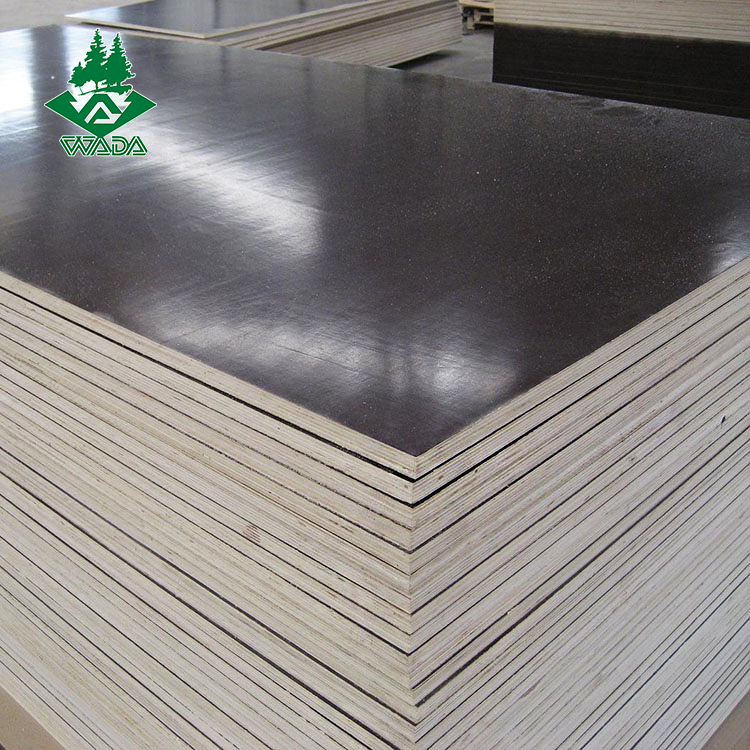
| Film Faced Plywood | 1200×1800 / 1200×2400 / 1220×2440 / 1250×2500 / 1500×3000 mm; thickness 4–35 mm; density 650–750 kg/m³ | Dark brown or black film; fingerjoint, poplar, combi, hardwood, pine or Russia birch core; MR, melamine WBP or phenolic WBP glue; re-use in concrete projects 2–40 times |
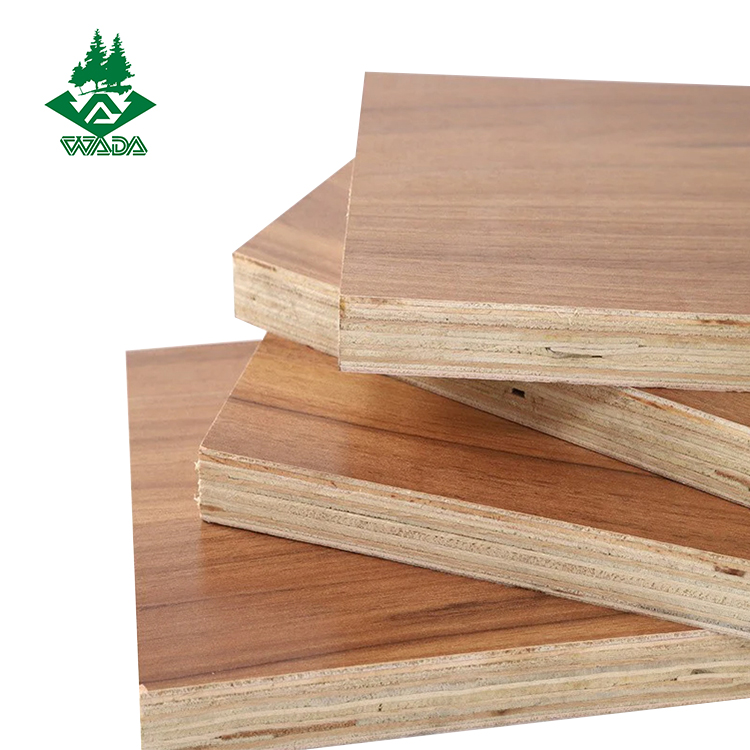
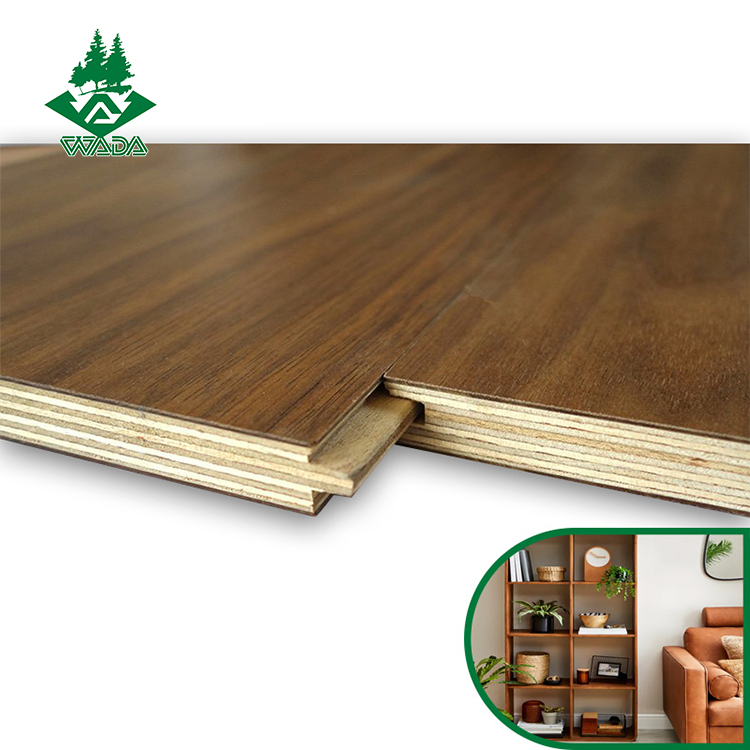
| Veneered Plywood | 4×8 to 7×9 ft; thickness 2–25 mm; density 500–750 kg/m³; moisture content 8%–12% | White oak, red oak, black walnut, parota, wenge, ash, birch, pine, sapeli or engineered veneer; plywood, MDF, chipboard or blockboard core; grades A, AA, AAA; quarter-cut or crown-cut |
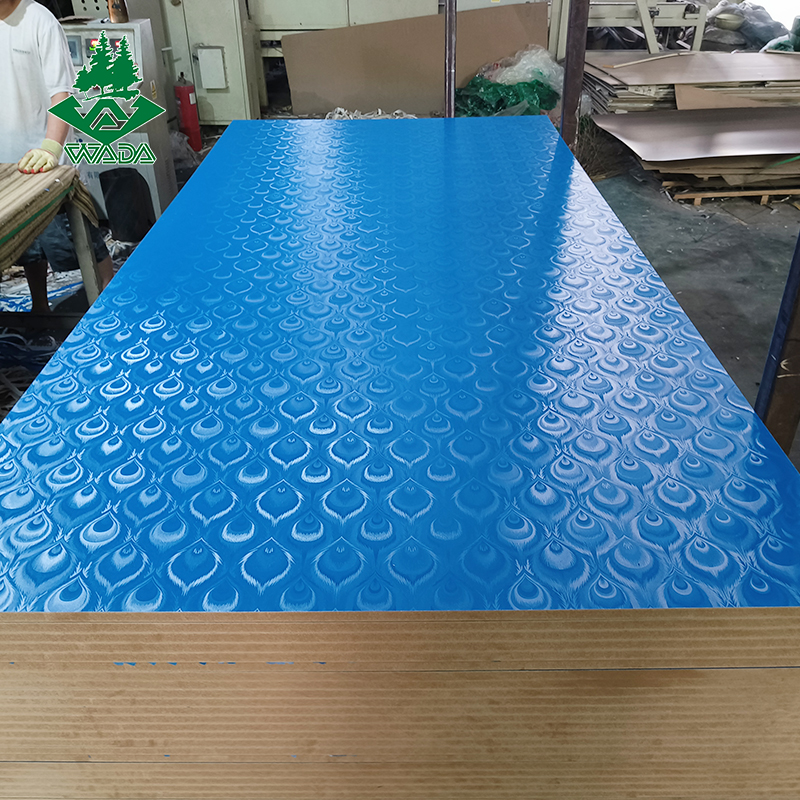
| Melamine Board | 4×8 to 7×9 ft; thickness 2–30 mm; density 550–750 kg/m³; moisture content 8%–12% | Melamine paper, PET film or HPL face; plywood, MDF, particle board or blockboard core; glue E0 / CARB P2 / E1 / E2 |
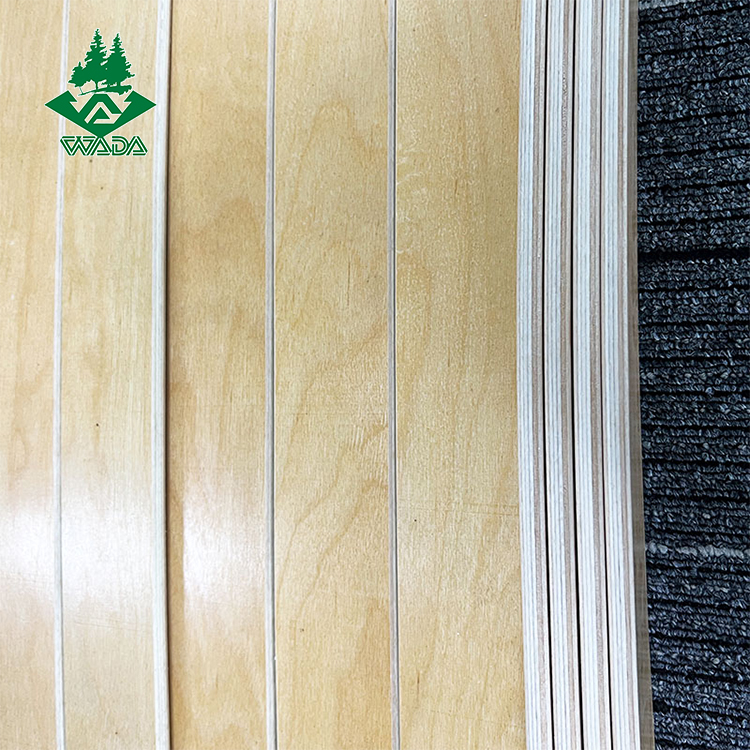
| LVL bed slat | Width 25–190 mm; thickness 7–15 mm; density from 520 kg/m³; moisture content 8%–12% | Birch, beech or poplar face/back; birch or poplar core; glue E0 / E1; furniture bed grade |
On the capability side, WADA runs OEM/ODM programs with customization across size, thickness and layout, holds monthly panel capacity of more than 10,000 CBM, quotes a lead time of 25–45 days, works from a minimum order quantity of one 40-foot container, and applies 100% inspection. After-sales support is handled remotely. Its quality inspection team combines experienced inspectors, a technical team and workers with more than ten years in the timber industry.
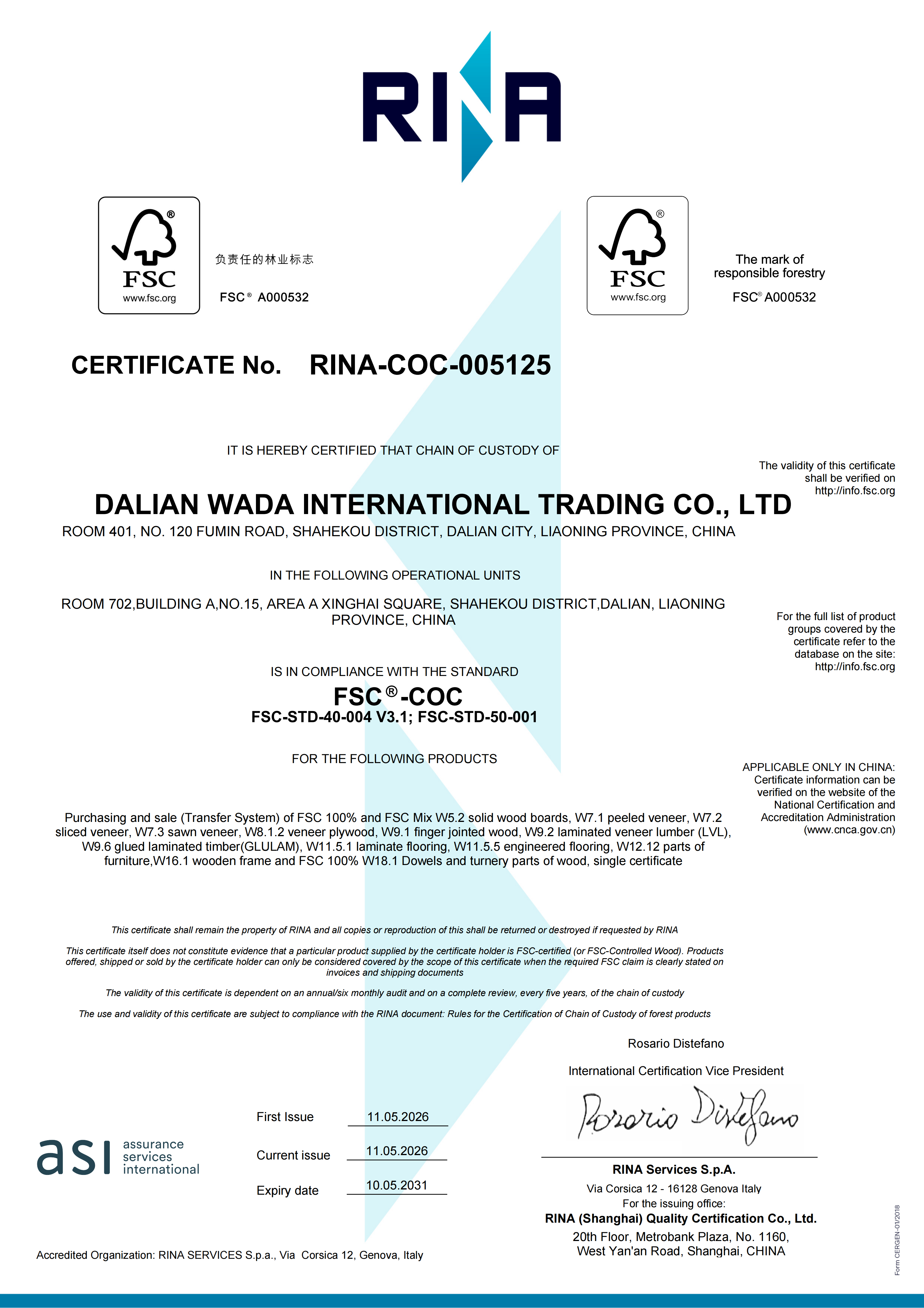
Certification is held at supplier level and documented per market — FSC chain of custody, EUDR, CARB P2, EPA, JAS and JIS. For FSC, the certified scope covers solid wood boards, peeled veneer, sliced veneer, sawn veneer, veneer plywood, finger jointed wood, laminated veneer lumber (LVL), glued laminated timber (GLULAM), laminate flooring, engineered flooring, furniture parts and wooden frames, serving the EU, North America and UK markets.
Step-by-Step Breakdown: How to Run the Head-to-Head Decision
Step 1 — Fix your output definition before anything else
List the panel families, thicknesses, board sizes and face grades you will actually sell or consume over the next 24 months. If that list contains MDF, plywood, LVL, melamine-faced board and veneered board at once, the line model already looks heavy: a single integrated line does not produce all of those families. If the list is one family at high, stable volume, the line model becomes credible.
Step 2 — Map certification exposure by destination market
Certification is where the two models diverge fastest. A supplier-held certificate travels with the shipment; a self-built line must be certified on its own output. Japan requires JAS 0701:2023 for LVL, JAS 0233:2024 for plywood and structural plywood, JIS A 5905 for MDF and JIS A 5908 for particle board. Australia and New Zealand require AS/NZS 4357.0:2005 (R2016) for structural LVL under BSI Product Certification, and AS 6669-2016 for 17 mm formwork plywood under a StandardsMark Licence. The US market, including California, requires CARB Phase 2 and TSCA Title VI under California Code of Regulations Sections 93120–93120.12. EU construction use requires compliance with EN 13986 for CE marking. Count how many of these your own plant would need to obtain and maintain.
Step 3 — Normalize cost to delivered cost per m³ of usable output
Put both models on the same unit. On the supply side, that means landed cost per cubic meter including freight, duty and moisture-conditioning losses. On the line side, it means raw veneer or log input, glue, energy, tooling, maintenance, rejected panels, certification cost, financing and labor, divided by usable output — not by nominal output. Only then does the comparison mean anything.
Step 4 — Test the labor assumption, not the labor brochure
Automation is the largest swing factor in the line model, because an integrated line consolidates peeling, drying, patching, composing, lay-up, pressing, sanding and cross-cutting into one continuous flow. Buyers entering this step typically work with a planning assumption of a 30–50% reduction in direct line labor. Treat that range as a model input to be validated against your own shift pattern, product mix and current headcount — not as a published test result or a guarantee from any equipment supplier. The valid test is a headcount-per-shift comparison run against your actual product mix.
Step 5 — Stress-test quality control and yield
Ask who absorbs a bad batch. Under the panel model, inspection sits upstream: WADA applies 100% inspection, and a rejected panel never reaches your floor. Under the line model, you become the inspector — glue mixing, press cycles, sanding tolerance and moisture control all move in-house. Moisture content is a useful proxy for this risk: supplied panels typically ship at 8%–12% moisture content, while MDF ranges from 5% to 13% depending on specification. If you have no laboratory or drying control plan, the line model transfers risk to you without giving you the tools to manage it.
Step 6 — Run a commercial validation order before either commitment
Do not decide from a quotation. Place a validation order at realistic specification — one 40-foot container is the stated minimum order quantity at WADA — and check thickness tolerance, face grade, density and moisture content against the data sheet. If you are seriously considering a line, use the same period to benchmark the supplier's own output as the target your line would have to beat.
Step 7 — Decide on phasing, not on a single either/or
Most buyers do not choose absolutely. They start on the panel model to establish market demand and certification coverage, then add automation for the highest-volume family. Because WADA supplies both engineered wood panels and woodworking machinery, this staged route stays with a single partner instead of splitting between a panel trader and an equipment vendor.
Use Cases: Which Model Fits Which Buyer Profile
Furniture manufacturing, Mexico — 100 containers. A furniture manufacturer ordered 100 containers of veneered board, melamine board, LVL bed slats and MDF for furniture and cabinet production, with decoration as the stated result and fashion as the highlight. This is a multi-family, design-driven profile: the buyer's advantage comes from switching panel families quickly, not from pressing its own board.
Exterior cladding, Portugal — 20 containers. A wall cladding project used marine plywood for 20 containers of outdoor cladding, requiring weather resistance and UV resistance. Small-volume, high-specification exterior work rarely justifies owned upstream capacity, because the specification is the value, not the tonnage.
Building structure, Japan — 200 containers. A construction builder took 200 containers of film faced plywood and structure plywood for building structure, with high strength, high durability and waterproof performance. This is high volume with a certification-heavy destination market — a profile where the panel model wins on compliance speed and the line model wins only if volume is contractually secured.
Building structure, Australia — 50 containers. A building contractor ordered 50 containers of structure plywood and film faced plywood, again with high durability and waterproof requirements. The pattern across the Australia and Japan cases is the same: the destination market's standards (AS/NZS 4357.0:2005 (R2016), AS 6669-2016, JAS 0233:2024) are already held by the supplier.
Plywood production, Vietnam — one complete line. A plywood manufacturer purchased one complete line used for manufacturing plywood, veneer and engineered wood panels in industrial production facilities, with panels destined for furniture, construction, packaging and interior applications. The stated result was stable production, with a one-stop solution as the highlight. This is the clearest line-model profile: the buyer already is a panel producer, sells into multiple industries, and has the technical organization to run the process.
Working-condition scenarios sharpen the same split. US interior finishing projects requiring eco-friendly, formaldehyde-free board, and Polish furniture production requiring a smooth surface and stable core, both favour buying finished panels on repeat. Industrial packaging in Singapore requiring high load capacity, and exterior wall cladding in Mexico exposed to UV and outdoor conditions, are likewise specification problems best solved by matching a certified panel to the job rather than by building capacity. Only when a single panel family runs continuously at high volume does the line model start to pay for itself.
Comparison Table: Finished Panel Supply vs. Integrated Production Line
| Decision line | Finished panel supply | Integrated production line |
|---|---|---|
| What you buy | Panels to specification across multiple families (plywood, MDF, LVL, melamine board, veneered board, film faced plywood) | Upstream equipment: peeling, drying, patching, composing, lay-up, cold press, hot press, sanding, cross saw |
| Capital exposure | Working capital in inventory; minimum order quantity of one 40-foot container | Fixed capital in machinery, installation and commissioning, plus an in-house technical organization |
| Unit cost behaviour | Agreed per order; varies with grade, glue type, size and market | Improves with utilization; deteriorates sharply when the line runs below capacity |
| Certification ownership | Held and documented by the supplier: FSC, EUDR, CARB P2, EPA, JAS and JIS, plus BSI and StandardsMark for Australia/New Zealand | Must be obtained for your own output, market by market (JAS, JIS, CARB Phase 2 / TSCA Title VI, AS/NZS, EN 13986) |
| Quality control | Supplier-side control; 100% inspection stated by WADA | Buyer-side control: your own inspection, glue handling, press settings and moisture management |
| Customization | OEM/ODM on size, thickness and layout; engineered or natural veneer faces; grades A to AAA | Full freedom within the equipment purchased; change requires further investment |
| Capacity and ramp | Available immediately; supplier capacity stated above 10,000 CBM per month | Built gradually: commissioning, trial runs and operator learning all precede stable output |
| Lead time | 25–45 days stated lead time, plus moisture-conditioning allowance | No fixed figure applies; add commissioning time and certification lead time |
| Labor profile | Downstream labor only | Direct line labor; automation is the main lever on headcount |
| Best-fit signal | Multi-family buyers, distributors, furniture and fit-out producers with a changing mix | Manufacturers with stable, high-volume, single-family output and an existing technical team |
FAQ: Compliance, Capability, Budget, Sample and Lead Time
Which certifications apply to each model, and who owns them?
Under the finished-panel model, the supplier holds the certificates and passes documentation with the shipment. WADA's FSC chain of custody covers solid wood boards, peeled and sliced veneer, veneer plywood, finger jointed wood, LVL, GLULAM, laminate and engineered flooring, furniture parts and wooden frames for the EU, North America and UK. For the US including California, structural plywood is certified to CARB Phase 2 and TSCA Title VI under California Code of Regulations Sections 93120–93120.12. For Japan, LVL is certified to JAS 0701:2023, plywood and structural plywood to JAS 0233:2024, MDF to JIS A 5905 and particle board to JIS A 5908. For Australia and New Zealand, structural LVL is certified to AS/NZS 4357.0:2005 (R2016) under BSI Product Certification, and 17 mm formwork plywood to AS 6669-2016 under a StandardsMark Licence. Construction panels sold into the EU must also comply with EN 13986 for CE marking eligibility, and US composite wood products must meet EPA TSCA Title VI emission limits of 0.11 ppm for MDF and 0.05 ppm for hardwood plywood. Under the line model, none of these transfers automatically — you certify your own output.
What capability must a supplier have for the panel route to make sense?
The panel route only replaces a production line if the supplier owns upstream capability rather than reselling third-party board. WADA operates from a 53,950 m² facility with around 200 employees and 25 R&D engineers, runs OEM/ODM programs with customization on size, thickness and layout, states monthly panel capacity above 10,000 CBM, applies 100% inspection, and maintains multiple production bases in China plus overseas branches in Japan and Singapore. Its MDF is produced by continuous flat pressing on Difenbach & Sinbelkamp (Germany) equipment. That combination — capacity, R&D, export documentation and product breadth across LVL, plywood, veneered board, MDF, OSB, wall panel and woodworking machinery — is the capability that a buyer choosing the panel model is effectively outsourcing to.
How should the cost of buying panels be compared with building a line?
Convert both options to cost per cubic meter of usable output. On the supply side, use landed cost at your stated specification, with a minimum order quantity of one 40-foot container as the entry point and a lead time of 25–45 days as the planning basis. On the line side, add glue, energy, tooling, maintenance, rejected output, certification cost, financing and the labor structure to the equipment cost. Two cautions apply. First, glue type is a real cost line, not a footnote: options range from MR and E1/E2 through melamine WBP and phenolic WBP to E0 and CARB P2, and the specification you choose changes both price and market access. Second, do not build the business case on published market size, because valuations diverge between research houses — for 2025 plywood, USD 80.57 billion (Grand View Research) versus USD 52.5 billion (IMARC Group). Your own order book is the only stable input.
What should be validated before committing to either model?
Validate at specification level, not at catalogue level. On the panel route, order a real specification — the WADA minimum is one 40-foot container — and verify thickness, board size, density, glue type, veneer grade and moisture content against the data sheet; supplied panels typically ship at 8%–12% moisture content, with MDF ranging from 5% to 13%. Film faced plywood should be validated against its stated re-use range of 2–40 times in concrete projects, since that number defines the cost per pour. On the line route, benchmark against a working reference: a plywood manufacturer in Vietnam runs one complete line producing plywood, veneer and engineered wood panels for furniture, construction, packaging and interior use, with stable production as the stated outcome. Compare your projected output against that benchmark before signing.
What lead time and ramp-up should be planned on each route?
The panel route has a defined planning basis: 25–45 days stated lead time from a supplier running more than 10,000 CBM per month, with one 40-foot container as the minimum order quantity, plus an allowance for moisture conditioning before machining. The line route has no equivalent fixed figure — add commissioning, operator training, trial runs and certification approval to the installation schedule before you count on saleable output. If you want to compare the two routes against your own specification rather than a general benchmark, request a sample or a quotation from WADA GROUP at www.wadaplywood.com — that is the fastest way to replace planning assumptions with your own numbers.
Conclusion: Decide by Volume Stability and Certification Load
The choice between buying finished panels and building an integrated production line resolves into two questions. How stable and how narrow is your output? And how much certification do your destination markets demand?
If your mix spans several panel families — for example MDF, plywood, LVL, melamine board and veneered board across furniture, interior, construction and packaging applications — the panel route keeps your capital free and your compliance burden with a supplier who already holds FSC, EUDR, CARB P2, EPA, JAS and JIS documentation. If your output is a single family at high, contractually secured volume, and you already employ the technical team to control glue, pressing, sanding and moisture, the line route converts a recurring purchase into owned capability — with a labor-reduction assumption around 30–50% of direct line labor that must be validated against your own headcount and shift pattern.
Most buyers land between the two extremes, and that is a legitimate outcome: start with finished panels to prove the market and the specification, then add automation for the family with the highest and most stable volume. Because WADA GROUP produces engineered wood panels and also supplies woodworking machinery, both stages can be sourced from the same value chain.
Next step
Send your specification — panel family, size, thickness, glue type, face grade and destination market — and WADA GROUP will respond with a sample plan or a quotation. Full product and capability details are in the company brochure.
Website: www.wadaplywood.com
Download the WADA Group brochure: Wada Group PDF
Email: wada@wadatrade.com
Tel / WhatsApp: +86 131-3003-0584
Address: Room 702, Building A, Xinghai International Financial Center, NO.13-15, Area A Xinghai Square, Shahekou District, Dalian, China
Market and regulatory references in this article: Grand View Research (plywood, MDF and WPC market data), Market Reports World (OSB production), Global Market Insights (wood-based panel market leaders), European Panel Federation (EN 13986), US Environmental Protection Agency (TSCA Title VI), ITC / US Census Bureau (HS 44 trade data), IMARC Group and Intel Market Research (alternative market valuations). All product, certification, capacity and case facts are first-party data from Dalian WADA International Trading Co., Ltd.
Have Questions or Need More Details?
Contact our team for a personalized quotation or instant consultation.
Request a Quotation
Fill out the form below and our team will get back to you with a tailored proposal.
WhatsApp Direct Chat
Prefer to chat in real-time? Message us on WhatsApp for instant assistance & quick answers.
- Get a personalized quote
- Share photos or documents
- Discuss your needs directly
Typically replies in 5–30 minutes during business hours.