
Wood Panel Selection Guide for Furniture Manufacturing: MDF, Plywood, LVL & More
Wood Panel Selection Guide for Furniture Manufacturing: MDF, Plywood, LVL & More
Wood panel selection for furniture manufacturing is a component decision before it becomes a purchasing decision. The board that carries a bed slat, the board that faces a wardrobe door, and the board that forms a cabinet carcass are chosen on different criteria — even when all three ship in the same 40-foot container.
This guide maps the main engineered wood panel families — MDF, plywood, LVL, veneered board, melamine board and film faced plywood — to the furniture components they actually serve. It then addresses the decision that follows: whether to buy finished panels or invest in production capacity, and how that choice should shift as a business moves from trading to manufacturing.
Why Panel Selection Goes Wrong in Furniture Manufacturing
Most panel sourcing problems start before a quotation is issued. Three patterns repeat across furniture projects.
Selecting by grade label instead of component function. A board can carry a "furniture grade" label and still be the wrong board for a load-bearing slat or a curved front. Grade names describe a supply category. They do not describe the load path, the fastening method, or the finishing route a component will pass through.
Treating glue system and moisture content as afterthoughts. Glue line and moisture content decide whether a panel survives a humid installation, a kitchen environment, or a long container voyage. A specification that lists only thickness and size leaves the two variables that drive failure unmanaged.
Mismatching the procurement model to the business stage. A distributor reselling standard panels and a manufacturer building a new factory need different supply relationships. Splitting an order across several vendors creates coordination load: separate lead times, separate quality certificates, separate accountability when a shipment fails inspection.
Four supply risks recur in panel procurement: panel quality inconsistency, raw material fluctuation, delivery delay, and multi-supplier coordination. WADA Group maps each to a control method — multi-stage quality inspection, stable sourcing through long-term suppliers, production planning and schedule control, and an integrated one-stop supply model that keeps one party responsible for the whole chain.
What Is Changing in the Wood Panel Market
Buyers entering furniture production in 2026 are working inside a market that is still expanding, and still fragmented across panel categories. Published third-party figures give the scale.
- The global plywood market was valued at USD 80.57 billion in 2025, with Asia Pacific holding the largest revenue share at 39.4% (Grand View Research).
- The global MDF market is projected to grow from USD 44.96 billion in 2025 to USD 82.24 billion by 2033, at a CAGR of 8.2% (Grand View Research).
- Oriented Strand Board production reached over 32 million cubic meters globally in 2024, with the USA accounting for 14 million cubic meters (Market Reports World).
- The Wood Plastic Composites market reached USD 8.89 billion in 2025, with an expected CAGR of 11.7% until 2033 (Grand View Research).
Market size estimates should be read as directional, not exact. Aggregations of the same category differ between research firms — for plywood alone, 2025 valuations range from USD 52.5 billion (IMARC Group) to USD 80.57 billion (Grand View Research), and total wood-based panel valuations range similarly depending on which sub-categories are grouped. The planning takeaway is not a precise number: it is that demand across MDF, plywood and OSB remains broad, and that supply relationships will be evaluated on continuity rather than on a single price point.
Compliance has become an equally concrete selection variable. Wood-based panels used in construction must comply with the harmonized European standard EN 13986 for CE marking eligibility (European Panel Federation). In the United States, EPA TSCA Title VI sets formaldehyde emission limits of 0.11 ppm for MDF and 0.05 ppm for hardwood plywood (US Environmental Protection Agency). Both requirements sit upstream of the furniture factory: they constrain which board a brand owner can legally place on a shelf.
Supply geography matters alongside regulation. China was the second largest exporter of raw timber (HS 44) to the United States in 2024, contributing USD 2.17 billion, or a 9% share (ITC / US Census Bureau) — a reminder that panel sourcing decisions are also freight, tariff and lead-time decisions.
Panel Families and the Furniture Components They Serve
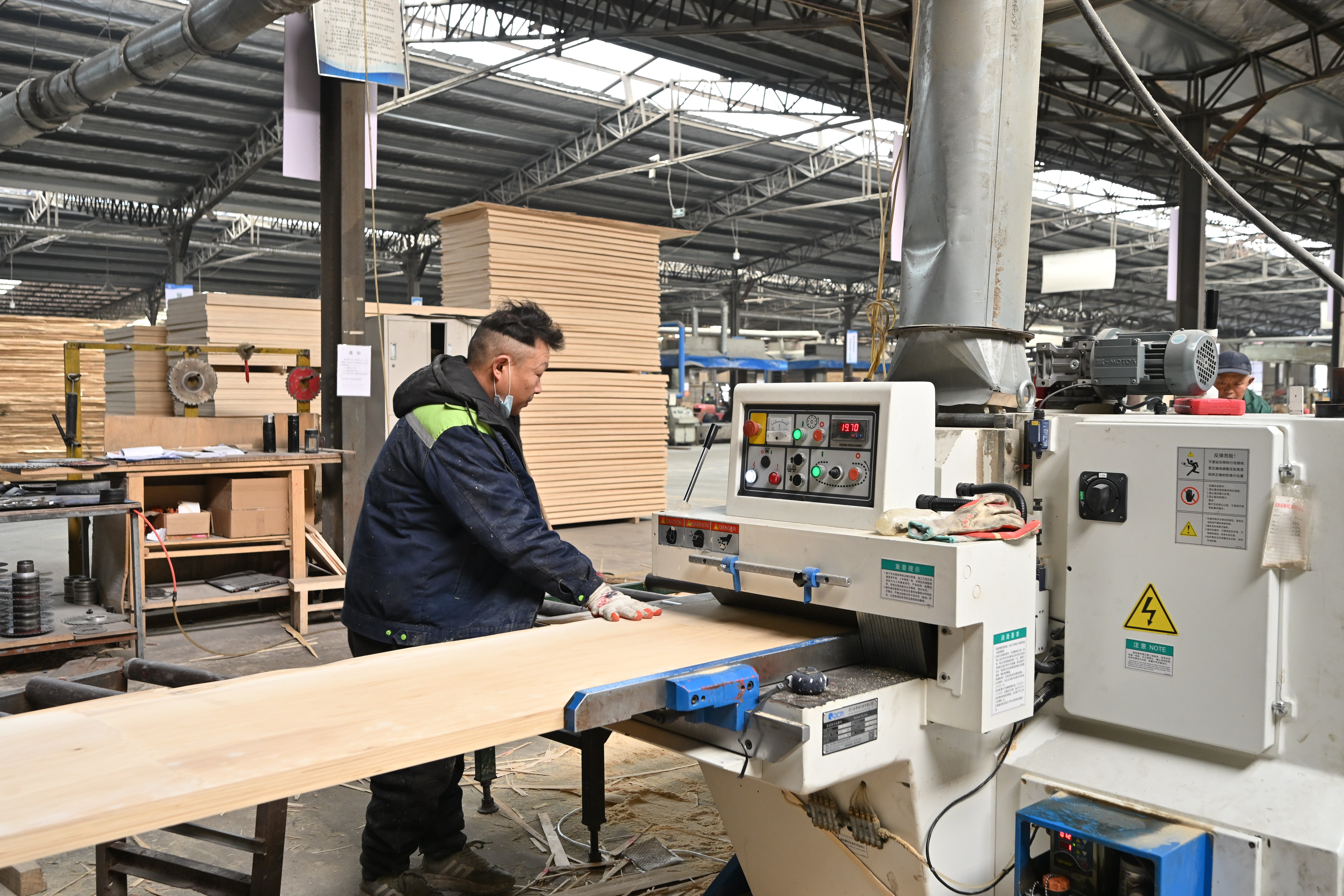
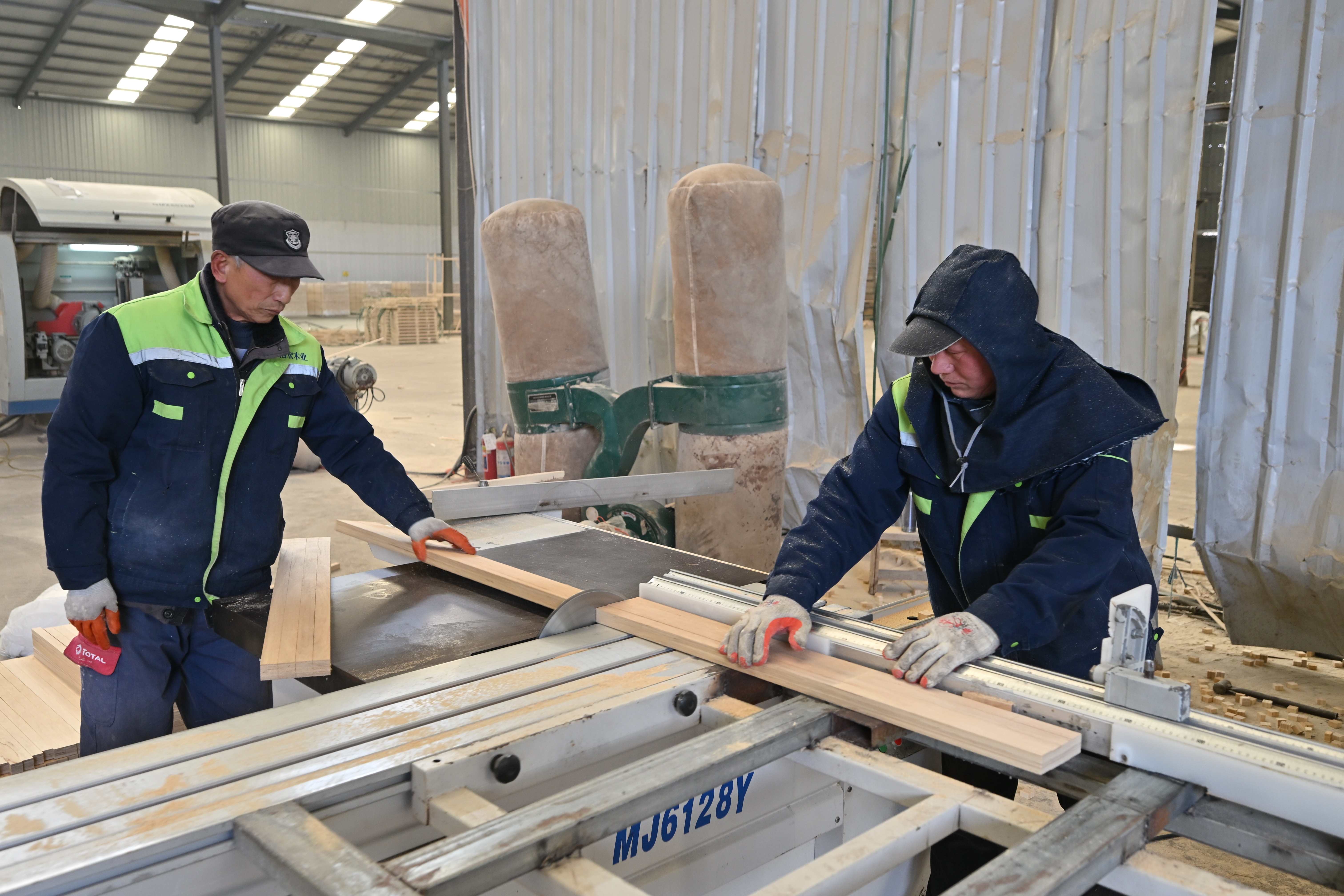
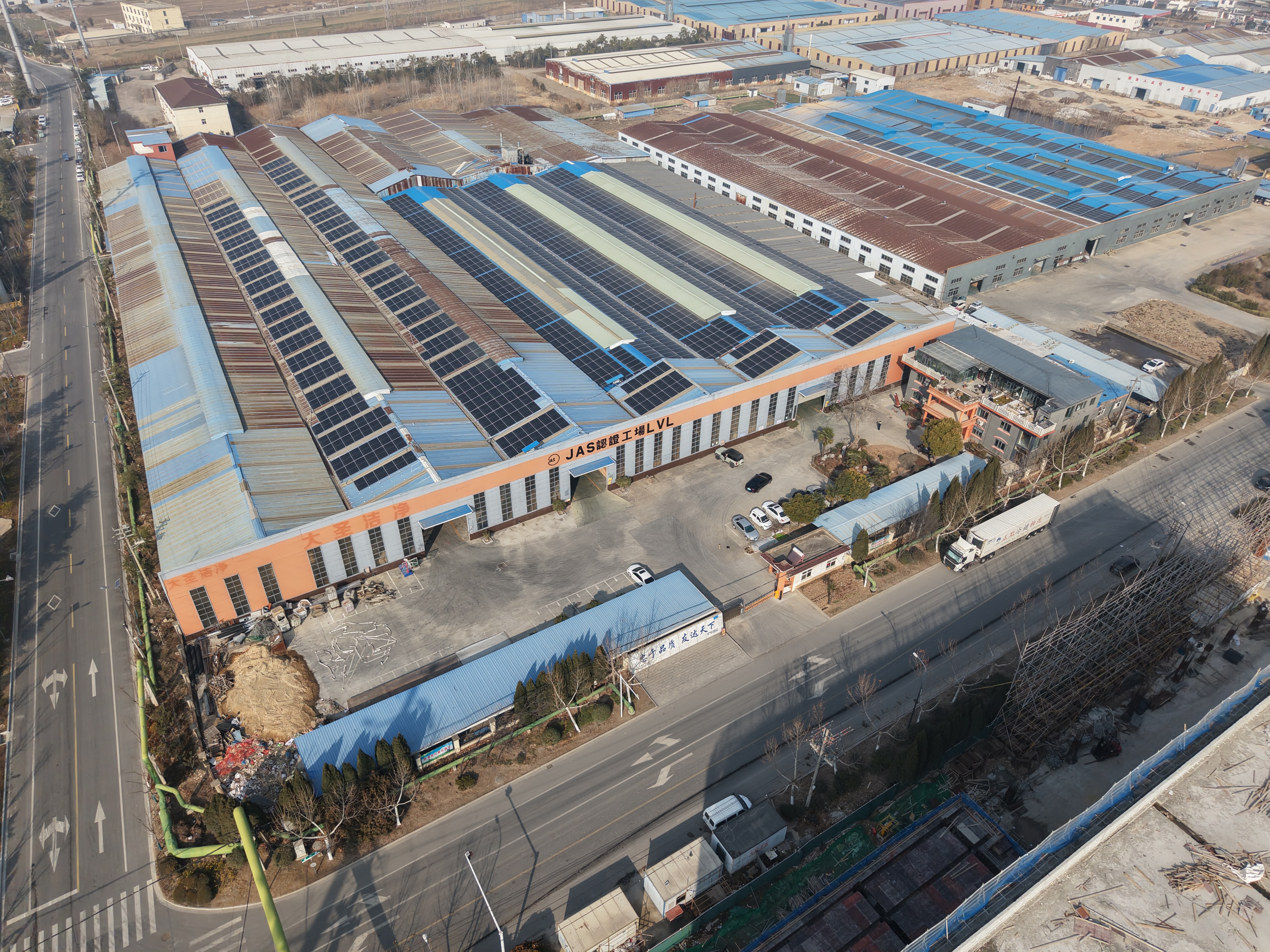
Dalian WADA International Trading Co., Ltd. is a manufacturer and global exporter of engineered wood products, established in 2010 and operating a 53,950 m² production base with 200 employees, including a 25-engineer R&D team. Its panel output runs at more than 10,000 CBM per month, across a portfolio of 10+ panel categories supported by 15+ types of woodworking machinery — a configuration that allows full-process solutions from log to finished board rather than panel supply alone. Products hold FSC, EUDR, CARB P2, EPA, JAS and JIS certification, and export is 100% of output, with North America, the EU, Australia, Japan, South Korea, the Middle East, Mexico and South America as main markets.
The portfolio is organized so that each furniture component can be matched to a specific board, rather than to a generic "wood panel" line item.
MDF: carcasses, routed fronts and painted surfaces
Medium Density Fiberboard is the workhorse for cabinet carcasses, routed decorative fronts, and components that will be painted or laminated. The MDF supplied through WADA is produced on continuous flat pressing equipment — Difenbach & Sinbelkamp (Germany) — in sizes from 4×8 to 8×16 feet and thicknesses from 1.2 mm to 50 mm, with density of 500–1000 kgs/m³, moisture content of 5%–13%, and glue systems of E0, CARB P2 or E1. Documented usage includes furniture board, routed board, lightweight high-strength board and water-proof board.
Where it fits: flat, uniform surfaces, machined profiles, edge-banded panels, shelf and door production. Where it does not: MDF is not a structural board for load-bearing spans, and standard MDF is not intended for sustained moisture exposure. Choosing it for a slat or a wet-area frame is a component-mismatch, not a price problem.
Plywood: case goods, drawers and general furniture
Commercial plywood is the general-purpose structural and semi-structural board of furniture manufacturing. Available sizes start at 4×8 feet or as required, thicknesses from 2 mm to 25 mm, face and back veneers in birch, pine, okoume, bintangor, sapeli, pencil cedar and poplar, cores in poplar, eucalyptus, combi or full birch, with glue systems of E0, CARB P2, E1, E2 or WBP. Veneer grades run from B/BB down to C/C, and density sits between 520 and 700 kgs/m³ with 8%–12% moisture content. Documented applications include furniture manufacturing, interior decoration and fit-out, packaging, door manufacturing and commercial display.
Within the plywood family, three variants answer narrower component needs:
- Marine plywood — 4×8 to 4×9 feet, 9–25 mm, birch or okoume faces with melamine WBP or phenolic WBP glue, density 600–750 kgs/m³, used in shipbuilding, boat and yacht manufacturing, high-moisture interior applications, and bathroom or kitchen manufacturing.
- Structure plywood — 3×6 to 4×8 feet, 9–28 mm, larch or pine faces with eucalyptus, larch, pine or combi cores, melamine WBP or phenolic WBP glue, density 650–750 kgs/m³, aimed at structural engineering, timber frame construction, roofing and flooring systems.
- Film faced plywood — 1200×1800 mm through 1500×3000 mm, 4–35 mm, dark brown or black film faces, cores in fingerjoint, poplar, combi, hardwood, pine or Russia birch, with MR, melamine WBP or phenolic WBP glue, density 650–750 kgs/m³. It is a construction and industrial board; in furniture operations it typically serves jigs, fixtures and heavy-duty transport components rather than visible surfaces.
LVL: bed slats and frame components
Laminated Veneer Lumber is the board that makes the component-level argument clearest. WADA's LVL bed slat is engineered specifically for linear load paths: widths from 25 mm to 190 mm, thicknesses from 7 mm to 15 mm, birch, beech or poplar faces over birch or poplar cores, E0 or E1 glue, and 8%–12% moisture content, in a furniture bed grade. Documented applications include furniture manufacturing, bedroom furniture production, home furnishing and retail, hospitality furniture supply for hotels and apartments, and e-commerce furniture sellers.
A bed slat fails on flex and fatigue, not on surface appearance. That makes LVL a specification item defined by width, thickness and glue line — the parameters that would be irrelevant if the same factory were buying a decorative board.
Veneered board: decorative faces and door fronts
Veneered board carries the surface. Sizes run 4×8 to 7×9 feet, thicknesses 2–25 mm, with faces in white oak, red oak, black walnut, parota, wenge, ash, birch, pine or sapeli, or engineered veneer, over plywood, MDF, chipboard or blockboard cores. Veneer cut type is Q/C or C/C, grades are A, AA or AAA, glue options include E0, CARB P2, E1, E2 and melamine, density is 500–750 kgs/m³, and packing follows export standard pallet packing or loose packing.
For furniture manufacturers the practical question is not whether veneer looks better than a melamine face — it is whether the project needs grain continuity, repairability and a face that can be re-finished after installation. Limit: veneered surfaces demand controlled handling and stable humidity through storage and assembly; a factory without that control usually gets better yield from a melamine or film face.
Melamine board: flat-pack and volume cabinet production
Melamine board is the volume board of modular furniture. Sizes range from 4×8 to 7×9 feet, thicknesses 2–30 mm, faces and backs in melamine paper, PET film or HPL, over plywood, MDF, particle board or blockboard cores, with E0, CARB P2, E1 or E2 glue, cabinet or furniture grade, density 550–750 kgs/m³ and 8%–12% moisture content. Documented applications include modular furniture, office furniture, retail fixtures, exhibition and shopfitting, cabinets and wardrobes, and decorative panel distribution.
Adjacent categories: wall panel, OSB/FOSB, WPC and flooring
The same component logic extends beyond core furniture boards. Wall panel and decorative panel categories serve interior fit-out and shopfitting. OSB/FOSB continues to grow as a structural and packaging board, with global production above 32 million cubic meters in 2024. WPC is expanding faster than the panel average, with an 11.7% expected CAGR to 2033, and appears increasingly in exterior and moisture-exposed applications. MDF and plywood also feed flooring and door manufacturing, which the documented industry lists confirm.
Step-by-Step: How to Run a Panel Selection Decision
A repeatable sequence prevents the two most expensive errors: specifying the wrong board, and specifying the right board through the wrong supply model.
- Define the component and its load path. Decide whether the part carries load, carries only itself, or is purely decorative. Bed slats, frames and structural members belong in LVL, structure plywood or high-density plywood; carcasses and fronts belong in MDF, melamine board or veneered board.
- Define the environment. Interiors in dry climates, high-humidity interiors, kitchens, bathrooms and outdoor or marine exposure each change the required glue system. WBP-grade glues appear in marine, structure and film faced plywood specifications; E0, E1, E2 and CARB P2 systems cover interior boards.
- Define the surface and finishing route. If the component will be painted, a routed MDF face may be the most efficient route. If it ships as a finished flat-pack panel, a melamine or PET face removes a finishing step. If grain appearance is a selling point, veneered board with Q/C or C/C cut and A/AA/AAA grade is the specification to write.
- Lock the compliance set before the price negotiation. Confirm which certificates the destination market requires — FSC, EUDR, CARB P2, EPA, JAS/JIS — and confirm the emission limits that apply, including EPA TSCA Title VI limits of 0.11 ppm for MDF and 0.05 ppm for hardwood plywood.
- Choose the supply model for your current stage. Panel-only purchasing, integrated panel plus production-line supply, or OEM/ODM customization are different commitments and should be chosen deliberately (see the comparison below).
- Validate with samples and pre-shipment testing. Match the sample against the written specification, including thickness tolerance, moisture content and face grade, and confirm the acceptance method — pre-shipment test is the standard acceptance route.
- Plan MOQ, lead time and payment terms into the project schedule. A minimum order of one 40-foot container, a 25–45 day lead time, FOB or CIF delivery terms, and T/T 30/70 or 50/50 payment structures are the commercial inputs that determine when a furniture line actually receives material.
Use Cases: Five Furniture Manufacturing Scenarios
1. Bedroom furniture and bed slat production
LVL bed slat in widths of 25–190 mm and thicknesses of 7–15 mm, with E0 or E1 glue and 8%–12% moisture content, is the component-level match for slat systems. The failure mode is flex fatigue, so width, thickness and glue line are the three specification values worth negotiating.
2. Cabinet and wardrobe carcass manufacturing
MDF from 1.2 mm to 50 mm, in sizes up to 8×16 feet, supports carcass panels, shelves and routed door fronts. Where the cabinet ships as a finished flat-pack unit, melamine board over plywood, MDF, particle board or blockboard gives a pre-finished face and removes a coating step.
3. Decorative and high-end surfaces
Veneered board in white oak, red oak, black walnut, parota, wenge, ash, birch, pine or sapeli — with Q/C or C/C veneer cut and A/AA/AAA grade — fits door fronts, table tops and display furniture where grain continuity is part of the product value.
4. Hospitality, office and retail fit-out
Modular furniture, office furniture, retail fixtures, exhibition and shopfitting all consume melamine and veneered panels in volume, with E0 or CARB P2 glue systems as the common specification. Delivery reliability matters more here than in one-off projects, because fit-out schedules are fixed by contract.
5. Humid interiors and specialty builds
Marine plywood with melamine WBP or phenolic WBP glue, and structure plywood in 9–28 mm, serve bathroom and kitchen manufacturing, boat and yacht interiors, and load-bearing furniture frames. Film faced plywood in 4–35 mm thicknesses is usually deployed in furniture operations for jigs, fixtures and heavy-duty transport parts rather than visible surfaces.
Wood Panel Comparison Table for Furniture Manufacturing
The table below maps each documented panel category to its typical furniture component, the parameters that define the specification, and the boundary where the board stops being the right choice.
| Panel type | Typical furniture component | Key documented parameters | Fits when | Limit / caution |
|---|---|---|---|---|
| MDF | Carcass, shelf, routed front, painted door | 4×8–8×16 ft; 1.2–50 mm; E0 / CARB P2 / E1; 500–1000 kgs/m³; MC 5%–13% | Uniform machining, painting, lamination, edge-banding | Not a structural or load-bearing board; standard MDF not for sustained moisture exposure |
| LVL bed slat | Bed slat, frame component | Width 25–190 mm; 7–15 mm; birch / beech / poplar; E0 / E1; MC 8%–12% | Linear load paths, fatigue resistance, repeatable slat dimensions | Engineered for defined load direction — not a general surface or panel board |
| Commercial plywood | Case goods, drawers, general furniture, packing | 4×8 ft or as required; 2–25 mm; E0 / CARB P2 / E1 / E2 / WBP; 520–700 kgs/m³ | Structural and semi-structural furniture parts, door manufacturing | Face/back grade must be specified — B/BB and C/C behave differently on visible edges |
| Marine plywood | Humid-interior furniture, kitchen and bathroom units | 4×8–4×9 ft; 9–25 mm; melamine WBP / phenolic WBP; 600–750 kgs/m³ | High-moisture interior applications, boat and yacht interiors | Specify glue system explicitly; marine grade addresses moisture, not permanent immersion |
| Structure plywood | Load-bearing frames, structural furniture members | 3×6–4×8 ft; 9–28 mm; larch / pine face; WBP; 650–750 kgs/m³ | Structural engineering, timber frame, roofing and flooring systems | Heavier and denser than decorative boards — check weight impact on finished furniture |
| Film faced plywood | Jigs, fixtures, heavy-duty transport parts | 1200×1800 to 1500×3000 mm; 4–35 mm; MR / melamine WBP / phenolic WBP; 650–750 kgs/m³ | Repeated use under abrasion and concrete-contact duty | Not a furniture surface board; film face is not intended as a decorative finish |
| Veneered board | Door front, table top, display furniture | 4×8–7×9 ft; 2–25 mm; Q/C or C/C cut; grade A / AA / AAA; 500–750 kgs/m³ | Grain appearance, re-finishable surfaces, premium product lines | Requires humidity-controlled handling; repairability comes with surface sensitivity |
| Melamine board | Flat-pack panels, wardrobe, retail fixture | 4×8–7×9 ft; 2–30 mm; melamine paper / PET film / HPL face; E0 / CARB P2 / E1 / E2; 550–750 kgs/m³ | Pre-finished volume production, modular and office furniture | Surface damage is difficult to repair in the field; core choice still drives strength |
Buy Finished Panels or Build Production Capacity?
The second decision in panel sourcing is not which board, but which position in the value chain. A business that resells standard panels, and a business that runs a furniture line with fixed output, should not be buying the same way.
The core difference is coverage. Panel-only suppliers typically offer 5–6 panel products with no production equipment or system integration — for example, Shouguang Wanda Wood Co., Ltd. operates on that panel-supply model. It is a straightforward and legitimate model when a buyer only needs materials. Integrated suppliers work across both sides: 10+ panel categories plus 15+ types of machinery, enabling full-process solutions from log to finished board, with unified responsibility for the entire production line and system compatibility as part of the package.
Cost logic differs accordingly. A buyer of finished panels optimizes purchase price, freight and payment terms. A manufacturer investing in a production line optimizes process cost over time — and the operational value of automation and process optimization, as WADA defines it for its line customers, includes reducing labor by 30–50%.
| Business stage | What you actually need | Practical model | Cost logic |
|---|---|---|---|
| Trading, distribution, early-stage resale | Standard panel categories in container volumes | Buy finished panels; MOQ one 40-foot container; FOB or CIF | Cost controlled by panel price, freight and payment terms (T/T 30/70 or 50/50) |
| Brand owner with a stable SKU range | Consistent panels plus customized size and surface | Panel purchase combined with OEM/ODM customization | Cost controlled by specification discipline and repeat-order stability |
| Manufacturer building a new factory | Panels plus production equipment and process design | Integrated supply: panel portfolio plus 15+ machinery types, log to finished board | Capex offset over time through automation and process optimization |
| Manufacturer upgrading an existing line | Equipment integration without breaking current output | Integrated supply with unified line responsibility and system compatibility | Avoids multi-supplier coordination risk and duplicated accountability |
| Long-term partnership stage | Supply continuity, stable quality, planned delivery | Integrated one-stop supply with production planning and schedule control | Cost controlled by continuity: stable sourcing and multi-stage QC reduce rework and delay |
WADA serves both sides of this decision. Buyers of finished panels and manufacturers building or upgrading factories work with the same supplier, under flexible cooperation models, and can move between models as their stage changes — which is the practical meaning of supply-chain partnership rather than a purchase order.
FAQ: Wood Panel Sourcing for Furniture Manufacturers
What certifications should a wood panel supplier hold for furniture exports to the EU and the US?
For the European Union, wood-based panels used in construction must comply with the harmonized European standard EN 13986 to be eligible for CE marking (European Panel Federation). For the United States, EPA TSCA Title VI sets formaldehyde emission limits of 0.11 ppm for MDF and 0.05 ppm for hardwood plywood (US Environmental Protection Agency). WADA products hold FSC, EUDR, CARB P2, EPA, JAS and JIS certification, which covers the certificate set most often requested by EU, US, Australian and Japanese buyers. Certificates should be verified against the exact product and specification being ordered.
Can a single supplier cover both panel categories and production equipment?
Dalian WADA International Trading Co., Ltd. operates a portfolio of 10+ panel categories plus 15+ types of machinery, enabling full-process solutions from log to finished board, from a 53,950 m² facility with 200 employees and a 25-engineer R&D team. Monthly panel capacity exceeds 10,000 CBM. A panel-only supplier, by contrast, typically offers 5–6 panel products without production equipment or system integration. Which structure suits a buyer depends on whether the requirement is materials alone or materials plus process capability.
What is the minimum order, and when does investing in a production line make sense?
The minimum order is one 40-foot container, with FOB or CIF delivery terms and T/T 30/70 or 50/50 payment structures. Buying finished panels directly is the lower-risk route when volumes or product mix are still variable, because cost is captured in the purchase price and freight. Investing in production capacity becomes the more rational route once output is stable enough to absorb equipment and process design — in that case, integrated line solutions as defined by WADA include automation and process optimization intended to reduce labor by 30–50%, and the cost is recovered through production rather than through purchasing.
How can we validate a panel before committing to a full container?
Validation runs on three levels: a specification match covering size, thickness, glue system, face grade and moisture content; a sample check against the intended component and finishing route; and a pre-shipment test, which is the standard acceptance method for orders. WADA supports personalized size and surface customization under OEM and ODM programs, so sample evaluation can be run against the exact specification rather than an approximation, and multi-stage quality inspection covers the panel before it leaves the production base.
What lead time and capacity should we plan into a furniture production schedule?
Plan on a 25–45 day lead time, backed by monthly panel production capacity above 10,000 CBM and production planning and schedule control to protect delivery dates. Because supply risk in this category typically shows up as delivery delay or raw material fluctuation rather than as a pricing event, the useful planning inputs are confirmed capacity, a written schedule, and a supplier with stable sourcing through long-term material partners. If your project is moving from specification to shipment, you can review the full WADA portfolio and production capabilities in the WADA Group product brochure, or send your component list and annual volume for a matching recommendation.
Next Steps for Furniture Manufacturers
Panel selection holds up when it is treated as three linked decisions: match the board to the component, match the glue and compliance set to the environment and the destination market, and match the procurement model to the business stage. The first two decide whether the product performs. The third decides whether the business scales.
Furniture manufacturers working on frames, slats, carcasses and decorative surfaces can send their component list and target market and receive a panel-to-component recommendation, sample arrangement and container plan covering MOQ, lead time and payment terms.
Request a panel-to-component recommendation
Dalian WADA International Trading Co., Ltd. — established 2010, 100% export, serving partners in more than 50 countries.
Email: wada@wadatrade.com | Tel / WhatsApp: +86 131-3003-0584 | Website: www.wadaplywood.com
Download the WADA Group catalogue for the full panel and machinery portfolio.
Have Questions or Need More Details?
Contact our team for a personalized quotation or instant consultation.
Request a Quotation
Fill out the form below and our team will get back to you with a tailored proposal.
WhatsApp Direct Chat
Prefer to chat in real-time? Message us on WhatsApp for instant assistance & quick answers.
- Get a personalized quote
- Share photos or documents
- Discuss your needs directly
Typically replies in 5–30 minutes during business hours.