
Verifying Wood Panel Supplier Claims: Capacity, Lead Time & QC
How to Verify a Wood Panel Manufacturer's Claims: Capacity, Lead Time, and QC Evidence
A wood panel sourcing decision is usually made before anyone can walk the factory floor. What a procurement team actually receives is a set of claims: a stated production capacity, a quoted lead time, a description of quality control, and a promise of after-sales support. The workable approach is not to believe or disbelieve those claims in general terms, but to convert each one into something checkable — a number, a document, or a process step that can be confirmed before the first order.
This guide sets out that verification method for wood panel, plywood, MDF, LVL, and melamine board sourcing. It explains which claims carry real weight, what evidence supports each one, and where buyers most often accept a claim that was never verifiable. Dalian WADA International Trading Co., Ltd., trading as WADA GROUP, is used as a worked example: it is a manufacturer and global exporter of engineered wood products established in 2010, and its published operating facts show what a supplier's disclosure can look like when claims are meant to be checked.
Problem Definition: A Claim Is Not a Capability
A capability claim becomes verifiable only when it is tied to a unit of measure, a document, or an observable process. Most sourcing friction comes from claims that never reach that stage. Three situations recur.
- The vague claim that is never tested. Phrases such as "strong production capacity," "fast delivery," or "strict quality control" describe no measurable property. They cannot be confirmed or refuted, so they carry no decision value.
- The claim that is true only for a reference order. A supplier may hold a quality level on a familiar panel size or a simple specification and lose it on a custom size, an unusual thickness, or a different glue system. The claim was honest for one product, not for the product being bought.
- The repeated claim. A trading intermediary can accurately describe a factory that it does not control. Capacity, QC, and corrective action then depend on a third party the buyer has never assessed.
The practical rule that follows is simple: treat any claim that cannot be attached to a number, a document, or a process step as unverified marketing, not as procurement information.
Industry Background: Why the Verification Bar Has Risen
Engineered wood panels are a large and still-growing category, which means more suppliers enter the market each year and buyers carry more verification load than a decade ago. The global plywood market was valued at USD 80.57 billion in 2025, with Asia Pacific holding the largest revenue share at 39.4%, according to Grand View Research. Grand View Research also projects the global Medium Density Fiberboard market to grow from USD 44.96 billion in 2025 to USD 82.24 billion by 2033, at a CAGR of 8.2%. In a separate category, Oriented Strand Board production reached over 32 million cubic meters globally in 2024, with the USA accounting for 14 million cubic meters, per Market Reports World. And the Wood Plastic Composites market reached USD 8.89 billion in 2025, with an expected CAGR of 11.7% until 2033, again per Grand View Research.
Those figures are useful context, but they also illustrate why verification matters — analysts themselves do not agree. Grand View Research places the 2025 plywood market at USD 80.57 billion while IMARC Group puts it at USD 52.5 billion, and aggregate wood-based panel totals differ widely depending on how sub-categories are combined. A buyer who applies careful scrutiny to market numbers should apply the same scrutiny to a factory claim.
Regulatory pressure has pushed more of the panel specification into checkable territory. Wood-based panels used in construction in the European Union must comply with the harmonized standard EN 13986 to be eligible for CE marking, per the European Panel Federation. In the United States, the EPA TSCA Title VI regulation sets formaldehyde emission limits for composite wood products at 0.11 ppm for MDF and 0.05 ppm for hardwood plywood, according to the US Environmental Protection Agency. Trade flows reinforce the same point: China was the second largest exporter of raw timber (HS 44) to the U.S. in 2024, contributing USD 2.17 billion, a 9% share, per ITC and US Census Bureau data.
The consequence for buyers is that certification, emission, and specification claims are no longer generic differentiators. They are facts that can be requested, read, and cross-checked — and a supplier that handles those requests smoothly is usually a supplier whose other claims will also survive scrutiny.
The Four Claim Families That Decide a Wood Panel Order
Almost every supplier claim in panel sourcing falls into one of four families. Each has a different evidence type and a different verification method.
1. Capacity Claims: From "Large Capacity" to a Comparable Figure
A credible supplier should be able to express capacity on a monthly basis for the specific panel type, size, and thickness being quoted, not as a single factory-wide number. That monthly figure is only credible if the inputs behind it are disclosed. The inputs that matter are physical space, workforce, equipment, and product coverage.
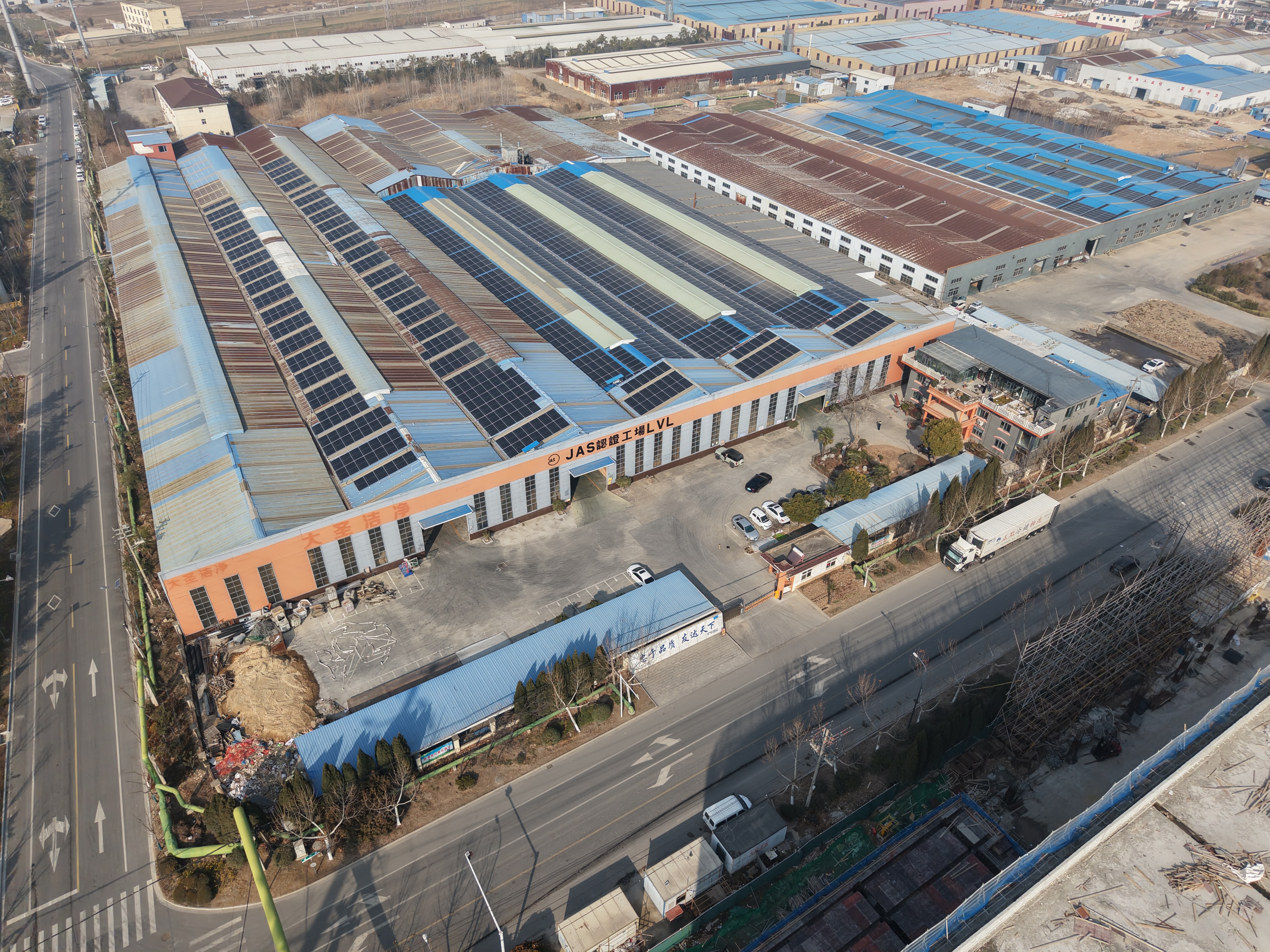
WADA's published operating facts illustrate the level of disclosure that allows a monthly capacity statement to be tested: a manufacturing facility of 53,950 square meters, approximately 200 staff, an R&D team of 25 engineers, and an annual production value of about USD 3.5–4 million. Its product coverage includes LVL, plywood, veneered board, MDF, OSB, wall panel, and woodworking machine. From these inputs, a buyer can ask how a specific order — for example 4x8 ft MDF at a defined thickness, or 9–28 mm structural plywood — is scheduled within that base, and whether the answer changes when the order is placed in a peak month.
A capacity claim that arrives without a product-specific monthly figure, or with a figure that cannot be reconciled against disclosed facility and equipment facts, is not yet a capability claim. It is a sales position.
2. Lead Time Claims: Derived Numbers, Not Promises
Lead time is an output of capacity, product mix, and packing. It is therefore checkable. A supplier that cannot explain how the quoted lead time was calculated is quoting an expectation rather than a schedule.
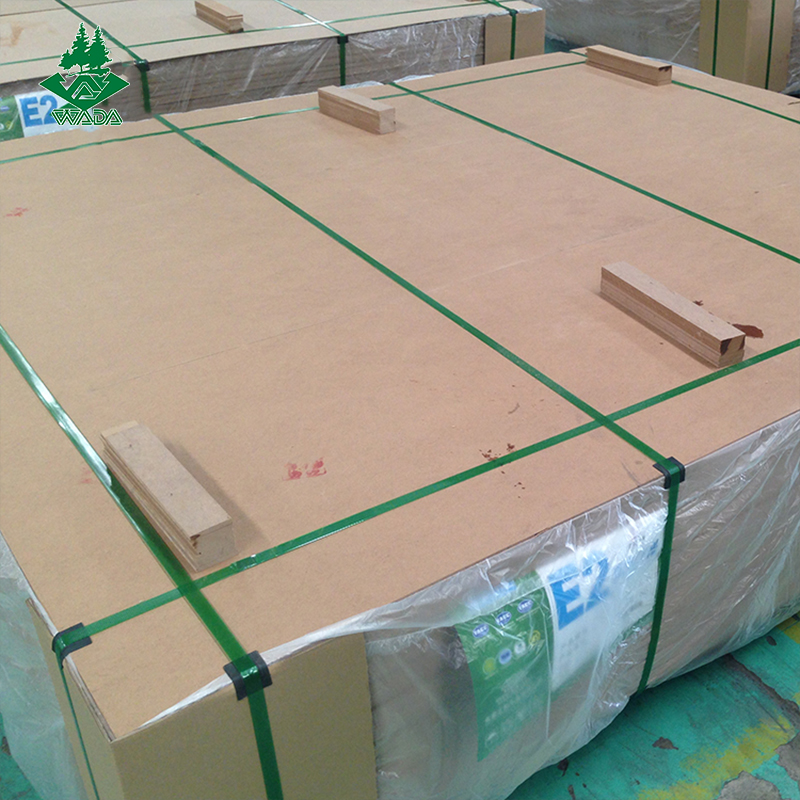
Useful verification questions include: is the order supplied from stock or from production scheduling; which line runs this panel type; is the material pressed on a continuous line or a multi-opening press; and how is the shipment packed. Packing matters more than most buyers expect — export standard pallet packing and loose packing involve different handling and consolidation time, and both appear as standard options in WADA's product specifications. A lead time that ignores packing method and destination market is incomplete.
Verification check: Ask the supplier to state the lead time and the capacity basis it was calculated from — the panel type, the line, and the order volume assumed. If the two items do not appear together, the number is not yet verifiable.
3. Quality Control Claims: From Adjectives to Measured Variables
Quality control is the claim family buyers accept most readily and test least often, because the description usually sounds technical. The verification move is to check whether the supplier's QC description references the same variables that appear in the specification you are buying.
Panel performance is governed by measurable parameters, and each one gives a buyer a checkpoint:
- Density. MDF is specified at 500–1000 kgs/m³; marine plywood at 600–750 kgs/m³; commercial plywood at 520–700 kgs/m³; structure plywood at 650–750 kgs/m³; film faced plywood at 650–750 kgs/m³.
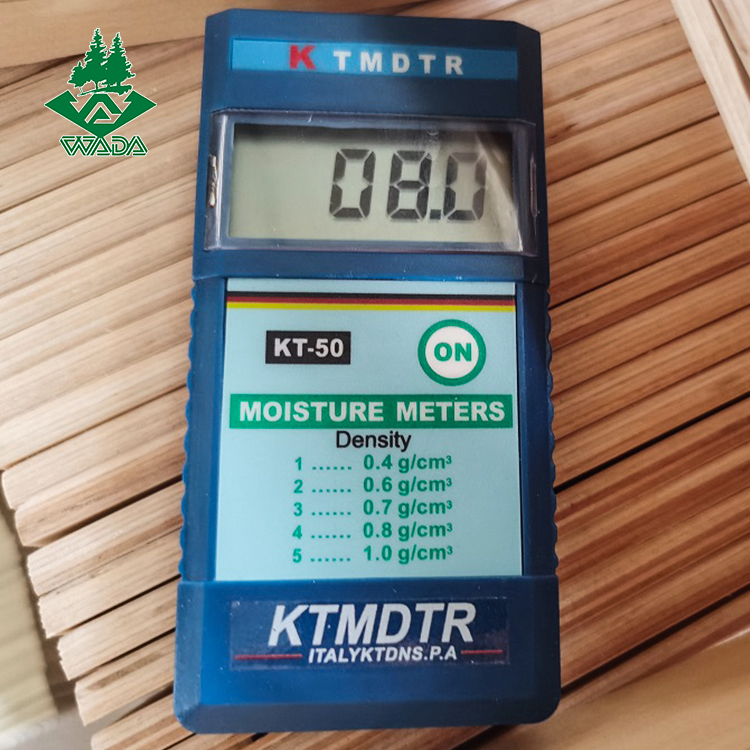
- Moisture content. Most plywood grades are specified at 8%–12%; MDF spans 5%–13%. A supplier that measures and reports moisture content per batch is describing process control rather than a slogan.
- Glue system. MDF is produced with E0, CARB P2, or E1 glue; commercial plywood with E0, CARB P2, E1, E2, or WBP; marine and structure plywood with Melamine WBP or Phenolic WBP; film faced plywood with MR, Melamine WBP, or Phenolic WBP.
- Veneer grading. Commercial plywood is graded across B/BB, BB/BB, BB/CP, BB/C, CP/CP, CP/C, and C/C. A grade claim is only meaningful when the grading rule is stated.
- Thickness range. MDF runs from 1.2 to 50 mm; film faced plywood from 4 to 35 mm; structure plywood from 9 to 28 mm; marine plywood from 9 to 25 mm; LVL bed slat from 7 to 15 mm with widths of 25 to 190 mm.
The equipment behind those variables is also part of the claim. WADA's MDF production uses continuous flat pressing with equipment from Difenbach and Sinbelkamp of Germany, and its plywood lines include veneer peeling, veneer drying, veneer patching, core veneer composing, an automatic lay-up line, cold press, hot press, sanding, and a fully automatic cross saw. Each of these process steps corresponds to a defect type that QC is supposed to prevent — veneer patching to face defects, core composing to voids and overlaps, cold and hot pressing to bond integrity, and sanding to thickness consistency.
4. After-Sales Claims: Who Owns the Problem After Shipment
After-sales support is the claim family most often stated and least often structured. The verifiable questions are: who handles a claim, at what point in the chain, and with what authority? A trading intermediary may pass a claim back to a factory it does not control, which lengthens resolution time regardless of the supplier's stated commitment.
Two structural facts help a buyer judge this claim. First, does the supplier operate its own factories, trading companies, and overseas branches — WADA operates overseas branches in Japan and Singapore, which means a regional response path exists beyond the domestic office. Second, is the technical contact able to discuss specifications rather than only order status? A supplier with an in-house engineering team can answer questions about glue selection, density targets, and application fit; a supplier without one will usually redirect those questions or answer them vaguely.
WADA's export profile adds one more checkable dimension: roughly 100% of its products are exported, serving customers in more than 50 countries and regions, with major markets in North America, the EU, Australia, Japan, South Korea, the Middle East, Mexico, and South America. A supplier with a broad export base has usually already absorbed the compliance and documentation demands of those markets — which shows up in how quickly it produces paperwork when asked.
Step-by-Step Breakdown: A Pre-Order Verification Sequence
The sequence below can be run within a normal quotation cycle. It is ordered so that each step produces the input for the next.
Step 1 — Record the claim in the supplier's own wording
Write down what was actually said, without softening it: "monthly capacity sufficient for your order," "lead time confirmed after deposit," "strict QC on every batch." Vague phrasing is itself information, and it becomes the baseline for the next step.
Step 2 — Convert the claim into a checkable unit
Capacity becomes panels per month for a named product, size, and thickness. Lead time becomes calendar days from deposit to loading, tied to a stated production basis. QC becomes a measurable variable — density, moisture content, glue type, veneer grade, thickness tolerance. After-sales becomes a named contact, a response path, and a defined claim procedure.
Step 3 — Request the evidence pack
A short, specific list works better than a broad request. Ask for: the operating figures behind the capacity claim; the certification documents relevant to your destination market; the QC parameters recorded per batch; the packing standard (export standard pallet packing or loose packing); and the internal claim handling procedure.
Step 4 — Cross-check documents against physical evidence
Documents should be consistent with visible reality. Factory photography, production line images, equipment identification, and packing photographs give a buyer a way to test whether the described process matches the physical plant. When a supplier can supply aerial and production-floor images of the same facility referenced in its capacity figures, the claim set becomes coherent.

Step 5 — Verify certification scope, not just the logo
A certification claim should be checked at the level of scope and applicability. WADA's products are certified with FSC, EUDR, CARB P2, EPA, JAS and JIS, and the MDF range carries FSC, CARB/EPA, JIS, and EUDR certificates. The verification question is whether the certificate covers the specific panel type, factory, and market you are buying into — for the EU, that includes the CE marking framework under EN 13986; for the US, the EPA TSCA Title VI limits of 0.11 ppm for MDF and 0.05 ppm for hardwood plywood.
Step 6 — Test the lead time logic against the capacity basis
Place the two claims side by side. If the monthly capacity figure cannot absorb your order volume within the stated lead time, one of the two numbers is not grounded. Ask the supplier to explain the scheduling assumption rather than simply reconfirming the date.
Step 7 — Use the response path before you need it
Send one technical question during the quotation stage — for example, which glue system suits a high-humidity application, or how density is controlled when the panel is routed. The speed and specificity of the reply is the most reliable preview of after-sales performance you will get before shipment.
Use Cases: Where Claim Priority Changes
Not every claim carries equal risk in every project. Matching the verification effort to the application is what keeps the process efficient.
- Australia — building construction, outdoor structural use. Structural support in long-term outdoor conditions with waterproof and high-strength requirements. Structure Plywood, specified at 9–28 mm with Larch or Pine faces and Melamine WBP or Phenolic WBP glue, is the relevant family. Here the capacity and QC claims carry the most risk, because a bond or density failure appears only after installation.
- United States — interior finishing, wall, kitchen, and furniture material. Panels are permanently installed in a dry indoor environment, with eco-friendly and formaldehyde-free requirements. Certification claims dominate: CARB P2 and EPA compliance, checked against the TSCA Title VI emission limits of 0.11 ppm for MDF and 0.05 ppm for hardwood plywood.
- Poland — furniture manufacturing, workshop production, continuous mode. The requirement is a smooth surface and a stable core for cabinet and panel making. QC consistency claims matter most: veneer grade, core composition, density range, and thickness tolerance across batches rather than within a single sample.
- Singapore — industrial packaging, heavy-duty transport. Crating and protection with high load capacity, in one-time or reusable operation. Lead time and volume claims dominate, because packaging panels are bought to a shipment schedule rather than to a long-term aesthetic standard.
- Mexico — outdoor decoration, exterior wall cladding, long-term outdoor use. UV-resistant and weather-resistant performance with an installation system and fasteners. Durability claims and technical support claims matter most, since installation detail affects service life as much as the panel does.
Comparison Table: Which Evidence Answers Which Claim
The table below maps each claim family to the evidence that supports it and the check a buyer can perform without visiting the plant.
| Claim family | Typical claim wording | Evidence to request | Buyer-side check |
|---|---|---|---|
| Capacity | "We have large production capacity." | Facility area, headcount, equipment list, product range, monthly output by panel type | Reconcile the monthly figure for your panel type against disclosed facility and equipment facts (e.g. 53,950 m² facility, ~200 staff, 25 R&D engineers) |
| Lead time | "Delivery is fast and reliable." | Production basis (stock or schedule), line assignment, packing standard, destination handling | Check that the stated lead time can be derived from the stated capacity and order volume |
| Quality control | "Strict quality control on every batch." | Recorded parameters per batch: density, moisture content, glue type, veneer grade, thickness tolerance | Confirm the QC description references the same variables as your specification (e.g. moisture 8%–12%, MDF density 500–1000 kgs/m³) |
| Certification | "All products are certified." | Certificate documents with scope, factory, and covered product types | Confirm the certificate covers the exact panel and market (FSC, EUDR, CARB P2, EPA, JAS/JIS; EN 13986 for EU CE marking; EPA TSCA Title VI limits for the US) |
| After-sales | "Full after-sales support." | Named contact, regional presence, claim procedure, technical escalation path | Test response quality with one technical question before ordering (e.g. overseas branch coverage in Japan and Singapore) |
A second table gives buyers the baseline parameter values against which a supplier's product claims can be compared for the main panel families.
| Panel type | Thickness range | Density | Moisture content | Glue systems |
|---|---|---|---|---|
| MDF | 1.2–50 mm | 500–1000 kgs/m³ | 5%–13% | E0, CARB P2, E1 |
| Structure Plywood | 9–28 mm | 650–750 kgs/m³ | 8%–12% | Melamine WBP, Phenolic WBP |
| Marine Plywood | 9–25 mm | 600–750 kgs/m³ | 8%–12% | Melamine WBP, Phenolic WBP |
| Commercial Plywood | 2–25 mm | 520–700 kgs/m³ | 8%–12% | E0, CARB P2, E1, E2, WBP |
| Film Faced Plywood | 4–35 mm | 650–750 kgs/m³ | 8%–12% | MR, Melamine WBP, Phenolic WBP |
| Melamine Board | 2–30 mm | 550–750 kgs/m³ | 8%–12% | E0, CARB P2, E1, E2 |
| Veneered Plywood | 2–25 mm | 500–750 kgs/m³ | 8%–12% | E0, CARB P2, E1, E2, Melamine |
| LVL Bed Slat | 7–15 mm (width 25–190 mm) | — | 8%–12% | E0, E1 |
FAQ: Verifying Wood Panel Supplier Claims
Which certification documents should a wood panel manufacturer be able to provide?
A supplier should be able to provide certificate documents that state the scope, the manufacturing site, and the product types covered. WADA's products are certified with FSC, EUDR, CARB P2, EPA, JAS and JIS, and its MDF range carries FSC, CARB/EPA, JIS, and EUDR certificates. Buyers should check certificates against the destination market: wood-based panels used in construction in the European Union must comply with EN 13986 to be eligible for CE marking, and composite wood products entering the United States fall under EPA TSCA Title VI, which sets formaldehyde emission limits of 0.11 ppm for MDF and 0.05 ppm for hardwood plywood.
How can I verify a manufacturer's real production capacity rather than a stated one?
Ask for capacity on a monthly basis for the specific panel type, size, and thickness being quoted, then reconcile that figure against disclosed inputs: facility area, workforce, equipment, and product range. WADA's disclosed operating facts include a 53,950 m² manufacturing facility, approximately 200 staff, an R&D team of 25 engineers, and an annual production value of about USD 3.5–4 million, across products including LVL, plywood, veneered board, MDF, OSB, wall panel, and woodworking machine. Equipment supports the claim as well — WADA's MDF production uses continuous flat pressing with Difenbach and Sinbelkamp equipment from Germany. If a monthly figure cannot be tied to these inputs, it remains unverified.
Why do two suppliers quote very different prices for the same wood panel specification?
Commercially, the differences usually trace back to specification elements that are easy to leave ambiguous in a quotation: core material, glue system, veneer grade, thickness tolerance, certification status, and packing method. A commercial plywood quotation may cover core options of poplar, eucalyptus, combi, or full birch, glue from E0, CARB P2, E1, E2, or WBP, and veneer grades from B/BB through C/C — each of which changes cost. Density range and moisture content also vary by panel family, from 500–1000 kgs/m³ for MDF to 520–700 kgs/m³ for commercial plywood. The practical step is to ask each supplier to state these parameters explicitly in writing, so the comparison is made between equivalent specifications rather than between two different products.
How should I use samples to verify what a supplier claims?
A sample is only useful if it matches the production specification rather than a hand-selected board. Ask for the sample to be drawn from a normal production batch and accompanied by the batch parameters: density, moisture content, glue type, veneer grade, and thickness. For plywood families, moisture content is normally specified at 8%–12%, and for MDF between 5% and 13%. Physical checks on the sample — measuring thickness across the panel, checking core composition for voids or overlaps, and reviewing face veneer consistency — reveal more than visual inspection alone. If the supplier cannot state the parameters of the board it sent, the sample demonstrates appearance, not capability.
What should a manufacturer disclose about lead time and delivery before a first order?
Before the first order, a supplier should disclose the production basis for the lead time — whether the order is served from stock or from scheduling — along with the line assigned to the panel type, the packing standard, and the destination handling arrangement. WADA's product specifications list export standard pallet packing or loose packing as standard options, and the choice affects handling time as well as damage risk. A supplier with an established export base is usually easier to verify on this point: WADA exports approximately 100% of its products, serving customers in more than 50 countries and regions across North America, the EU, Australia, Japan, South Korea, the Middle East, Mexico, and South America, and operates overseas branches in Japan and Singapore. The next step for a buyer is to test that path directly — request a sample or a quotation with the full parameter set, and check how quickly and how specifically the technical questions come back.
Conclusion: Verification Is a Sequence, Not a Single Question
Evaluating a wood panel manufacturer's claims is less about scepticism and more about structure. Capacity becomes verifiable when it is expressed monthly for a named panel type and reconciled against facility, workforce, and equipment facts. Lead time becomes verifiable when it is derived from that capacity basis and the packing standard. Quality control becomes verifiable when it references the measurable variables in the specification — density, moisture content, glue system, veneer grade, thickness tolerance. Certification becomes verifiable when the certificate scope matches the panel and the destination market. After-sales becomes verifiable when there is a named path and a technically competent response.
WADA GROUP, formally Dalian WADA International Trading Co., Ltd., has operated since 2010 with over 15 years of experience in engineered wood products, integrating independent R&D, standardized production, quality control, and global sales service. Its published operating facts and product specifications are structured so that buyers can run exactly the checks described in this guide rather than accepting a claim at face value.
Next Step
If you are preparing a panel specification and want the parameters, capacity basis, and certification scope in writing, request a sample or a quotation from WADA GROUP. Review the full product and capability range in the company brochure, or send your specification directly and ask for the batch-level details behind the quote.
Brochure download: WADA Group Product & Capability Brochure (PDF)
Website: www.wadaplywood.com
Email: wada@wadatrade.com
Tel / WhatsApp: +86 131-3003-0584
Office: Room 702, Building A, Xinghai International Financial Center, NO.13-15, Area A Xinghai Square, Shahekou District, Dalian, China
Have Questions or Need More Details?
Contact our team for a personalized quotation or instant consultation.
Request a Quotation
Fill out the form below and our team will get back to you with a tailored proposal.
WhatsApp Direct Chat
Prefer to chat in real-time? Message us on WhatsApp for instant assistance & quick answers.
- Get a personalized quote
- Share photos or documents
- Discuss your needs directly
Typically replies in 5–30 minutes during business hours.