Sourcing Woes? Solving Panel Consistency Issues with Reliable Manufacturing Partners
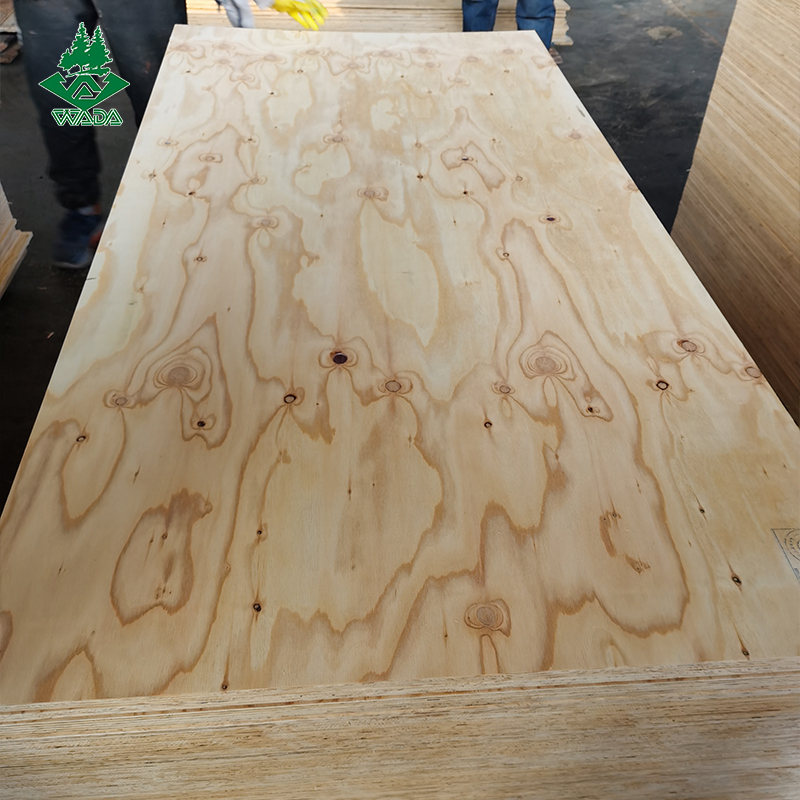
Dalian WADA International Trading Co., Ltd. (WADA GROUP) is a manufacturer and global exporter of engineered wood products established in 2010 in Dalian, China. The company produces LVL, plywood, veneered board, MDF, OSB and wall panels, together with woodworking machinery, across multiple production bases in China, with overseas branches in Japan and Singapore. Its entire output is exported to North America, the EU, Australia, Japan, South Korea, the Middle East, Mexico and South America.
This article breaks down what panel inconsistency actually costs a buyer, why the problem has become more acute across plywood, MDF and engineered board sourcing, and what a sourcing and QC structure looks like when it is designed to remove the risk — including the inspection scope and lead-time window to write into your next purchase order.
Problem Definition: What “Panel Consistency” Actually Means in a Purchase Order
Consistency is not a single property. It is a group of tolerances that have to hold at the same time, order after order. Buyers who treat it as one item — “18 mm MDF” — leave the rest of the specification open, and that is where variation enters.
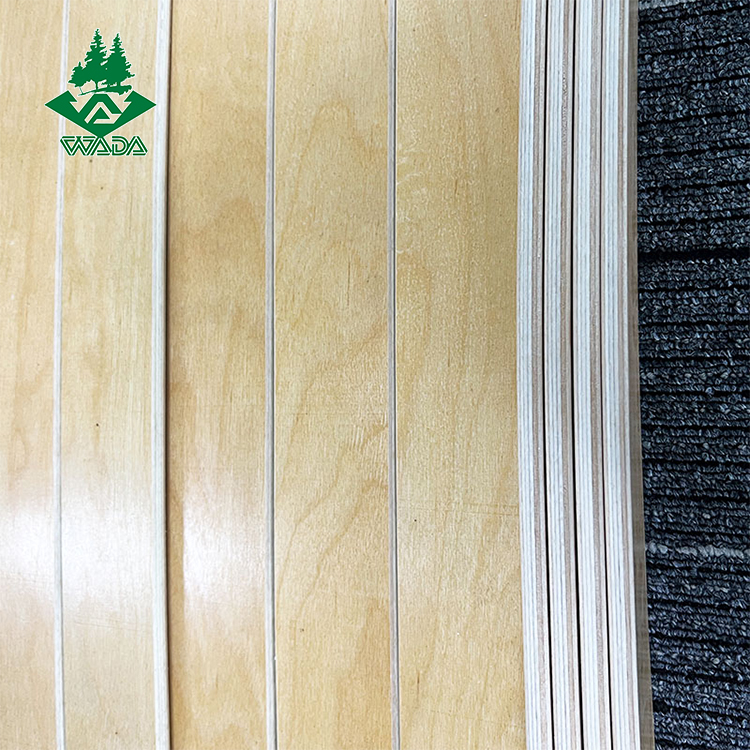
- Dimensions and thickness. Commercial plywood is supplied from 2–25 mm, film faced plywood from 4–35 mm, MDF from 1.2–50 mm, and LVL bed slats at 7–15 mm thickness with widths of 25–190 mm. Thickness drift is what stops a CNC or edge-banding line.
- Density. MDF spans roughly 500–1000 kg/m³ depending on grade; plywood families sit between 520–750 kg/m³. Density changes screw-holding, machining behaviour and total container weight.
- Moisture content. Plywood, LVL, melamine board and veneered board are typically controlled at 8%–12%; MDF at 5%–13%. Panels outside that window move after installation.
- Core build-up and veneer grade. Combi core versus full core, and veneer grades such as B/BB, BB/BB, BB/CP, BB/C, CP/CP, CP/C or C/C, are not interchangeable in cabinet and furniture work.
- Glue and emission class. E0, E1, E2, CARB P2, MR, melamine WBP and phenolic WBP each suit a different exposure and a different market.
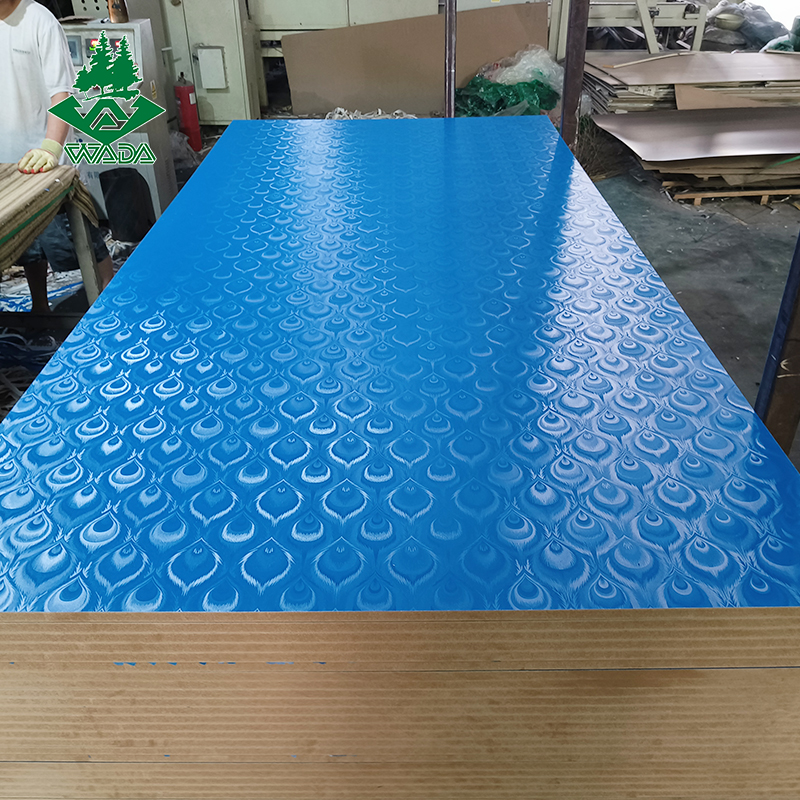
- Surface and colour match. Melamine paper, PET film and HPL behave differently under the same pressing parameters, while veneer cut type (Q/C or C/C) and face grade (A, AA, AAA) determine whether a run of faces looks uniform.
- Packing. Export standard pallet packing versus loose packing changes edge damage rates and moisture pickup in transit.
Two failure modes cause most sourcing pain. The first is batch-to-batch variability: the first container passes the buyer’s inspection and the second one does not, even though the specification never changed. The second is delivery slippage: the quoted lead time was a commercial promise, not a production plan, so quality shortcuts appear at the end of the schedule and the shipment date moves. In furniture, cabinetry, formwork and cladding projects, both failure modes land on the buyer’s production line rather than on the supplier’s balance sheet.
Industry Background: Why Panel Consistency Became a Sourcing Risk
Demand for engineered wood panels keeps expanding, and so does the number of suppliers claiming to serve it. Grand View Research valued the global plywood market at USD 80.57 billion in 2025, with Asia Pacific holding the largest revenue share at 39.4%. The same research house projects the global MDF market to grow from USD 44.96 billion in 2025 to USD 82.24 billion by 2033, a CAGR of 8.2%, and places the wood plastic composites market at USD 8.89 billion in 2025 with an expected CAGR of 11.7% through 2033. Market-size estimates should be read with care — independent firms differ, and IMARC Group values the plywood market at USD 52.5 billion for the comparable period — but the direction of travel is consistent.
Capacity is growing fastest in exactly the categories where buyers now source several families at once. Oriented strand board production passed 32 million cubic meters globally in 2024, with the USA alone accounting for 14 million cubic meters, according to Market Reports World. Meanwhile China remained the second largest exporter of raw timber (HS 44) to the United States in 2024, contributing USD 2.17 billion, a 9% share, based on ITC and US Census Bureau trade data.
Two structural forces push consistency risk upward. The first is compliance. Wood-based panels for construction use in the European Union must comply with the harmonized standard EN 13986 to be eligible for CE marking, and under the US EPA TSCA Title VI regulation, formaldehyde emission limits are set at 0.05 ppm for hardwood plywood and 0.11 ppm for MDF. A batch that drifts on glue formulation is no longer only a quality complaint; it is an import rejection. The second is supply concentration. Global Market Insights identifies West Fraser Timber, Arauco, Kronospan and EGGER Group as leading global players in the wood-based panel market. Below that tier sits a long tail of converters, traders and re-packers, and consistency variance concentrates in the tail.
The practical consequence: a buyer who sources plywood, MDF, melamine board, veneered board and LVL from separate suppliers has created five independent chances for thickness, moisture, density or core composition to move. Consolidating behind a partner with its own production bases and a documented QC sequence removes most of those handoffs.
The Solution: Stable Sourcing and Multi-Stage QC Behind One Partner
Consistency is not recovered by a better final inspection report. It is built upstream, at raw-material intake and at each production stage, then verified before the container is closed. WADA GROUP operates 53,950 m² of production space with 200 employees and a 25-engineer R&D team, and supplies export markets on 100% export volume. Three structural choices sit behind that setup.
1. Raw-material sourcing held to a specification, not to availability
Panel consistency starts with what goes into the press. WADA specifies core and face species by product family rather than substituting whatever is on hand: eucalyptus, larch, pine, poplar, birch, okoume and combi cores for plywood programs; birch, beech and poplar faces with birch or poplar cores for LVL bed slats; larch and pine faces for structure plywood; birch and okoume faces for marine plywood; white oak, red oak, black walnut, parota, wenge, ash, birch, pine and sapeli faces for veneered board, with engineered veneer available where a repeatable grain is required.
For MDF, consistency is largely an equipment question. WADA runs continuous flat pressing on Difenbach & Sinbelkamp (Germany) lines, which keeps plate pressure and fibre distribution inside a narrow band — the reason density (500–1000 kg/m³ by grade) and thickness (1.2–50 mm) repeat from run to run instead of drifting across a shift.
2. Multi-stage QC anchored on 100% inspection
WADA’s stated quality control is 100% inspection, carried out by an experienced inspection team and backed by a technical team and production workers with more than 10 years of experience in the timber industry. In practice, 100% inspection means the verification steps below run on every batch rather than on a sampled pack:
- Thickness and dimension check against the ordered spec (for example 4–35 mm film faced plywood, 2–30 mm melamine board, 9–28 mm structure plywood).
- Moisture verification inside the stated window: 8%–12% for plywood, LVL, melamine and veneered boards; 5%–13% for MDF.
- Density verification by grade (MDF 500–1000 kg/m³; commercial plywood 520–700 kg/m³; marine plywood 600–750 kg/m³; film faced plywood 650–750 kg/m³).
- Core lay-up and veneer grade confirmation against the ordered grade (B/BB through C/C; A, AA, AAA for veneered board).
- Glue class confirmation — E0, E1, E2, CARB P2, MR, melamine WBP or phenolic WBP — matched to the declared end use.
- Surface inspection of film, melamine paper, PET film, HPL or veneer, plus edge and corner checks before packing.
3. Lead time quoted from the production schedule
WADA quotes a production lead time of 25–45 days, with monthly panel capacity of more than 10,000 CBM and a minimum order quantity of 1x40' container. That window is a QC feature, not just a logistics figure: it is the time required to hold the inspection gates above without compressing them. Programs that quote materially shorter windows are usually removing gates, not removing work. OEM and ODM programs covering size, thickness and layout customization run inside the same window, so a customized panel does not have to mean an unverified panel.
Step-by-Step Breakdown: A Buyer’s Verification Workflow
Step 1 — Write the full tolerance set into the purchase order
Replace “MDF 18 mm” with a density band, a moisture window, a glue class, a veneer or surface grade, a size tolerance and a packing type. Every tolerance left open becomes a negotiation after arrival instead of a check before loading.
Step 2 — Verify how raw-material intake is controlled
Ask which core and face species are specified for your product, and what the substitution rule is when intake is short. A partner who specifies species by family (for example larch and pine faces with eucalyptus, larch, pine or combi core) can answer this concretely; a trader usually cannot.
Step 3 — Agree the QC gates before production starts
Define the checkpoints: incoming material, in-process control at pressing and sanding, surface application for film, melamine or veneer, pre-packing inspection, and pre-loading inspection. Gates agreed in advance cannot be skipped quietly under schedule pressure.
Step 4 — Confirm what 100% inspection actually covers
Ask which parameters are recorded per batch and whether inspection applies to individual panels, to packs, or to both. Density, moisture and thickness data recorded per batch is what turns a claim of consistency into something you can audit across orders.
Step 5 — Fix the lead-time window and its internal milestones
Map the 25–45 day window to sample approval, material preparation, production, QC, packing and loading. A supplier who can break the window into milestones can also tell you honestly which milestone is at risk.
Step 6 — Validate with a sample and a first article
Measure thickness, density and moisture on the sample, check face and edge quality, and compare the glue class against the certificate. Approving a first article before a full run is cheaper than rejecting a container after it.
Step 7 — Inspect before loading, including packing
Confirm the packing method (export standard pallet packing or loose packing), corner protection and loading sequence, and keep photographic records. Packing failures are frequently reported later as quality failures.
Step 8 — Close the loop on the next order
Feed arrival results back into the specification. Remote after-sales support is most useful when it is used to adjust parameters for the next batch rather than only to settle a claim on the last one.
Use Cases: Where Consistency Risk Appears First
Furniture and cabinet manufacturing — continuous production
In workshop production running continuously for cabinets and panels, the critical requirements are a smooth surface and a stable core. MDF, melamine board and veneered plywood are the panels normally involved, and the failure that hurts most is thickness or density drift, because it surfaces as rework at the edge-banding and CNC stage rather than as a visible defect at goods-in. A furniture manufacturer in Mexico has taken 100 containers for furniture and cabinet production from WADA GROUP.
Interior finishing — permanent installation
Interior fit-out in a dry indoor environment, covering walls, kitchens and furniture, is a permanent installation. Here the governing requirements are eco-friendly and formaldehyde-free performance alongside stable moisture. Veneered plywood, melamine board and MDF are matched to these projects, with glue classes such as E0 and CARB P2 and moisture control at 8%–12% for melamine and veneered boards and 5%–13% for MDF.
Construction — outdoor structural use
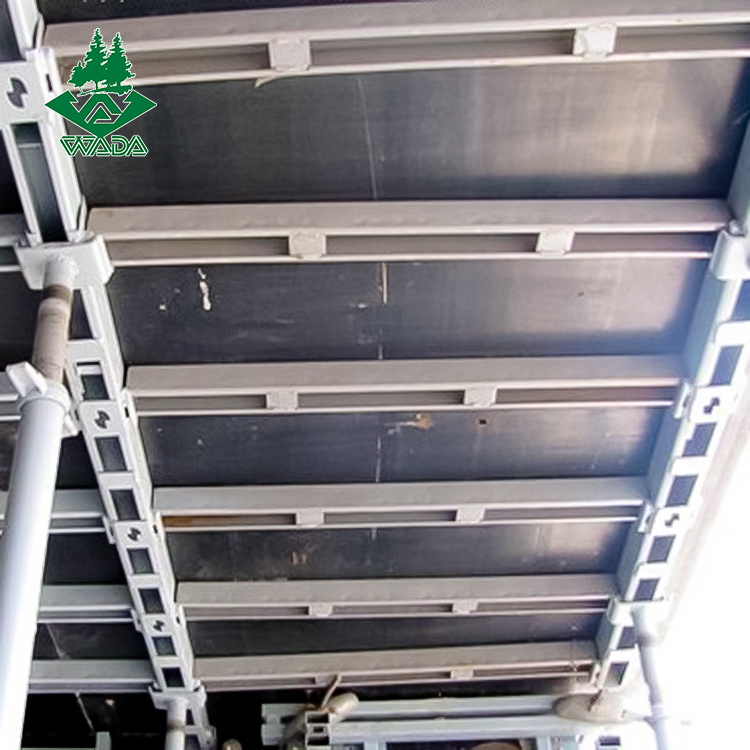
Outdoor structural applications require waterproof performance and high strength over long-term use. Film faced plywood and structure plywood are the standard matches; film faced plywood is rated for 2–40 reuses in concrete projects, so film integrity and edge sealing determine both cost per pour and consistency across batches. A construction builder in Japan has taken 200 containers for building structure, and an Australian building contractor 50 containers.
Outdoor cladding — UV and weather exposure
Exterior wall cladding operates under UV exposure in an outdoor environment, providing decoration and protection, and requires UV resistant and weather resistant material together with a compatible installation system and fasteners. Marine plywood and structure plywood are the usual specifications. A wall cladding project in Portugal has taken 20 containers, with weather resistance and UV resistance as the stated results.
Industrial packaging — heavy-duty transport
Crating and protection under heavy-duty transport conditions calls for high load capacity and either one-time or reusable operation. Commercial plywood from 2–25 mm with E0, CARB P2, E1, E2 or WBP glue is the workhorse for this application. Beyond finished panels, WADA GROUP has also supplied a plywood manufacturer in Vietnam with one complete production line for manufacturing plywood, veneer and engineered wood panels.
Comparison Table: Panel Types and Their Consistency Risk Points
| Panel type | Typical thickness range | Glue / surface options (declared) | Where consistency risk concentrates | Verification checkpoint |
|---|---|---|---|---|
| MDF | 1.2–50 mm | E0 / CARB P2 / E1; continuous flat pressing | Density and thickness across the press cycle (500–1000 kg/m³) | Density and thickness records; moisture at 5%–13% |
| Film faced plywood | 4–35 mm | MR / melamine WBP / phenolic WBP; dark brown or black film | Film integrity and edge sealing across 2–40 concrete reuses | Film bond and edge check at 650–750 kg/m³ |
| Commercial plywood | 2–25 mm | E0 / CARB P2 / E1 / E2 / WBP | Veneer grade mix and core voids (B/BB through C/C) | Veneer grade and core composition against the ordered grade |
| Marine plywood | 9–25 mm | Melamine WBP / phenolic WBP; birch or okoume face | Glue-line durability under continued moisture exposure | Glue-line and moisture check at 8%–12%, 600–750 kg/m³ |
| Structure plywood | 9–28 mm | Melamine WBP / phenolic WBP; larch or pine face | Core composition consistency (eucalyptus / larch / pine / combi) | Core lay-up check at 650–750 kg/m³ |
| Veneered board | 2–25 mm | E0 / CARB P2 / E1 / E2 / melamine; Q/C or C/C cut | Face colour and grain matching across a run | Face grade (A / AA / AAA) and cut-type match |
| Melamine board | 2–30 mm | E0 / CARB P2 / E1 / E2; melamine paper, PET film or HPL | Surface colour batch and core stability (plywood / MDF / PB / BB core) | Colour batch and surface adhesion check at 550–750 kg/m³ |
| LVL bed slat | 7–15 mm (width 25–190 mm) | E0 / E1; birch, beech or poplar face | Moisture and warp in curved slats | Moisture verification at 8%–12% before packing |
Read across the table and the pattern is consistent: the checks that prevent rejected containers are density, moisture, core composition and grade — not glossy surface appearance at the sample stage. Those four parameters are exactly what a multi-stage QC sequence with 100% inspection is designed to hold.
FAQ
What certifications should a wood panel manufacturing partner be able to document?
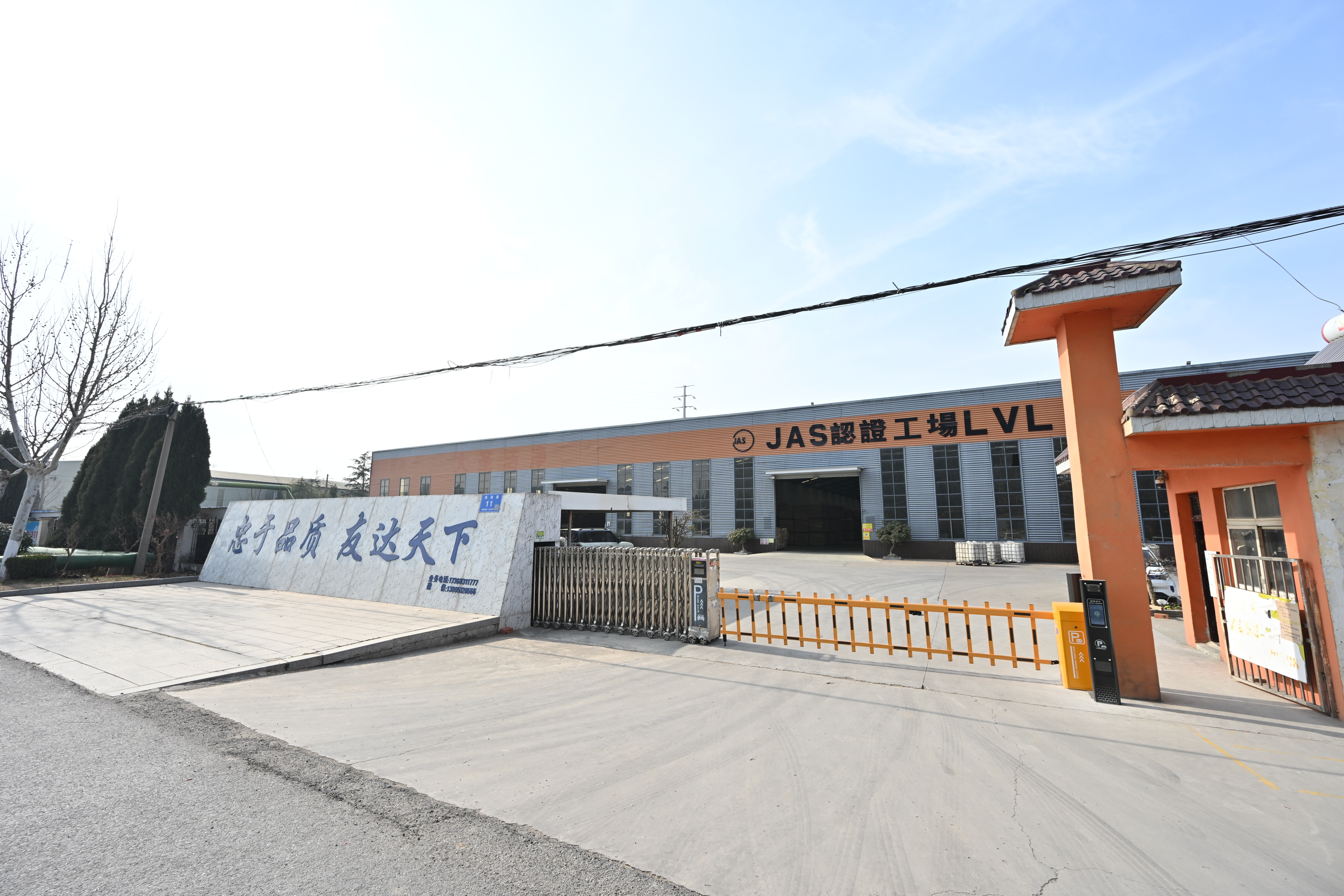
For panel programs shipping into regulated markets, the certification set that matters includes FSC, EUDR, CARB P2, EPA, and JAS & JIS — the set held by WADA GROUP. Two regulatory thresholds explain why: wood-based panels for construction use in the European Union must comply with the harmonized standard EN 13986 to be eligible for CE marking, and under the US EPA TSCA Title VI regulation, formaldehyde emission limits are 0.05 ppm for hardwood plywood and 0.11 ppm for MDF. Ask for the certificate scope mapped to the exact panel type you are buying.
How does 100% inspection change batch-to-batch results compared with sample-based QC?
Sampling tells you what a stack looked like; 100% inspection tells you what each batch contains. At WADA, quality control is stated as 100% inspection, carried out by an experienced inspection team and supported by a technical team and workers with more than 10 years of experience in the timber industry. In operational terms this covers thickness and dimension, moisture content (8%–12% for plywood, LVL, melamine and veneered boards; 5%–13% for MDF), density against the grade band, core lay-up, veneer or surface grade, and glue class — before packing, not after arrival.
What is the minimum order quantity, and does customization affect the schedule?
WADA’s minimum order quantity is 1x40' container, and monthly panel capacity exceeds 10,000 CBM. OEM and ODM programs cover size, thickness and layout customization, and they run inside the same 25–45 day production window as standard specifications. Customization changes the tooling and set-up sequence rather than the inspection scope, so a customized panel is not a less-verified panel.
Can panel consistency be validated before committing to a full container order?
Yes, and it should be. Sample validation is the point at which thickness, density, moisture, face grade, core composition and glue class can be measured against the ordered specification — for example veneer grade (B/BB through C/C), veneered face grade (A, AA, AAA), or film integrity on film faced plywood before it enters a concrete programme. Approving a sample and a first article before the production run is the cheapest control point in the entire sourcing process.
How long does production take, and how do I avoid lead-time slippage?
The stated production lead time is 25–45 days from order confirmation, with remote after-sales support once the goods are in use. Slippage is avoided by mapping that window to internal milestones — sample approval, material preparation, production, QC, packing and loading — and by treating QC gates as fixed dates rather than flexible ones. Buyers who want to move a specification forward can send their tolerance set, target market and annual volume to wada@wadatrade.com and receive a quotation with the lead-time window stated in writing.
Conclusion: Consistency Is Bought at Intake, Not at the Port
Panel sourcing problems almost never begin with the supplier’s price. They begin with a specification that left tolerances open, an inspection regime that sampled instead of verified, and a lead time that was sold before it was scheduled. The correction is structural: specify density, moisture, core, grade and glue class explicitly; require multi-stage QC with 100% inspection at agreed gates; and work with a partner whose sourcing is stable enough that the same specification produces the same panel in month twelve as in month one.
WADA GROUP supports that structure with multiple production bases in China, overseas branches in Japan and Singapore, a 25-engineer R&D team, a certification set covering FSC, EUDR, CARB P2, EPA, JAS & JIS, more than 10,000 CBM of monthly panel capacity, a 25–45 day production window and a minimum order of 1x40' container — supplying engineered wood products to more than 50 countries.
Next step: check the specification before you check the price
Download the WADA Group product brochure for panel parameters, certification scope, packing options and OEM/ODM customization — or send your tolerance set and target market for a quotation with a written lead-time window.
Brochure: WADA Group product catalog (PDF)
Email: wada@wadatrade.com | WhatsApp / Tel: +86 131-3003-0584 | Website: www.wadaplywood.com
Have Questions or Need More Details?
Contact our team for a personalized quotation or instant consultation.
Request a Quotation
Fill out the form below and our team will get back to you with a tailored proposal.
WhatsApp Direct Chat
Prefer to chat in real-time? Message us on WhatsApp for instant assistance & quick answers.
- Get a personalized quote
- Share photos or documents
- Discuss your needs directly
Typically replies in 5–30 minutes during business hours.