
Veneered Board vs. Melamine Board: A Comparison Guide for Cabinet and Furniture Makers
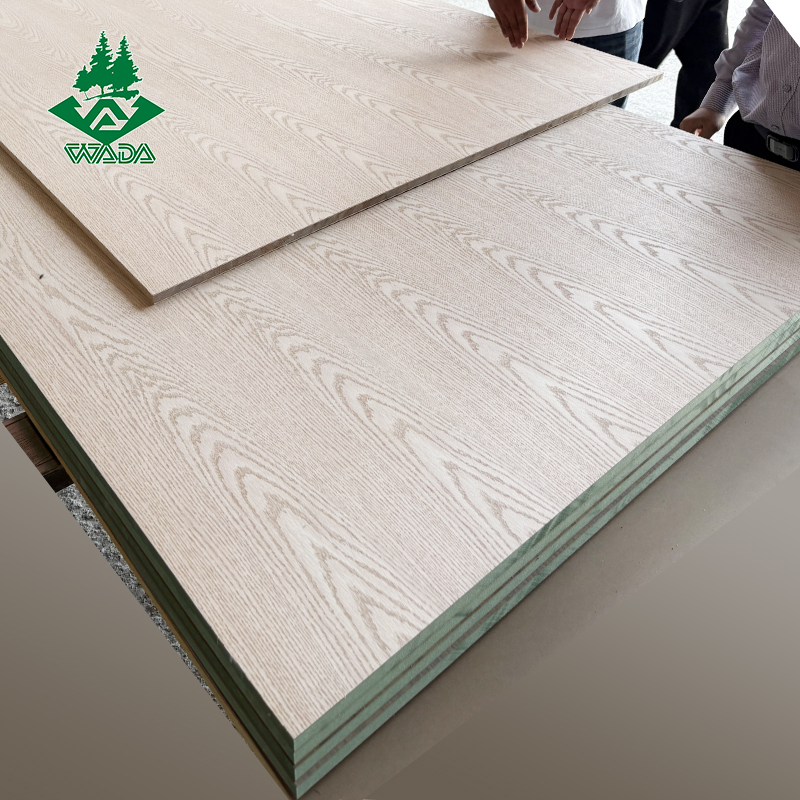
The short answer: specify veneered board when the value of the finished cabinet depends on a real wood face and your specification can absorb species, veneer cut and grade; specify melamine board when the project needs a decorative face that arrives already finished and repeats consistently across a production run. These two products are not competing grades of the same panel — they are two different face solutions built on the same core families, and the deciding factors are appearance control, core choice, thickness, glue class and the compliance rules of the destination market.
This guide compares Veneered Board and Melamine Board on the parameters cabinet and furniture makers actually write into a purchase order. Dalian WADA International Trading Co., Ltd. (WADA GROUP), based in Dalian, China, is a manufacturer and global exporter of engineered wood products — including Veneered Board, Melamine Board, MDF, plywood, LVL, OSB and wall panels — and supplies both panel types, which makes them directly comparable here.
Why the Veneered vs. Melamine Decision Gets Complicated
On paper the two products look almost identical. Both can be built on plywood, MDF, chipboard or blockboard cores. Both are supplied in formats from 4×8 ft to 7×9 ft. Both are offered with E0, CARB P2, E1 or E2 glue classes. Because the cores overlap this closely, a simple price-per-sheet comparison between the two says very little about which panel belongs in a cabinet programme.
The real differences sit in three places that a specification sheet rarely explains in plain language: the face layer (a real wood veneer versus a decorative overlay), the finishing route that face forces in the workshop, and the certification path required by the market the finished furniture is exported to.
There is also a compliance trap. Formaldehyde limits are set per composite wood product category and per jurisdiction, not per brand. Under the US EPA TSCA Title VI rule, the emission limit is 0.05 ppm for hardwood plywood and 0.11 ppm for MDF. In other words, the same decorative face can sit on two different cores and fall under two different limits. Buyers who compare faces only — and leave the core and glue class out of the specification — usually discover the problem during customs clearance rather than during sampling.
Industry Background: Where Surface-Finished Panels Sit Today
Panel demand scales with furniture, interior fit-out and construction output. Grand View Research valued the global plywood market at USD 80.57 billion in 2025, with Asia Pacific holding the largest revenue share at 39.4%. Veneered and melamine boards sit inside that same supply chain as the decorative, furniture-facing end of the engineered wood panel family.
Regulation has become part of the buying decision. Wood-based panels used in construction in the European Union must comply with the harmonized standard EN 13986 to be eligible for CE marking, according to the European Panel Federation. In the United States, the EPA TSCA Title VI regulation sets the formaldehyde emission limits for composite wood products. Japan, Australia and New Zealand apply their own standards: JIS A 5905 for MDF, JIS A 5908 for particle board, JAS 0233:2024 for plywood, JAS 0701:2023 for LVL, AS/NZS 4357.0:2005 (R2016) for structural LVL and AS 6669-2016 for 17 mm formwork plywood.
WADA GROUP was established in 2010 and operates a 53,950 m² production base with 200 employees, including a 25-engineer R&D team, exporting 100% of its output to North America, the EU, Australia, Japan, South Korea, the Middle East, Mexico and South America. Its product certifications include FSC, EUDR, CARB P2, EPA, JAS and JIS.
What Actually Differs Between Veneered Board and Melamine Board
Six specification points separate the two products. Everything else — the core, the format, the glue logic and the delivery packing conventions — is shared territory.
1. The face layer: real wood veneer versus a decorative overlay
A Veneered Board carries a wood face on both sides. Documented species include White Oak, Red Oak, Black Walnut, Parota, Wenge, Ash, Birch, Pine and Sapeli, and engineered veneer is also available. Veneer cut type is specified as Q/C or C/C, and veneer grades are quoted as A, AA or AAA. Those three variables — species, cut and grade — determine how much natural grain variation appears across a batch.
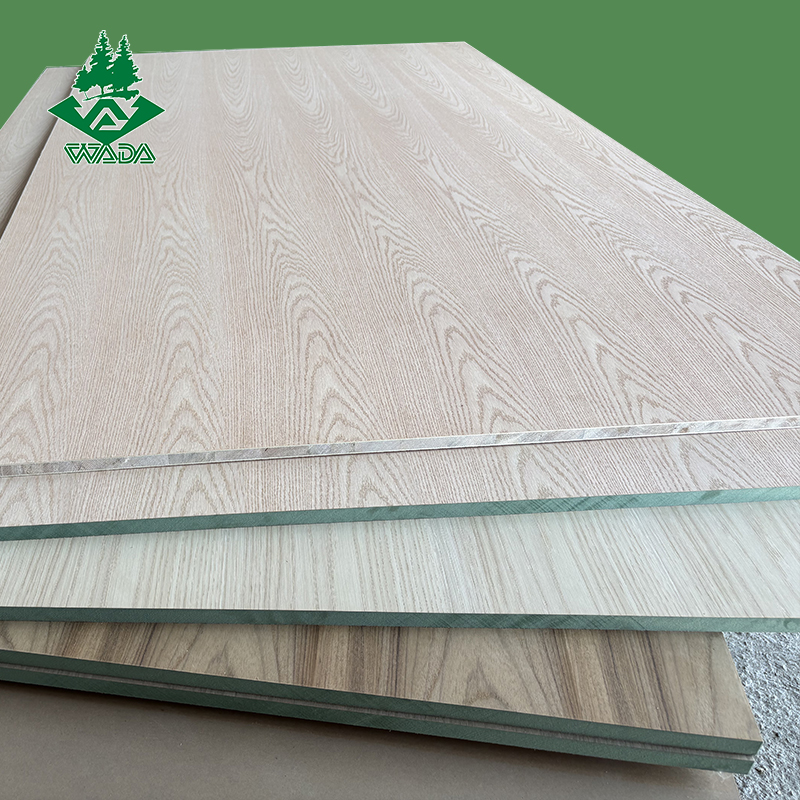
A Melamine Board carries a factory-finished decorative surface: melamine paper, PET film, HPL or UV finish applied to the core. The face is already the finished surface of the panel. Grades are quoted as furniture grade or cabinet grade rather than veneer grade, because there is no natural veneer to grade.
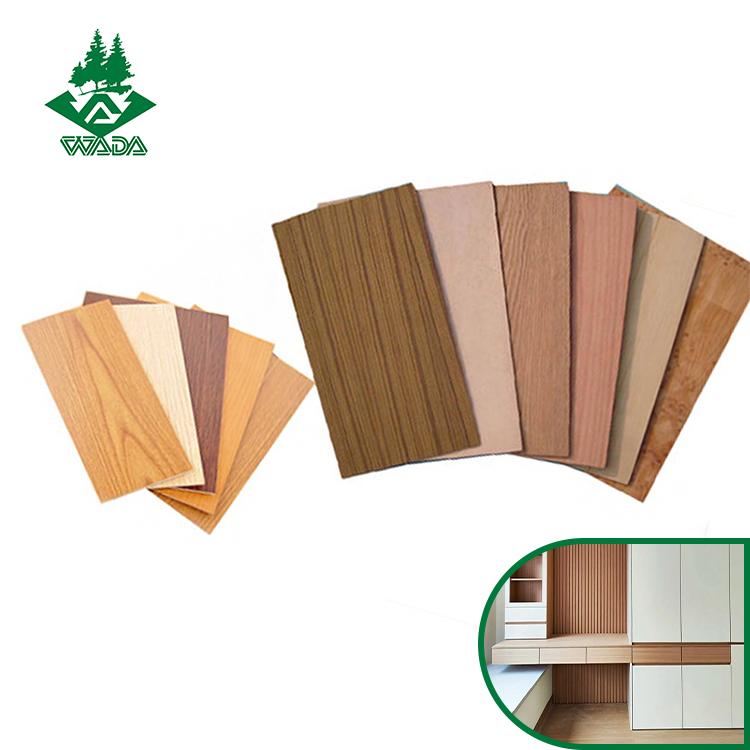
The practical consequence is about consistency and rework. A decorative overlay is designed to deliver a repeatable appearance across a production run and across repeat orders of the same decor. A natural veneer face varies by nature, which is why an engineered veneer option exists for projects where catalogue-level consistency matters more than natural variation.
2. The core: the layer both products share
Core selection is independent of face selection, which is why the two products are often specified together in the same cabinet programme. Both Veneered Board and Melamine Board can be built on plywood, MDF, chipboard or blockboard cores.
For routed and shaped components, WADA's MDF is produced by continuous flat pressing on Difenbach & Sinbelkamp (Germany) equipment, in thicknesses from 1.2 mm to 50 mm, sizes from 4×8 ft to 8×16 ft, densities of 500–1,000 kg/m³ and moisture content of 5%–13%, with glue classes E0, CARB P2 or E1. So the same face can be delivered on a routing-friendly MDF core, or on a plywood core where a different structural role is required.
3. Format and thickness envelope
Both products are supplied between 4×8 ft and 7×9 ft. The documented thickness ranges differ at the top end: Veneered Board runs from 2 mm to 25 mm, while Melamine Board runs from 2 mm to 30 mm. Where a design calls for a decorative panel above 25 mm, the melamine route offers more headroom inside the standard range.
4. Glue class and market compliance
Glue classes overlap but are not identical. Veneered Board is available with E0, CARB P2, E1, E2 or melamine glue. Melamine Board is available with E0, CARB P2, E1 or E2. In both cases, the glue class is the part of the specification that decides which market the shipment can enter.
WADA's certification set covers the main destination markets. Structural plywood is certified to CARB Phase 2 and TSCA Title VI for the United States including California, under California Code of Regulations Sections 93120–93120.12. MDF is certified under JIS A 5905 for the Japanese market, plywood under JAS 0233:2024 and LVL under JAS 0701:2023. Structural LVL is certified to AS/NZS 4357.0:2005 (R2016) under BSI Product Certification for Australia and New Zealand, and 17 mm formwork plywood is certified under StandardsMark Licence to AS 6669-2016.
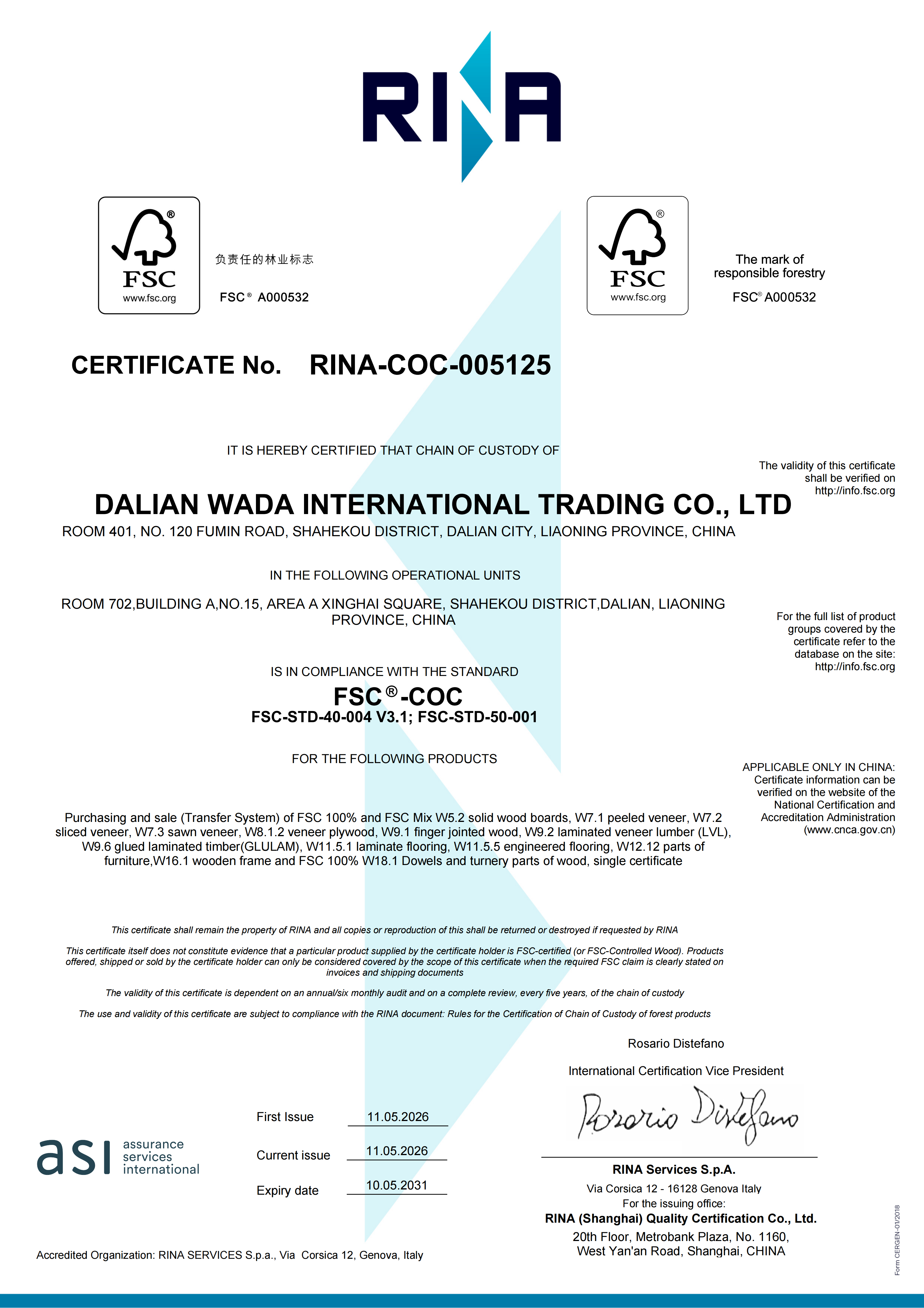
FSC chain-of-custody certification covers solid wood boards, peeled, sliced and sawn veneer, veneer plywood, finger-jointed wood, LVL, glued laminated timber, laminate flooring, engineered flooring and furniture parts for the EU, North America and UK markets, and Veneered Board is listed among the covered products.
For US-bound furniture, two EPA TSCA Title VI limits are worth writing directly into the spec sheet: 0.05 ppm for hardwood plywood and 0.11 ppm for MDF.
5. Density, moisture content and what to check on delivery
Veneered Board is documented at 500–750 kg/m³ and Melamine Board at 550–750 kg/m³, both at 8%–12% moisture content. Density follows the core rather than the face, so the figure is effectively a core indicator; moisture content is the acceptance window to verify on arrival.
6. What drives cost, and why there is no single price band
Cost differences between the two products come from the face route, the core, the thickness, the format, the glue class, the order quantity relative to a one-container minimum, and any processing such as cut-to-size or edge work. A natural veneer face is specified by species, veneer cut and grade; a decorative overlay is specified by decor and finish type. Because every combination is quoted separately, a generic price band for veneer versus melamine does not exist — the correct comparison is a quote against a complete specification.
Step-by-Step: Writing a Veneered or Melamine Specification for a Cabinet Project
The sequence below follows the order in which specification decisions lock each other down. Skipping a step usually means re-quoting later.
- Define the working environment first. WADA's application records separate indoor dry-environment work from exterior work. Interior finishing projects in the US are recorded as permanent installation in indoor dry environments for walls, kitchens and furniture, with an eco-friendly, formaldehyde-free requirement. Continuous workshop production is the other common profile: a furniture manufacturing application in Poland is recorded as cabinet and panel making in continuous production, where the stated requirement is a smooth surface and a stable core.
- Choose the face route. If the design language is a visible wood species with natural grain variation, specify Veneered Board with the species, the veneer cut (Q/C or C/C) and the grade (A, AA or AAA). If the design language is a repeatable colour and texture across a run, specify Melamine Board with the face type — melamine paper, PET film, HPL or UV — and the decor reference.
- Set the core. Nominate plywood, MDF, chipboard or blockboard according to machining and structural needs, and state it explicitly in the purchase order, because the face option does not define the core.
- Fix thickness and format. Both products run from 4×8 ft to 7×9 ft; Veneered Board from 2–25 mm and Melamine Board from 2–30 mm.
- Match the glue class to the destination market. E0, CARB P2, E1 and E2 are available on both, with melamine glue additionally available on the veneered side. The target market determines which certificate must accompany the shipment.
- Validate, then schedule. Because panel orders start at 1×40' container and lead time runs 25–45 days, sample approval and certificate review should be completed before the production slot is booked.
Specification checklist before you request a quote: face type and species or decor · veneer cut and grade (veneer) or grade (melamine) · core material · thickness · format · glue class · destination market and required certificate · order quantity against a 1×40' container · processing such as cut-to-size or edge work.
Where Each Panel Earns Its Place
Both products are documented for the same customer groups: furniture manufacturers, cabinet and wardrobe manufacturers, interior contractors and fit-out companies, building material distributors and wholesalers, modular furniture manufacturers, office furniture manufacturers, retail fixture and display manufacturers, exhibition and shopfitting companies, and decorative panel distributors. In practice, the choice between them is a choice of project type rather than of customer type.
- Kitchens, wardrobes and modular cabinets. This is the volume end of the market, where a consistent decorative face and a cabinet-grade build reduce the number of finishing steps in the workshop. Melamine Board is graded as furniture grade or cabinet grade for exactly this type of work.
- Office furniture, retail fixtures and exhibition stands. These projects are usually driven by brand colours and repeat orders, so a decor that can be re-ordered consistently is often the deciding factor. Where the brand standard calls for a visible wood face, the same production runs use Veneered Board instead.
- Furniture ranges where the wood species is part of the product story. Veneered Board supports this directly through the documented face options — White Oak, Red Oak, Black Walnut, Parota, Wenge, Ash, Birch, Pine or Sapeli — or engineered veneer where a more uniform appearance is preferred.
- Interior fit-out in dry indoor environments. Both panel types are documented for walls, kitchens and furniture in permanent indoor installation.
- Exterior and high-moisture work belongs to a different material family. WADA's recorded outdoor application is an exterior wall cladding project in Mexico with UV exposure and weather-resistance requirements, supplied with Marine Plywood (Birch or Okoume faces, Melamine WBP or Phenolic WBP glue, 600–750 kg/m³) and Structure Plywood. Neither Veneered Board nor Melamine Board is documented for exterior cladding.
One project record shows how the two panel types are combined in real furniture production: a furniture manufacturer in Mexico has taken 100 containers of Veneered Board, Melamine Board, LVL and MDF for furniture and cabinet production, where the recorded application is decoration.
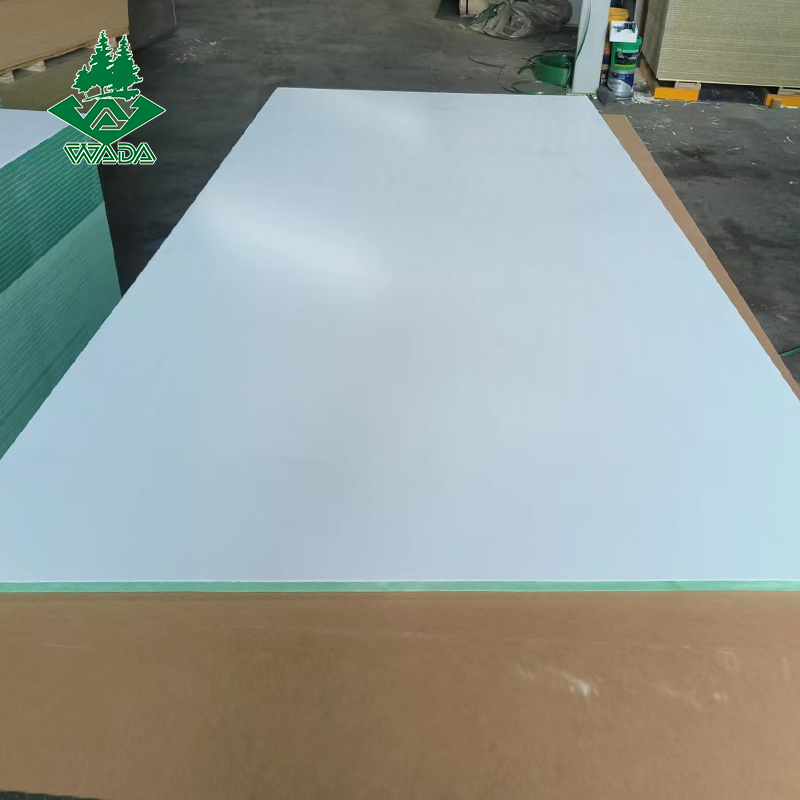
Veneered Board vs. Melamine Board: Side-by-Side Comparison
The table below compares only the specification points documented for both products. Where a value differs, the difference is a planning input; where it matches, the variable sits in the core or the market requirement instead.
| Specification point | Veneered Board | Melamine Board |
|---|---|---|
| Face / back | Real wood veneer: White Oak, Red Oak, Black Walnut, Parota, Wenge, Ash, Birch, Pine, Sapeli, or engineered veneer | Melamine paper, PET film, HPL or UV finish |
| Face grading | Veneer cut Q/C or C/C; grades A, AA, AAA | Furniture grade / cabinet grade |
| Core options | Plywood, MDF, chipboard, blockboard (BB) | Plywood, MDF, particle board (PB), blockboard (BB) |
| Size range | 4×8 ft – 7×9 ft | 4×8 ft – 7×9 ft |
| Thickness range | 2–25 mm | 2–30 mm |
| Glue options | E0 / CARB P2 / E1 / E2 / melamine glue | E0 / CARB P2 / E1 / E2 |
| Density | 500–750 kg/m³ | 550–750 kg/m³ |
| Moisture content | 8%–12% | 8%–12% |
| Decision note | Specify when the species, veneer cut and grade are part of the design intent | Specify when a repeatable decorative face and cabinet-grade build are the priority |
Both products are documented for the same customer groups — furniture, cabinet and wardrobe, modular and office furniture, interior fit-out, retail fixture and display, exhibition and shopfitting, and decorative panel distribution — and both can be specified with plywood, MDF, chipboard or blockboard cores.
Frequently Asked Questions
Do veneered and melamine boards meet the compliance requirements of the US, EU and Japanese markets?
Both are offered with low-emission glue classes — E0, CARB P2, E1 or E2 — and Veneered Board is additionally available with melamine glue. WADA holds FSC, EUDR, CARB P2, EPA, JAS and JIS certifications. For the United States, structural plywood is certified to CARB Phase 2 and TSCA Title VI under California Code of Regulations Sections 93120–93120.12, and the EPA TSCA Title VI limits are 0.05 ppm for hardwood plywood and 0.11 ppm for MDF. For Japan, MDF is certified under JIS A 5905, plywood under JAS 0233:2024 and LVL under JAS 0701:2023. For Australia and New Zealand, structural LVL is certified to AS/NZS 4357.0:2005 (R2016) and 17 mm formwork plywood to AS 6669-2016. For panels used in EU construction work, compliance with the harmonized standard EN 13986 is the condition for CE marking eligibility.
Can one supplier deliver both panel types with customization?
Yes. WADA runs OEM and ODM programmes with customization of size, thickness and layout, and a monthly panel capacity of more than 10,000 CBM. Quality control is described as 100% inspection, with remote after-sales support. The main product range covers LVL, plywood, Veneered Board, MDF, OSB and wall panels, so a mixed programme of veneered and melamine panels can be specified from a single supplier.
How large is the price difference between veneered and melamine board?
There is no single published price band, because every quote is built from the specification: face route (veneer species, cut and grade, or overlay type and decor), core, thickness, format, glue class, quantity and any processing. Panel orders start at a 1×40' container, so quantity breaks are calculated on container loading rather than on individual sheets. The reliable way to compare the two is to request quotes for the same thickness, format and core in each of the two face options.
How should a cabinet maker validate panels before placing a production order?
Validate against a written specification rather than a visual impression: species and veneer cut, or decor and face type; core material; thickness; size; glue class; and the certificate required by the destination market. Density and moisture content should be checked against the data sheet — Veneered Board is documented at 500–750 kg/m³ and Melamine Board at 550–750 kg/m³, both at 8%–12% moisture content. Because the production slot follows sample approval, this step belongs before the order is scheduled, not after it.
What MOQ and lead time should a cabinet or furniture maker plan for?
Panel orders start at 1×40' container, with a lead time of 25–45 days. Buyers running a mixed programme should raise the veneered and melamine face options in the same enquiry so that container planning, certificates and the delivery schedule are quoted together. To start, send your specification — face type, core, thickness, format, glue class and destination market — to wada@wadatrade.com or request the WADA GROUP catalogue through the link below.
Conclusion: Match the Face to the Project, Then Lock the Core
Veneered Board and Melamine Board solve two different problems on the same production line. Veneered board is the right specification when a natural wood face — in a nominated species, veneer cut and grade — is part of the product's value. Melamine board is the right specification when a repeatable decorative face, a cabinet-grade build and fewer finishing steps are the priority. In both cases, the core, thickness, glue class and destination-market certification have to be written into the specification separately, because those variables — not the face alone — determine whether a shipment clears the market it is sold into.
Next step: sample, quote or catalogue
Send your specification — face type and species or decor, core, thickness, format, glue class and destination market — and WADA GROUP will respond with a quotation, sample arrangement and delivery schedule for a 1×40' container order.
Email: wada@wadatrade.com · Tel / WhatsApp: +86 131-3003-0584 · Website: www.wadaplywood.com
Download the WADA GROUP product catalogue: Wada Group PDF catalogue
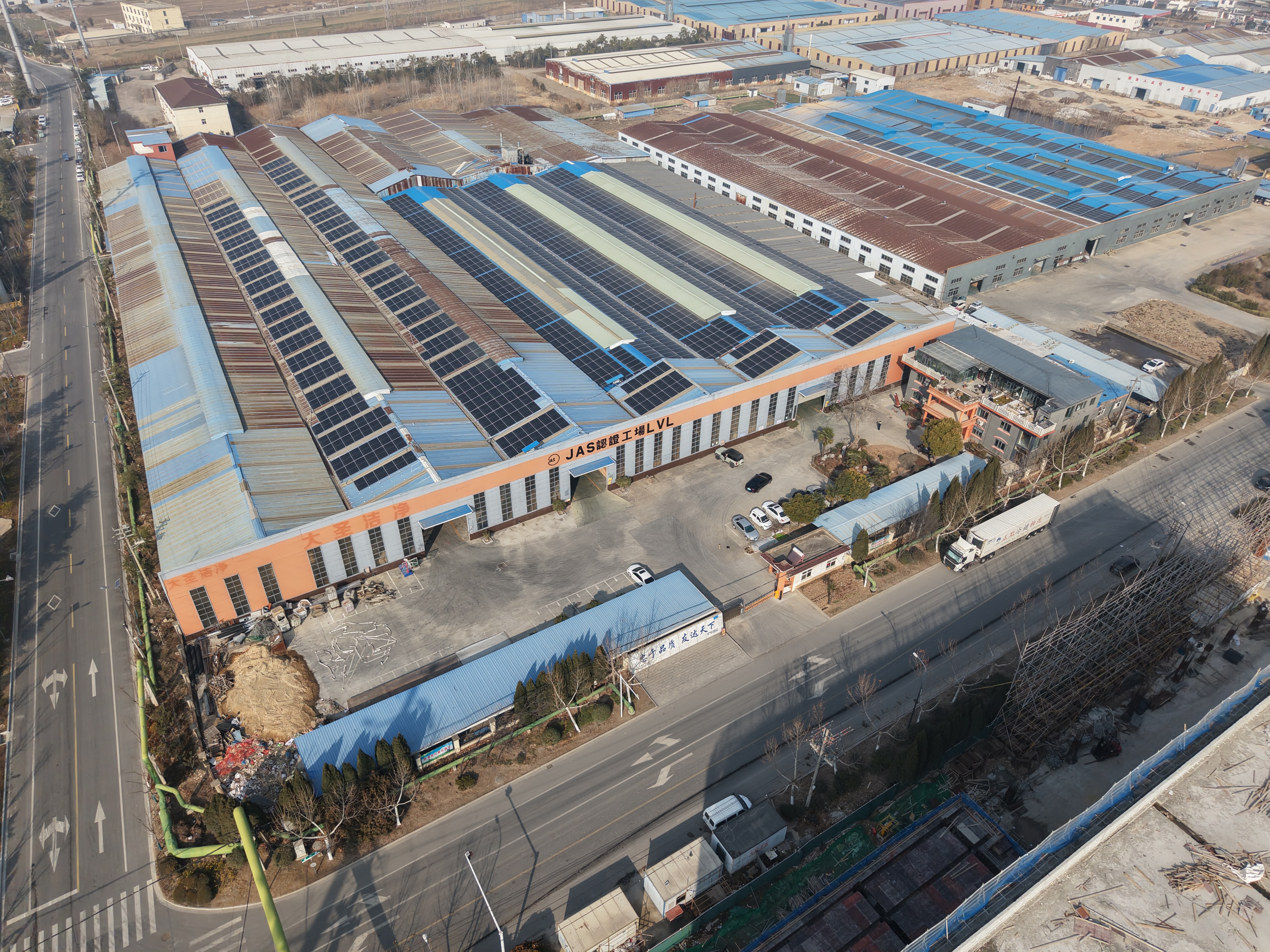
Dalian WADA International Trading Co., Ltd. — Room 702, Building A, Xinghai International Finacial Center, No.13-15, Area A Xinghai Square, Shahekou District, Dalian, China.
Have Questions or Need More Details?
Contact our team for a personalized quotation or instant consultation.
Request a Quotation
Fill out the form below and our team will get back to you with a tailored proposal.
WhatsApp Direct Chat
Prefer to chat in real-time? Message us on WhatsApp for instant assistance & quick answers.
- Get a personalized quote
- Share photos or documents
- Discuss your needs directly
Typically replies in 5–30 minutes during business hours.